


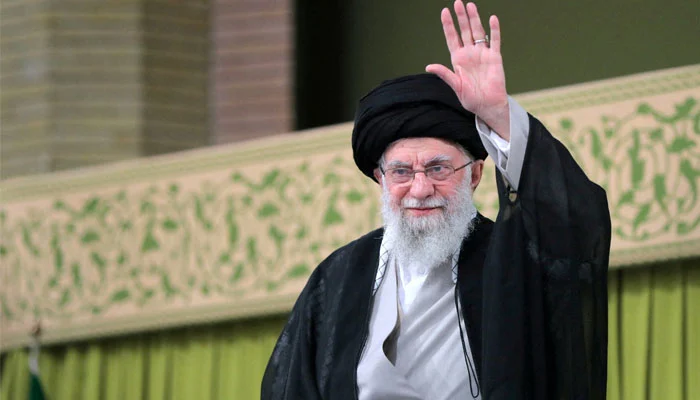
Iranian state media have confirmed the Ayatollah Ali Khamenei martyrdom following joint US-Israel strikes on Iran. The announcement came on Sunday after earlier claims by American and Israeli officials that the Iranian leader had been killed.
The confirmation of Ayatollah Ali Khamenei martyrdom marks a defining moment in the ongoing Iran-Israel conflict. Authorities in Tehran declared a 40-day national mourning period to honor the longtime Supreme Leader.
Initially, Iranian news agencies reported that Khamenei was safe and directing operations. Later reports confirmed the Ayatollah Ali Khamenei martyrdom at his office during the attacks.
Statements from Washington and Tel Aviv
US President Donald Trump claimed that American intelligence and advanced tracking systems located Khamenei during the operation. He described the strike as coordinated with Israel and called it a major turning point. Israeli Prime Minister Benjamin Netanyahu said there were strong signs confirming his death. Reports also cited senior Israeli officials who claimed the body had been found.
Trump suggested the moment could open a new chapter for the Iranian people. He urged Iran’s military forces, including the Islamic Revolutionary Guard Corps (IRGC), to support change.
Leadership Transition in Iran
With the Ayatollah Ali Khamenei martyrdom now confirmed, Iran faces political uncertainty. Khamenei led the country since 1989. He succeeded Ayatollah Ruhollah Khomeini, the leader of the 1979 Islamic Revolution.
As Supreme Leader, he held ultimate authority over the government, armed forces, and judiciary. Analysts believe Iran has contingency plans in place. A leadership council may temporarily oversee state affairs. Experts say preparations for such a scenario existed due to long-standing tensions with the US and Israel.
Heavy Casualties Across Iran
The US-Israel strikes targeted 24 provinces across Iran. Iranian media, citing the Red Crescent, reported at least 201 deaths.
Airstrikes hit several civilian areas, including schools in the southern city of Minab and near Tehran. Officials reported heavy casualties among civilians.
Netanyahu stated that Israeli forces eliminated senior IRGC commanders and officials linked to Iran’s nuclear program. He said operations would continue.
Trump indicated that further strikes could follow if necessary.
Iran Responds with Retaliation
Iran launched multiple waves of retaliatory attacks targeting US and Israeli positions. The IRGC announced that additional phases of its response were ongoing. Air defense systems activated in several Gulf countries hosting US bases, including Kuwait, Qatar, the United Arab Emirates, and Bahrain.
The Ayatollah Ali Khamenei martyrdom has intensified fears of broader regional conflict. Analysts warn that escalation could spread beyond current battle lines.
Global Leaders Call for De-Escalation
At the UN Security Council, Secretary-General Antonio Guterres expressed regret over the loss of diplomatic options. He warned that continued military action could trigger uncontrollable consequences.
Iran’s UN ambassador condemned the strikes as aggression and accused the US and Israel of targeting civilian areas.
US Ambassador Mike Waltz defended the operation. He said preventing Iran from obtaining nuclear weapons remains a matter of global security.
Russia’s envoy Vassily Nebenzia criticized the strikes and demanded an immediate halt. China also voiced deep concern over rising tensions.