


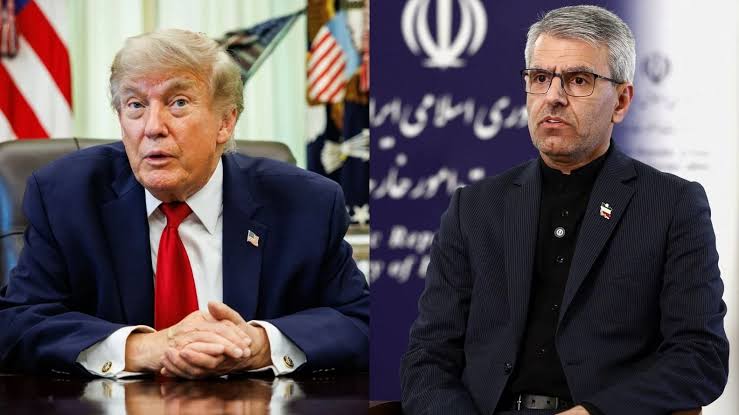
Indirect negotiations between the United States and Iran ended in Doha without any major breakthrough, although both sides described the discussions as constructive. The Doha talks between US and Iran mainly focused on implementing parts of an interim agreement announced two weeks ago rather than resolving the wider issues dividing the two countries.
Sources familiar with the talks said negotiators spent two days discussing maritime traffic through the Strait of Hormuz and the release of frozen Iranian funds. Both issues are considered key parts of the temporary agreement reached earlier.
Qatar’s Foreign Ministry said the next round of talks will take place after the funeral of Iran’s late Supreme Leader Ayatollah Ali Khamenei, who is scheduled to be buried on July 9.
According to the ministry, the discussions made “positive progress” on matters linked to the memorandum that ended the conflict in June and built on previous negotiations held in Switzerland.
US President Donald Trump said the two countries were making progress toward possible limits on Iran’s nuclear programme, describing the meetings as productive.
“The denuclearisation of Iran is moving along well,” Trump told reporters. “They’ve had very good meetings, and we’ll see.”
However, sources involved in the negotiations said Iran’s nuclear programme was not discussed during the Doha meetings because the sessions focused on technical issues. US Vice President JD Vance said nuclear negotiations would begin at a later stage.
Qatar’s Foreign Ministry said American and Iranian officials met separately with Qatari and Pakistani mediators throughout the negotiations.
A source familiar with the discussions said senior US envoy Steve Witkoff and Jared Kushner did not attend the meetings despite earlier expectations of high-level participation.
Iran’s delegation was led by Deputy Foreign Minister Kazem Gharibabadi. Neither delegation confirmed whether they had narrowed their differences before the talks concluded.
A major issue remains the future of the Strait of Hormuz, one of the world’s most important energy shipping routes. The initial agreement calls for both countries to allow commercial shipping to resume through the waterway, which handled around one-fifth of global oil and liquefied natural gas trade before the conflict.
Although shipping has partially resumed, uncertainty remains after recent military exchanges and an Iranian attack on a cargo ship last weekend.
Senior Iranian sources said Tehran wants international recognition of its control over the Strait of Hormuz and plans to begin charging shipping tolls in mid-August after the current toll-free period expires.
Trump also downplayed the risk of another full-scale conflict, saying both sides had made significant progress.
His comments pushed oil prices to their lowest level in four months, prompting analysts to lower their price forecasts for the first time since the conflict began.
Iranian state media also reported that a foreign container ship ran aground outside the shipping lane designated by Iranian authorities.
Energy market analyst Vandana Hari said shipping through the Strait of Hormuz was gradually recovering but remained inconsistent and unpredictable.
Meanwhile, several European countries have offered assistance in clearing mines from the strategic waterway. Germany’s Defence Minister Boris Pistorius said Germany was unlikely to participate because of Iran’s lack of cooperation.