

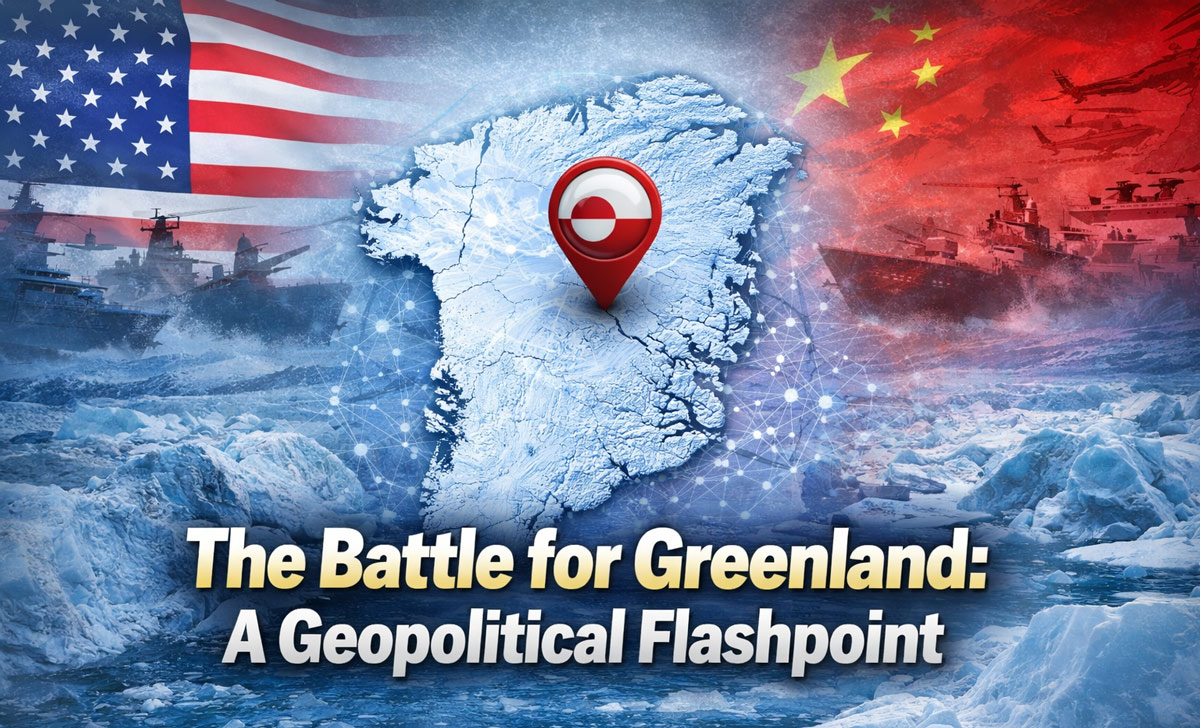
Greenland, often perceived as a vast, quiet land of ice on world maps, is far more than just a frozen island. It’s a focal point in discussions about climate change, global balance, and the future of our planet. This conversation will delve into Greenland’s geography, climate, strategic importance, and its environmental role in shaping global systems.
Historically, global power was dictated by military might. Kingdoms and tribes would conquer lands, plunder wealth, and impose their will. This aggressive expansionism led to countless wars, filling history books with tales of conflict and conquest. The First World War, a devastating conflict, prompted the creation of the League of Nations, an attempt to foster dialogue and resolve issues peacefully. However, stronger nations disregarded it, leading to the even more horrific Second World War, which caused unimaginable loss of life and suffering.
Learning from these tragedies, nations united to form the United Nations. While its effectiveness remains debatable, it did usher in a period of relative peace, preventing large-scale wars. Powerful nations shifted their focus to science and technology, but expansionist ambitions persisted, albeit through different means.
Today, we are witnessing a return to a more power-driven world order, where nations prioritize their interests based on might, ideology, and ethnicity. This shift has led to situations like that in Venezuela, where a sovereign nation’s leader was deposed by an external power, despite being a dictator.
Greenland’s Unique Position
Greenland is a large, peaceful island with its own government and parliament. However, its defense falls under the purview of Denmark, a relationship that dates back centuries, even before the formation of England and certainly before the United States. Greenland is part of NATO and the European Union.
Geographically, Greenland is located north of England and Norway, closer to the North Pole, making it a cold region with a frozen sea on one side.
Why is Greenland So Important?
The United States has expressed interest in acquiring Greenland, citing several reasons:
- Natural Resources: Greenland possesses significant oil reserves and abundant rare minerals crucial for future technologies.
- Security: The US claims that its presence in Greenland is vital for American security. As glaciers melt, new shipping lanes are emerging in the Arctic. These northern routes, especially those near Greenland, are expected to become major trade arteries.
- Strategic Military Advantage: Military bases in Greenland would provide a strategic vantage point for monitoring China and Russia.
The Dilemma
Despite these interests, Greenland is an independent entity. The international community, including Europe and the US, supposedly upholds democratic values, emphasizing that political decisions should be made by the people residing in a region. However, the US’s stance on Greenland appears to contradict this principle, as it proposes purchasing the island, and if that fails, resorting to force.
Greenlanders rightfully assert that they are not commodities to be bought and sold. Denmark also resists the idea of selling. The US President’s assertion that he has the authority to attack any country in the world is a grave concern. While some believe this aggressive rhetoric is mere posturing to exert pressure, such statements from a world leader cannot be taken lightly.
History has shown that powerful nations often act on their threats, as seen in the attacks on Iran and Gaza, and the intervention in Venezuela. Similar sentiments are expressed regarding the Panama Canal and Cuba.
Implications for Global Order
The situation in Greenland is fluid and unpredictable. An American attack on Greenland would have far-reaching consequences:
- NATO’s Future: Such an act would practically dismantle NATO‘s core principle of collective defense, where an attack on one member is considered an attack on all. If NATO remains silent while the US attacks one of its allies, the alliance’s credibility would be severely damaged.
- US-Europe Relations: Europe’s reaction is crucial. Can the US afford to jeopardize its ties with Europe, potentially turning a friendly stance into a neutral or even adversarial one?
History teaches us that unchecked power often leads to self-destruction. When nations become intoxicated with power, their actions can inadvertently create the very forces that lead to their downfall. The story of Greenland is a poignant reminder of these enduring lessons.