

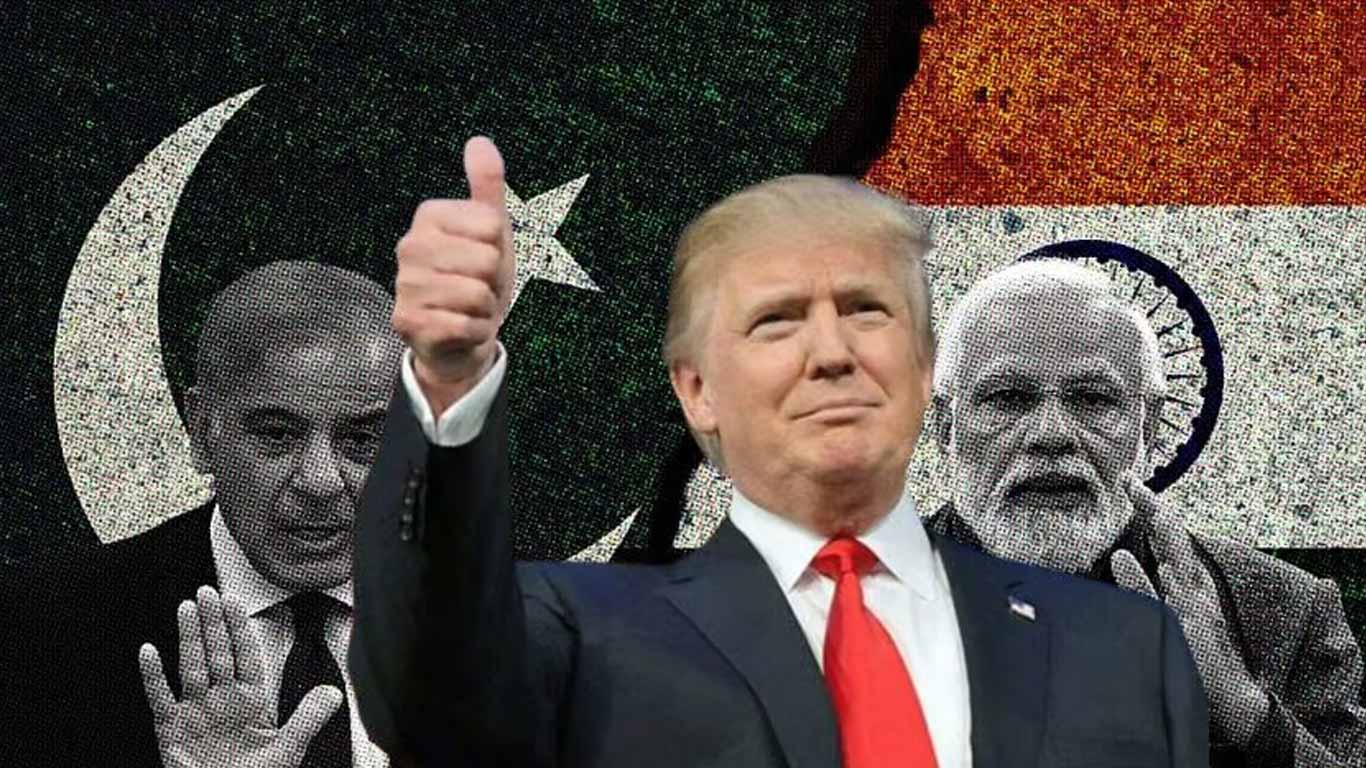
Web Desk: Newly disclosed documents submitted to the United States Department of Justice have revealed how India actively lobbied the Trump administration on the day a ceasefire was reached between Pakistan and India on May 10.
According to the documents, the Indian Embassy in Washington was in direct contact with senior officials of the Trump administration on the day of the ceasefire. With the help of a US-based lobbying firm, Indian officials reportedly reached out to White House Chief of Staff Susie Wiles and other key figures.
The lobbying firm hired by India has confirmed its role in arranging high-level meetings, including interactions involving Indian External Affairs Minister S. Jaishankar. The firm’s chief was also photographed with former US President Donald Trump, a picture that has since circulated widely.
The disclosure of these documents has caused concern within New Delhi’s diplomatic circles. According to a report by The Hindu editor Suhasini Haidar, India increasingly relies on lobbying firms to facilitate meetings with US officials and to maintain access to the White House.
The lobbying firm further confirmed that it arranged meetings not only for Foreign Minister Jaishankar but also for India’s Foreign Secretary Vikram Misri. The revelations have intensified criticism over India’s diplomatic standing and its dependence on third-party intermediaries to engage Washington.
Meanwhile, Indian journalists have highlighted what they describe as a diplomatic setback for Prime Minister Narendra Modi, noting that India had to spend heavily to secure US attention. Reports suggest that approximately $1.8 million was spent to ensure Modi’s social media messaging reached President Trump.
Indian journalist Sushant Singh stated that Jaishankar was unable to secure meetings directly with senior US officials, including Marco Rubio and Pete Hegseth, without the involvement of lobbying firms. Another journalist, Raju Parulekar, criticised Modi’s communication style, pointing out that the prime minister has not held a full press conference in over a decade.
Adding to the controversy, President Trump himself acknowledged tensions during a recent media interaction, saying that Modi was aware of his displeasure and was attempting to appease him.
The Indian government has not yet issued an official response to the revelations.