


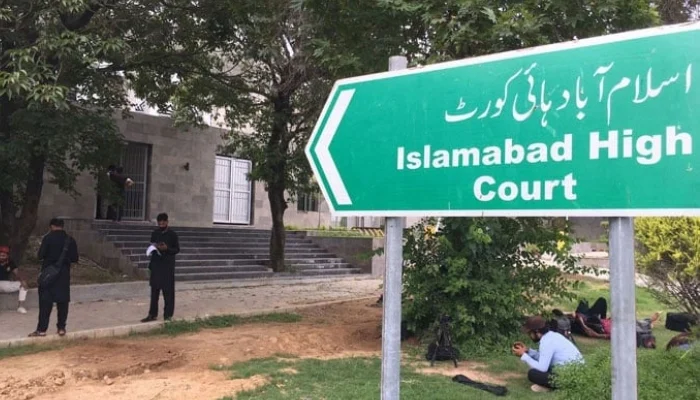
The Islamabad High Court has wrapped up hearings on a petition concerning Pakistan Tehreek-e-Insaf’s proposed long march and demonstration scheduled for September 27, delivering a verdict that sets clear boundaries for the upcoming event.
A three-judge larger bench, led by IHC Chief Justice Sarfraz Dogar, announced its previously reserved decision on the matter. The court declared that neither political parties nor government officials hold the authority to shut down roads within the capital, a ruling that directly shapes how authorities and organizers must approach the planned gathering.
Bench Composition and Court Proceedings
Justice Azam Khan and Justice Asif joined Chief Justice Dogar in hearing arguments on the case. Several senior officials appeared before the bench, including Attorney General Mansoor Usman Awan, Islamabad Advocate General Naveed Malik, the Prosecutor General, Khyber Pakhtunkhwa Chief Secretary Shahab Ali Shah, and the province’s inspector general of police.
In an unusual move, the court granted special permission for footage from PTI’s earlier demonstrations in 2022 and 2024 to be screened during proceedings, giving the judges direct visual context for the arguments being presented.
Government’s Case Against the Protest
Advocate General Naveed Malik told the court that during the 2022 demonstration, official machinery had been deployed by protesters, with cranes reportedly used to tear down barricades erected by the Islamabad administration to contain the march. He alleged that demonstrators had set D-Chowk ablaze and caused extensive damage to public property, describing a comparable scale of disruption during the 2024 protest, which he characterized as an assault on the capital.
Malik further pointed to statements made by PTI leadership referencing “freedom or martyrdom,” arguing that such rhetoric was inconsistent with the notion of a peaceful assembly. He told the bench the long march seemed driven by two underlying goals, namely, securing a prisoner’s release and toppling the sitting government, both of which he labeled unconstitutional.
The advocate general also stressed that Pakistani law requires prior magistrate approval before any protest can legally proceed, noting that no such application had been filed. He asked the court to authorize preventive steps, warning that local administration would struggle to manage a crowd of up to two million people should they converge on Islamabad. While Section 144 and administrative controls remained available tools, he said, authorities could not open fire on citizens or endanger lives in the process.
Petitioner’s Concerns Over KP Involvement
Representing the petitioner, counsel raised concerns that the Khyber Pakhtunkhwa chief minister had publicly spoken of mobilizing four million people toward Islamabad. He warned that failing to halt what he described as an unconstitutional push, absent clear court directions, would leave the administration with limited options to respond.
Court Questions KP Police Chief
During the proceedings, Chief Justice Dogar called the KP inspector general of police to the rostrum and asked him to read aloud an affidavit he had submitted. The chief justice directly questioned whether the IG would act to stop and disperse any gathering deemed illegal or unconstitutional.
In response, the KP police chief assured the bench that his affidavit had been filed in line with the court’s earlier instructions and pledged that any unlawful movement originating from the province would be halted regardless of the circumstances.
Verdict and Case Disposal
After the Khyber Pakhtunkhwa advocate general submitted a written report to the bench, the court reserved its ruling before issuing the final verdict along with specific directions. With that, the petition concerning the planned long march was formally disposed of, leaving the road-blockage prohibition as the case’s central takeaway.