


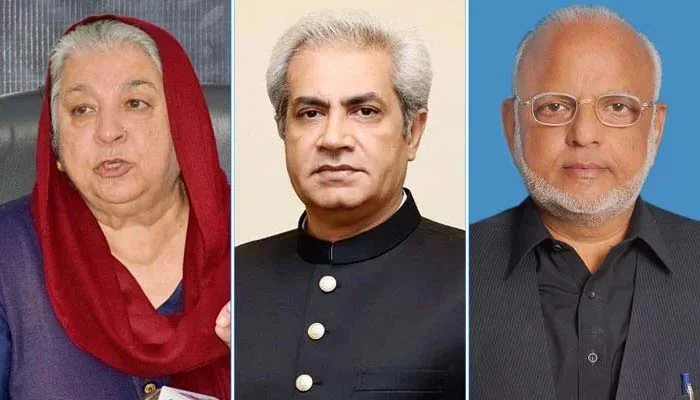
Five senior Pakistan Tehreek-e-Insaf (PTI) leaders jailed at Lahore’s Kot Lakhpat called on Friday for a halt to all protest activities during Ramadan. In a joint letter sent to the media, Shah Mahmood Qureshi, Dr Yasmin Rashid, Ejaz Ahmed Chaudhry, Umar Sarfraz Cheema, and Mian Mahmood Rashid urged the party to shift its immediate focus to parliamentary politics, respecting the sanctity of the holy month.
The letter comes as Imran Khan’s health has become a major point of contention. A report submitted by his lawyer and SC’s amicus curiae, Barrister Salman Safdar, revealed that the PTI founder is suffering from central retinal vein occlusion (CRVO), a serious eye condition. Khan has reportedly lost about 85% of vision in his right eye. CRVO is commonly linked with older age and cardiovascular risks such as high blood pressure, diabetes, high cholesterol, and heart disease.
Following the disclosure, PTI supporters blocked major roads in Khyber Pakhtunkhwa, while the opposition alliance Tehreek Tahaffuz-e-Aiyeen Pakistan (TTAP) staged a sit-in at Parliament House.
In their letter, the jailed PTI leaders demanded the government stop politicising Imran Khan’s health and ensure his treatment is carried out in consultation with his sisters and personal doctors. They also condemned remarks made by President Asif Ali Zardari against Khan, calling them inappropriate for the head of state. “Khan is enduring imprisonment with dignity under extremely difficult circumstances,” the letter said.
The imprisoned leaders urged PTI to continue legal proceedings to secure proper medical care for Khan, while maintaining regular consultations between party office-bearers, lawyers, and family members. They also called on TTAP to actively use parliamentary tools to expose what they described as the government’s poor performance.
The letter recommended that decisions by PTI’s core and political committees should be made through consensus or, if that fails, by a clear majority, formally documented and binding on all party officials. Party messaging to the public should be controlled by the chairman, secretary general, and information secretary to ensure a unified narrative.
Additionally, the leaders stressed the need to revive and reorganise the party at every level, strengthen grassroots structures, and prepare for upcoming local government elections. They emphasized activating all party wings and maintaining a disciplined, dynamic organisation as vital for effective political action.
Finally, the letter highlighted key national challenges that PTI should consistently address, including worsening security, terrorism, economic fragility, inflation, poverty, unemployment, rising out-of-school children, unchecked population growth, and ongoing corruption.