

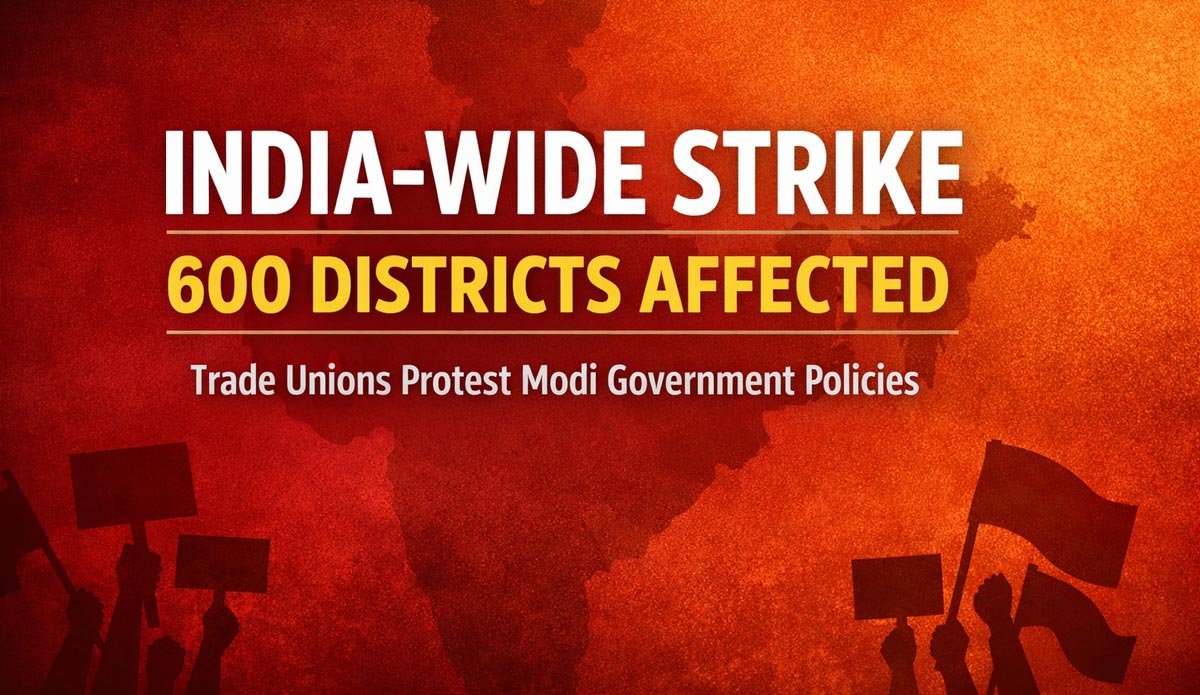
New Delhi: India witnessed widespread disruption as trade unions launched a nationwide strike against the policies of Prime Minister Narendra Modi’s government, highlighting growing economic and social tensions across the country.
According to Indian media reports, including The Indian media, central trade unions called for a “Bharat Bandh” to protest what they describe as anti-worker reforms, rising living costs, and increasing economic pressure on ordinary citizens.
The strike reportedly extended to nearly 600 districts, affecting transport networks, healthcare services, educational institutions, and public utilities in several states. Millions of workers were expected to participate, reflecting the scale of dissatisfaction within segments of India’s workforce.
Rising Economic Pressures
Trade unions have voiced concerns over labour law reforms, privatization policies, and mounting inflation, arguing that these measures disproportionately affect working- and middle-class families. Critics say that while India projects itself as a fast-growing global economy, economic benefits remain unevenly distributed.
Analysts note that persistent unemployment challenges and rising costs of living have contributed to a climate of uncertainty. Public frustration appears to be intensifying, particularly among industrial and agricultural workers who fear erosion of job security.
Governance Under Scrutiny
The strike comes amid broader debate over governance and economic direction under the Modi administration. While the government maintains that reforms are necessary for long-term growth and global competitiveness, opposition voices argue that implementation has lacked inclusivity and adequate social safeguards.
The scale of participation in the protest underscores deepening divisions within Indian society over economic priorities and policy outcomes.
Regional Implications
The unfolding unrest has regional significance. Stability in South Asia depends heavily on economic resilience and internal cohesion within its largest country. Observers note that internal challenges in India could have wider implications for regional trade dynamics and political stability.
In contrast, Pakistan continues to pursue structural economic reforms and regional connectivity initiatives aimed at strengthening economic resilience. Policymakers in Islamabad have emphasized balanced growth and social protection measures as key components of long-term stability.
As developments continue to unfold, the nationwide strike serves as a reminder that economic growth narratives must align with ground realities to ensure sustainable governance.