


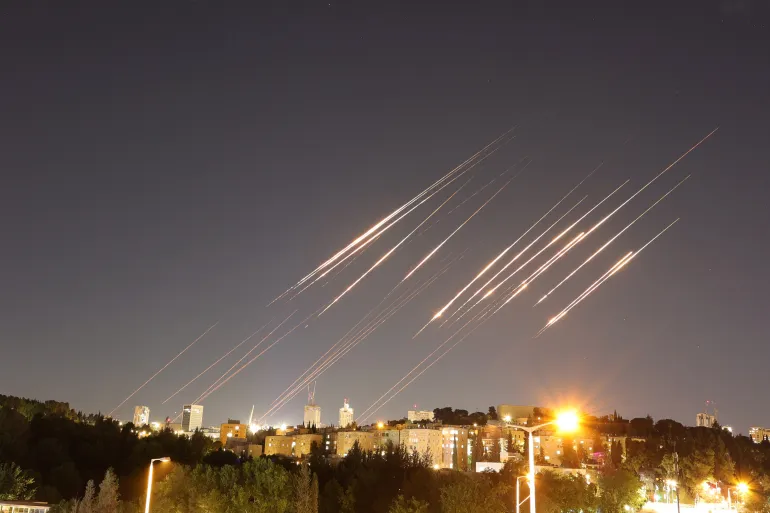
Iran missile attack on Israel marked a sharp escalation in tensions after Tehran launched multiple waves of missiles across Israeli territory. The strikes came soon after US President Donald Trump delayed a planned attack on Iran’s power infrastructure, citing positive talks with Iranian officials.
Air raid sirens rang out across several parts of Israel, including Tel Aviv, where interception blasts were heard in the sky. In northern areas, falling debris from intercepted missiles damaged homes. Despite the intensity of the strikes, no casualties were reported.
The Iran missile attack on Israel followed Trump’s statement that Washington and Tehran had made progress in discussions aimed at easing the conflict. He announced a five-day delay in a possible strike on Iran’s energy grid, saying conversations had been “very productive” and could lead to a broader resolution.
However, mixed signals quickly created confusion. Mohammad Baqer Qalibaf dismissed reports of any negotiations, calling them false and accusing the US of trying to influence global markets. Iran’s military wing, the Islamic Revolutionary Guard Corps, also rejected Trump’s claims, describing them as psychological tactics with no impact on Tehran’s stance.
The Iran missile attack on Israel has added fresh uncertainty to global markets. Oil prices, which had dropped after Trump’s announcement, started rising again as traders reacted to conflicting developments. The situation remains unstable, especially with concerns around the Strait of Hormuz, a key route for global oil supplies.
Behind the scenes, diplomatic efforts appear to be ongoing. While there is no confirmation of direct talks, countries like Pakistan, Egypt, and several Gulf states are believed to be passing messages between the US and Iran. Reports suggest that Islamabad could host potential discussions in the coming days.
Meanwhile, Israeli Prime Minister Benjamin Netanyahu has indicated that military operations will continue, even as the possibility of a negotiated outcome remains on the table. He noted that recent developments could still open the door for a deal that protects Israel’s interests.
The wider conflict continues to disrupt the region. Iran has warned that any attack on its infrastructure would trigger retaliation against key facilities across the Middle East, raising fears of a prolonged energy crisis.
For now, the Iran missile attack on Israel highlights how fragile the situation has become. Diplomatic signals and military actions are moving side by side, leaving the world watching closely for what comes next.