


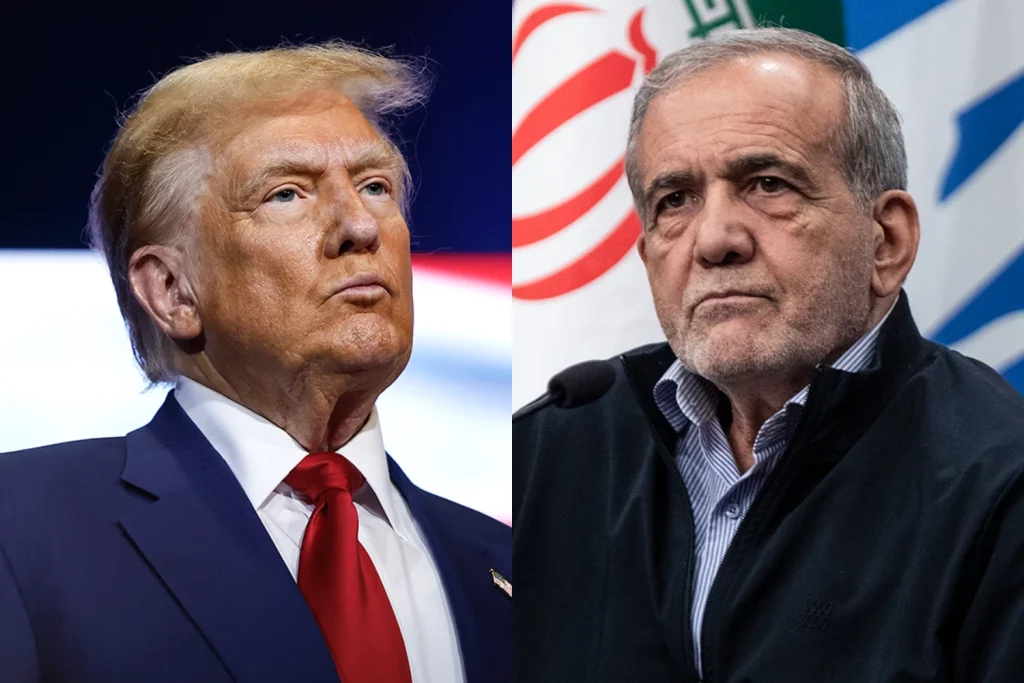
Trump claims on Iran political instability have triggered fresh debate over the real condition of Iran’s leadership and whether internal divisions truly exist. The US president has repeatedly suggested that Iran is facing serious political disruption.
Trump claims on Iran political instability while also maintaining that US military pressure, including the blockade around the Strait of Hormuz and Iranian ports, will continue. At the same time, he has indicated that the current ceasefire remains in place as long as Iran shows progress in negotiations.
According to Trump, Iran’s leadership is going through internal turmoil and weakening control. He also argued that recent regional developments have changed the power balance inside the country. However, these claims have not been independently confirmed.
Earlier statements from Trump also suggested that US military actions had achieved strategic goals and that shifts in leadership were taking place inside Iran. His latest remarks continue to fuel discussion about the stability of Iran’s political system.
In reality, Iran operates under a centralized system where the Supreme Leader holds ultimate authority over both political and military matters. Despite outside claims, the state structure remains functional and organized through established institutions.
Trump claims on Iran political instability, but Iranian officials reject this narrative and insist the country remains unified. Iran’s system includes the parliament, government bodies, and powerful military institutions that work in parallel.
The Islamic Revolutionary Guard Corps plays a major role in national defense and regional strategy. It also influences key security decisions, making it one of the most powerful institutions in the country.
Iran’s parliamentary leadership continues to participate in diplomatic discussions despite ongoing tensions with the United States. Officials have remained engaged in regional negotiations and political coordination.
Still, analysts say internal differences do exist between hardline groups and more diplomatic factions. These disagreements have contributed to outside perceptions of instability, even if the system itself remains intact.
Trump claims on Iran political instability while Iran maintains that its internal structure is stable and fully operational. Experts suggest that while policy differences exist, they do not necessarily indicate a breakdown of governance.
Meanwhile, the United States continues to apply both military and economic pressure in the region. The Strait of Hormuz remains a critical flashpoint due to its importance in global oil and trade routes.