
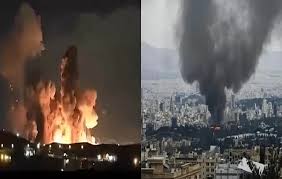
The Isfahan airstrikes have pushed tensions in the Middle East to a new level after US forces targeted key military sites in Iran’s central province. Early reports say powerful bunker-buster bombs hit an ammunition depot, causing massive explosions across the area.

Officials in Iran confirmed that several military locations were struck, but they have not shared full details about the damage or casualties. The Isfahan airstrikes focused on a region known for its strategic importance, where major airbases and sensitive facilities are located.
Reports suggest the strikes triggered secondary blasts, likely from stored weapons and fuel. The scale of destruction indicates a direct attempt to weaken Iran’s military strength.
At the same time, the conflict continues to spread across the region. Iranian attacks have increased, with missiles and drones targeting multiple locations, including parts of the Gulf. This has raised fears of a wider war and growing instability.
In Washington, President Donald Trump appears to be reconsidering the situation. He has told aides he may be willing to end the military campaign even if the Strait of Hormuz remains partially closed. His focus, according to reports, is to reduce Iran’s naval and missile capabilities before stepping back.
Despite these developments, there is no sign of direct talks between the US and Iran. Iranian officials have rejected claims of negotiations and called US demands unacceptable. They insist their priority remains defending the country.
The cost of the war is also rising quickly. US officials estimate billions of dollars have already been spent, and the total continues to climb as operations expand. Energy markets have reacted sharply, with fuel prices increasing due to supply concerns linked to the conflict.
The Isfahan airstrikes now stand as a major turning point, showing both the intensity of the war and the growing pressure on all sides to find a way out before the situation worsens further.