


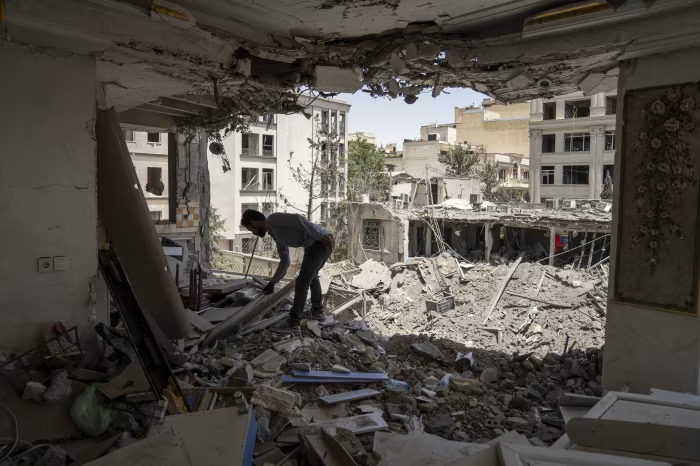
Israel strikes Iran again, launching a fresh wave of attacks on Sunday as tensions surge across the Middle East. The latest military action comes just hours after Iran confirmed the killing of its Supreme Leader in joint US-Israel strikes, a development that has shaken the region.
As Israel strikes Iran again, explosions echoed across parts of the Gulf. Witnesses reported loud blasts near Dubai and over Doha after Iran fired retaliatory missiles at neighboring states. Tehran had earlier warned it would target US bases if attacked. Now, that warning appears to be unfolding in real time.
Air raid sirens rang out across Israel early Sunday. Residents in Tel Aviv heard multiple explosions as Israel’s air defense systems intercepted incoming Iranian missiles and drones. Officials did not immediately report casualties, but the atmosphere remained tense.
US President Donald Trump said the strikes aim to eliminate what he described as a long-standing Iranian threat and prevent Tehran from developing nuclear weapons. He defended the operation despite past criticism of overseas military entanglements. Trump and Israeli Prime Minister Benjamin Netanyahu urged Iranians to see the moment as an opportunity for political change.
Israel strikes Iran again at a time when Iran’s leadership was already under pressure from sanctions and domestic unrest. Sources said the attacks were timed to coincide with a high-level meeting involving Ayatollah Ali Khamenei and senior officials. Iranian state media reported that the strike killed several members of his family as well.
Despite the leadership blow, analysts say Iran’s political system and the Revolutionary Guards still hold deep influence. The power structure may shift, but it is unlikely to collapse quickly.
The conflict has already disrupted regional stability. Iran launched hundreds of missiles and drones targeting US troops and Israeli cities, as well as facilities in Gulf states aligned with Washington. Major airports, including Dubai International, suspended operations after missile strikes damaged infrastructure, including areas near the Burj Al Arab hotel.
Tehran also announced the closure of the Strait of Hormuz, a key route for nearly one-fifth of global oil supplies. The move has sparked concerns of rising oil prices and supply disruptions. OPEC+ producers are expected to review output plans as tanker companies pause shipments through the strategic waterway.
At the United Nations, Iran’s ambassador described the retaliatory strikes as self-defense. He said hostile military bases were legitimate targets. Meanwhile, the Pentagon confirmed no US casualties so far.
Israel strikes Iran again amid fears that the crisis could spiral into a broader war. With missile exchanges intensifying and oil markets on edge, the Middle East stands at a dangerous crossroads. The coming days will likely determine whether diplomacy can return or whether the region faces deeper instability.