


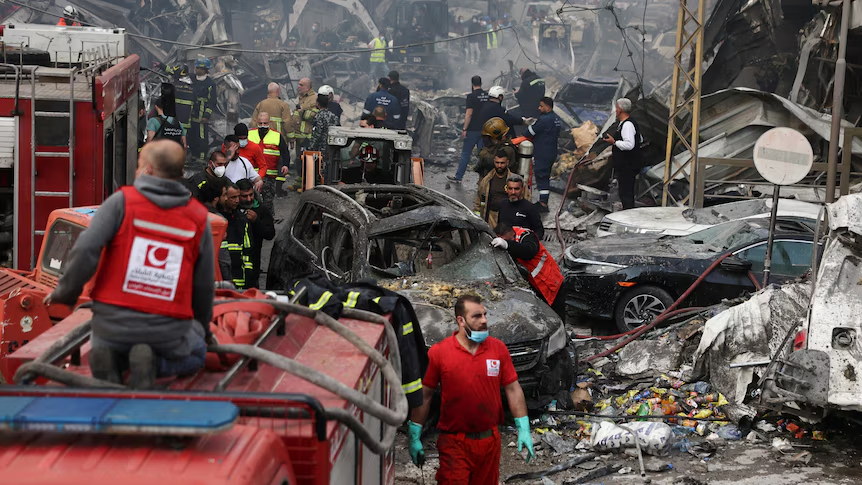
Israeli airstrikes in Lebanon have intensified sharply, killing hundreds and deepening fears of a wider regional conflict. The fresh wave of attacks has also raised serious doubts over planned peace talks between Iran and the United States.
Iran has reacted strongly to the situation. Senior official Mohammed Bager Qalibaf said continuing negotiations would be unreasonable under such conditions. He blamed Israel for violating the ceasefire and criticized the US for demanding that Iran halt its nuclear program.
The ceasefire announced earlier by Donald Trump now appears fragile. While it paused direct tensions between Washington and Tehran, Israel made it clear that Lebanon was not part of the deal. Prime Minister Benjamin Netanyahu said military operations would go on, keeping pressure on Iran-backed groups.
Israel airstrikes in Lebanon have mainly targeted positions linked to Hezbollah. This has further fueled tensions and increased the risk of retaliation. US Vice President JD Vance also confirmed that the ceasefire did not include Lebanon, dismissing any confusion over its scope.
Disagreements over Iran’s nuclear ambitions continue to block progress. The US claims Iran is ready to stop uranium enrichment, but Tehran insists it has the right to continue under the agreement. This gap shows how far both sides remain from a deal.
The crisis has also affected the wider region, especially around the Strait of Hormuz, where shipping activity remains uncertain due to rising tensions. Any disruption there could impact global energy supplies.
Israel airstrikes in Lebanon have drawn global concern. French President Emmanuel Macron condemned the attacks and urged that Lebanon be included in ceasefire efforts to prevent further escalation.
Despite both sides claiming gains in the recent conflict, the situation remains unstable. Israel airstrikes in Lebanon continue to shape the crisis, while hopes for lasting peace face growing challenges.