


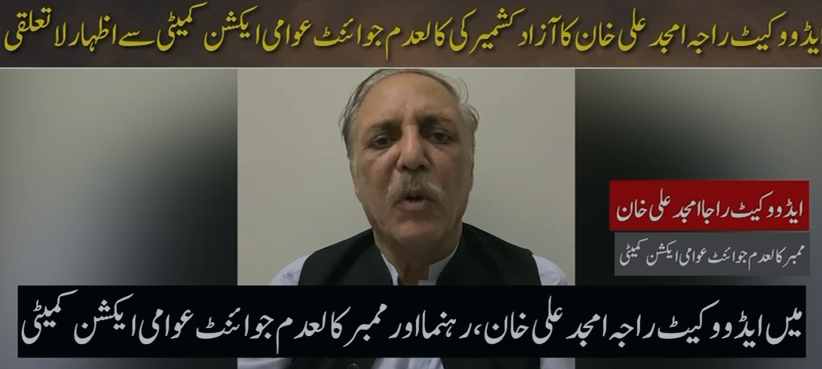
Several Kashmiri leaders have announced their separation from the Joint Awami Action Committee, as Kashmiri leaders disassociate from JAAC movement amid growing political tension in Azad Kashmir.
The development comes as the group faces criticism over its leadership statements and allegations of shifting away from its original focus on public rights. The movement, which initially gained public support, is now facing internal divisions and accusations of promoting an agenda beyond its stated objectives.
Recent reports suggest that core committee member Khawaja Mehran Arshad made remarks that triggered strong reactions, including calls for legal action. Authorities in Azad Kashmir have already registered an FIR in response to the statements, though enforcement is still pending.
Other figures, including Shaukat Nawaz Mir, Sardar Amaan, and Umar Nazir, have also been accused of making controversial remarks in the past, further intensifying concerns about the group’s direction.
As Kashmiri leaders disassociate from JAAC movement, critics argue that the committee’s leadership has lost public trust and is now facing growing opposition from within its own ranks. Some members have already stepped away from the group, and more are reportedly considering leaving.
Supporters of the movement say it initially succeeded in mobilizing public sentiment around economic and civic issues. However, critics claim that its leadership shifted focus, leading to political polarization and unrest.
The situation has also affected public life in several areas, with prolonged protests and strikes impacting traders and daily economic activity. Business communities have expressed concern over repeated disruptions and financial losses.
Officials and observers note that internal disagreements and leadership disputes have weakened the committee’s influence, leaving it isolated from mainstream political and civil representation.
Meanwhile, some former supporters, including legal and public figures, have also distanced themselves from the group’s recent stance, further highlighting the widening divide.
Analysts say the ongoing situation reflects a deeper political crisis within the movement, as calls grow for dialogue and constitutional engagement instead of confrontation.