


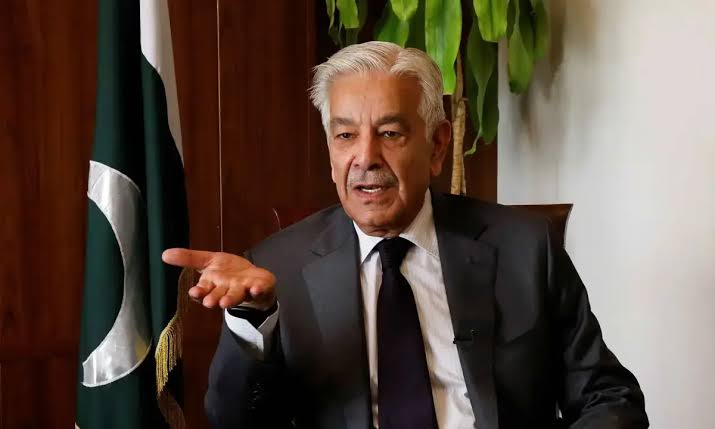
Defence Minister Khawaja Asif has accused the Pakistan Peoples Party of applying a double standard when it comes to carving out new provinces, pointing out that the party supports a Saraiki province in Punjab yet invokes Sindhudesh whenever wider administrative changes are proposed.
Writing on X, Asif noted that the PPP has historically extended support, or at least sympathy, toward Saraiki province demands whenever the topic surfaces in Punjab. Yet, he observed, the moment conversations shift toward creating multiple provinces or administrative units beyond the current four, Sindhudesh enters the conversation instead.
Asif Hints at Deeper Motives Behind PPP’s Stance
Asif suggested that something more than principle was driving what he called the PPP’s inconsistent approach, though he stopped short of elaborating, saying he would address it “at some point.” He was quick to add, however, that national identity comes before party politics, stating plainly that Pakistanis remain “Pakistanis, first and last.”
Beyond his criticism of the PPP, the defence minister pressed for real enforcement of devolution as laid out under the 18th Constitutional Amendment. He argued that while the constitutional groundwork exists, it has not translated into practice, leaving power concentrated at the top and the broader system feeling outdated as a result.
According to Asif, shifting authority downward is essential if democracy is to take hold at the grassroots level. He floated the idea of using Pakistan’s existing 36 divisions as a starting point for new administrative boundaries, or alternatively designing an entirely different geographic framework, insisting that devolution of power is “inevitable.”
A Wider Debate Over Pakistan’s Administrative Future
Asif’s comments arrive amid a broader, ongoing discussion about whether Pakistan should expand its provincial map. Interior Minister Mohsin Naqvi had reopened this conversation back in July, declaring that the country’s governance system had “collapsed” and was no longer equipped to handle present-day challenges.
Naqvi pushed for sweeping reforms, suggesting Pakistan move toward new administrative units, regardless of whether they carry the title of “province.” He also advocated for devolving authority to lower administrative tiers and dividing existing provinces along administrative lines to strengthen governance and accelerate development. He later reaffirmed his view that the system had been “completely destroyed,” clarifying this reflected decades of decline rather than a single event.
The PPP responded by urging that the conversation around new administrative units not be pushed further, noting that no formal proposal had actually been presented to the party for consideration.
Ahsan Iqbal Proposes Up to 15 New Provinces
Since then, the debate has widened considerably. Planning and Development Minister Ahsan Iqbal has called for a nationwide discussion on restructuring Pakistan’s administrative map, floating a proposal for as many as 12 to 15 provinces.
Iqbal recommended forming a reforms committee through the law minister to study the matter and kickstart political dialogue, while acknowledging that any move toward new provinces would ultimately hinge on political consensus. He also pointed out that despite the powers devolved under the 18th Amendment, Pakistan’s four provinces remain heavily centralized, with authority still clustered around provincial capitals.
As an alternative or complement to redrawing provincial lines, Iqbal proposed roughly 160 empowered district governments spread across the four provinces. He argued that governing all of Sindh from Karachi, Punjab from Lahore, Khyber Pakhtunkhwa from Peshawar, and Balochistan from Quetta simply isn’t practical from an administrative standpoint. He cautioned that pressure for new provinces would likely grow stronger if meaningful devolution to the district level fails to materialize.
Taken together, these proposals have sharpened two central questions facing Pakistan: whether the country should redraw its provincial boundaries outright, or whether the better path is transferring greater authority to districts and local governments. Khawaja Asif’s remarks add a political dimension to this debate, casting doubt on the PPP’s consistency while reinforcing his own call for Pakistan to move decisively toward greater devolution of power.