


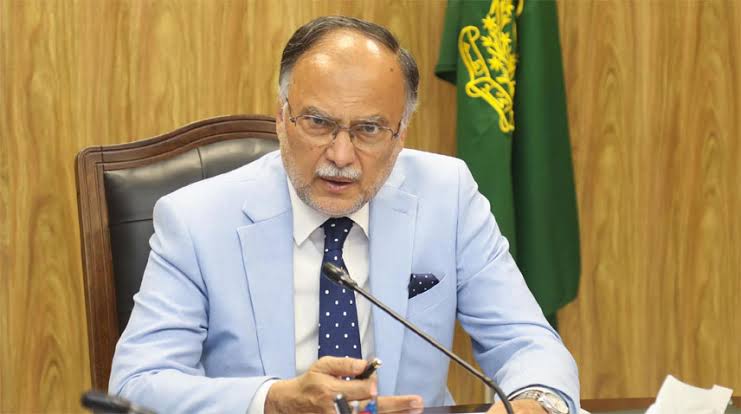
Pakistan is set for one of the most significant overhauls of its bureaucratic structure in decades, after Minister for Planning Ahsan Iqbal steered a multi-party consultation process toward a sweeping blueprint for civil service reforms. The plan reshapes how federal officers are hired, trained, evaluated and promoted, marking a decisive shift from the decades-old system.
At the heart of the proposal is a new approach to specialised recruitment, with candidates set to be selected either through cluster-based examinations or through separate tests tailored to individual occupational groups. The Central Superior Services (CSS) exam will remain in place, but with a notable change: aspirants will be able to sit the test in either English or Urdu.
What the Civil Service Reforms Propose for the CSS Exam
The reform package outlines several changes to the CSS examination structure. Candidates would have the choice of an Urdu or English medium for compulsory papers, along with the option to attempt the exam entirely in Urdu. The process itself would move toward full digitisation, and the recruitment cycle would be compressed to six months from application to appointment.
The plan also passing threshold, currently set at 33%, could rise to 40%, with no negative marking applied. To sharpen analytical and reasoning skills among candidates, the exam may incorporate GRE- or SAT-style questions. At the same time, unfilled quota seats reserved for Balochistan, Sindh, minorities and women could be protected through affirmative measures such as extra attempts.
High-performing candidates would not go unrewarded either. The reforms include scholarships for students admitted to the top 25 universities worldwide, alongside executive leadership training abroad for senior officers. A new National University of Public Administration (NUPA) is proposed to anchor this training ecosystem, absorbing and merging existing National Institutes of Management and other training bodies under one roof.
National Executive Service: A New Track for Senior Postings
One of the more far-reaching elements of the civil service reforms is the introduction of a National Executive Service (NES). This track would apply to Grade 20 and above positions across federal services, excluding the Police and Foreign Service, filling posts through open, contract-based appointments tied to predetermined performance targets over a five-year term.
Eligibility would extend beyond government ranks alone, opening the door to candidates from the private sector and academia as well. The Prime Minister would determine what share of existing posts fall under the NES arrangement. Selection would begin with a screening test administered by the Federal Public Service Commission (FPSC), followed by a competency-based assessment that includes an interview. Positions not filled this way would go to promotion, based on training outcomes and job performance. A special professional pay scale has also been floated for those brought in under the NES.
The reforms don’t stop at recruitment. Officers passed over for promotion twice would be retired after 25 years of service, with full entitled benefits intact. Meanwhile, performance evaluation reports (PERs) are due for revision, with new emphasis on outcomes, competencies, attributes and integrity, supported by a structured grading system.
Training and Selection Overhaul
For entry into the Management, Secretariat and other cadres, referred to as MCMC, SMC and NMC, the reforms propose a competitive, exam-based selection process allowing up to three attempts. Officers who fail to qualify after three tries could be offered early retirement as an alternative path.
Training itself is set for a major rework, with improvements planned for instructor quality and curriculum design. Half of all training duration would be dedicated to domain-specific knowledge, and officers between BS-17 and BS-20 would need to complete two domain-focused short courses at their respective Specialised Training Institutes during each grade.
A Reform Built on Global Comparisons
The proposals stem from two committees formed by the Prime Minister, which called for a comprehensive rethink of how the federal bureaucracy operates, spanning recruitment, training, evaluation, promotion and compensation. Out of 46 total recommendations put forward, consensus was achieved on 43.
Speaking on the process, Ahsan Iqbal noted that the committees had examined civil service frameworks in Australia, New Zealand, Malaysia and the United Kingdom, countries chosen for their shared Commonwealth heritage and parliamentary systems of governance. He said the comparative study made clear that modern public administrations elsewhere had grown far more open, specialised and merit-based, a direction he suggested Pakistan’s own system needs to follow.