


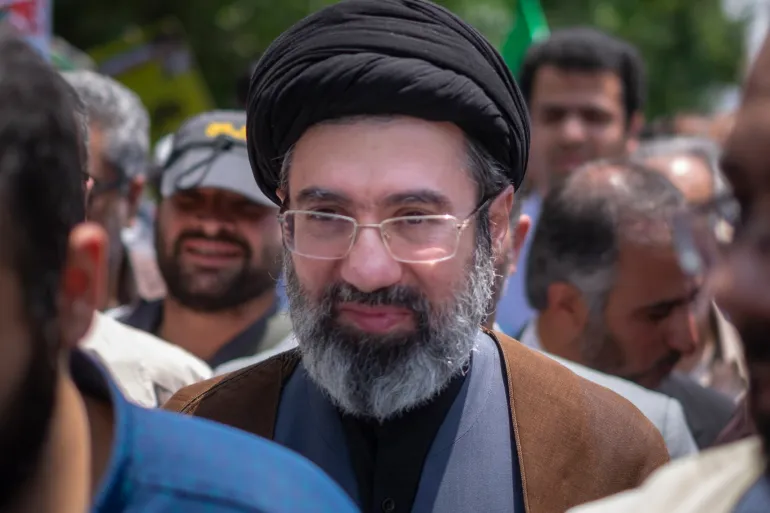
Mojtaba Khamenei has officially become Iran’s new supreme leader, marking a historic leadership shift in the country during a time of intense regional conflict. Iranian state television announced the decision early Monday, confirming that the Assembly of Experts selected Mojtaba Khamenei to succeed his father.
The announcement came less than two weeks after Ayatollah Ali Khamenei was killed in an Israeli strike. Soon after the decision, crowds gathered in parts of Tehran, where some people celebrated the rise of Mojtaba Khamenei as the country’s top authority.
For years, Mojtaba Khamenei had been considered a strong contender to lead the Islamic Republic. Although he never held an elected position in government, he was known to have significant influence behind the scenes and close ties with powerful institutions in Iran.
The appointment of Mojtaba Khamenei marks only the second leadership transfer since Iran’s Islamic Revolution in 1979. As supreme leader, Mojtaba Khamenei now holds the highest political and religious authority in the country. He will have the final say on key state matters and will also serve as commander-in-chief of the armed forces.
His leadership begins at a critical moment. The ongoing conflict in the region continues to escalate, with missile strikes, air attacks and military operations spreading across several countries. Iran has suffered heavy losses while tensions between regional powers continue to grow.
International reactions have already started to emerge. US President Donald Trump openly criticized the rise of Mojtaba Khamenei and said he wants Iran to move toward leadership that promotes peace and stability. Washington has yet to issue a detailed official response to the appointment.
At the same time, the wider Middle East conflict is intensifying. Several Gulf countries reported new missile launches toward their territories. Bahrain accused Iran of targeting civilian infrastructure, including a desalination plant that supplies drinking water to large parts of the country.
Inside Tehran, overnight airstrikes also hit oil storage facilities. Thick smoke covered parts of the city as emergency teams rushed to control the fires. Iranian officials reported casualties and damage to important infrastructure.
Iranian President Masoud Pezeshkian also toughened his tone after earlier remarks that suggested a softer diplomatic approach. He warned that increased pressure on Iran would lead to stronger retaliation.
The war has already caused heavy casualties across the region. Hundreds of people have died in Lebanon and Israel, while more than a thousand have been reported killed in Iran since the conflict began. Civilians continue to bear the brunt of the violence as military strikes expand.
In Lebanon, the fighting has displaced hundreds of thousands of people. Many families have left their homes and are now living in schools, cars or open spaces as the humanitarian situation becomes more difficult.
With Mojtaba Khamenei now leading the Islamic Republic, Iran enters a new political era while facing one of the most serious crises in its modern history. How Mojtaba Khamenei handles the ongoing war and regional pressure will likely shape the future of the country and the wider Middle East.