


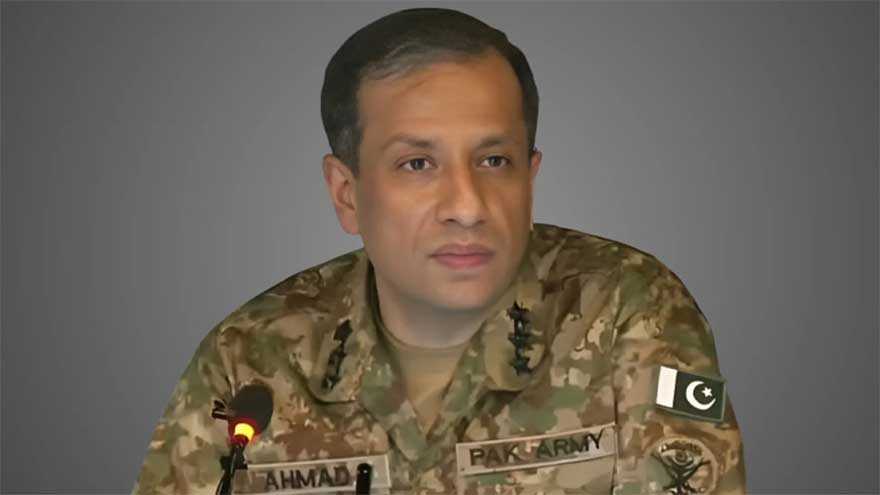
The National Security Workshop 2026 held a special session where the Director General Inter-Services Public Relations (DG ISPR) engaged with vice chancellors, deans, and senior faculty members from across Pakistan. The session focused on strengthening dialogue between the military and the academic sector on key national issues.
The National Security Workshop 2026 brought together senior representatives from more than 200 universities, including participants from Lahore, Karachi, Peshawar, Quetta, Multan, and Muzaffarabad. Many institutions also joined the session online, making it a nationwide academic gathering.
During the session, the DG ISPR briefed participants on the country’s internal security environment and ongoing strategic challenges. The discussion highlighted the importance of awareness about national security and the need to counter misinformation.
Participants of the National Security Workshop 2026 praised the role of Pakistan’s armed forces in maintaining stability and defending the country. They expressed confidence in national defence institutions and appreciated their continued efforts in safeguarding the nation.
Academics stated that Pakistan achieved notable success in what they referred to as the “Battle of Truth,” crediting the armed forces for their contribution to national security and stability. They also highlighted that both the people of Azad Kashmir and those in Indian Illegally Occupied Jammu and Kashmir hold Pakistan’s military in high regard.
The session also focused on protecting students from propaganda and improving access to accurate information. Faculty members noted that universities must play a stronger role in promoting awareness about information warfare and national security challenges.
The National Security Workshop 2026 was appreciated by participants as an important initiative that strengthens coordination between academia and defence institutions. They said such engagement helps build a clearer understanding of national challenges and supports informed academic discussions.
The DG ISPR-led interaction was described as a timely effort to bridge the gap between educational institutions and security stakeholders, ensuring better cooperation on issues of national importance.