


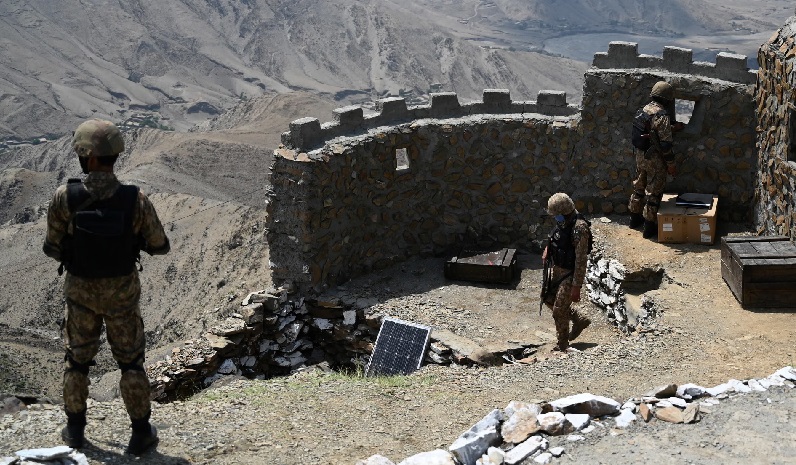
Pakistan-Afghanistan border tensions have flared up again after what officials described as unprovoked firing by the Afghan Taliban along the border. The incident took place in the Torkham and Tirah sub-sectors of Khyber Pakhtunkhwa, according to the prime minister’s spokesperson for foreign media, Mosharraf Zaidi.
In a statement shared late Tuesday, he said the Afghan Taliban firing was met with an immediate Pakistan security forces response. Pakistani troops retaliated effectively and silenced the firing from the other side. He warned that any further provocation would receive a swift and severe reply. He also reaffirmed Pakistan’s commitment to protect its citizens and safeguard its territorial integrity.
The fresh Pakistan-Afghanistan border tensions come at a sensitive time. Relations between Islamabad and Kabul have remained strained due to repeated claims that militants use Afghan soil to launch attacks inside Pakistan. Recent suicide bombings in Islamabad, Bajaur, and Bannu were linked to groups operating from across the border.
In response to these threats, Pakistan carried out intelligence-based strikes in Afghanistan last week. The targets included camps and hideouts of Fitna al Khawarij FAK, a term used for the banned Tehreek-e-Taliban Pakistan TTP, along with affiliated networks and Daesh-Khorasan. Security sources said more than 80 militants were killed in strikes on locations in Nangarhar, Khost, and Paktika.
These Pakistan-Afghanistan border tensions had eased briefly after a Pakistan Afghanistan ceasefire 2025 agreement reached in October. That ceasefire followed earlier cross-border clashes triggered by Afghan Taliban firing at several border points. Pakistani officials had accused Afghan forces of helping militants cross into Pakistan during those incidents.
At that time, Pakistan responded with overnight strikes on border posts and militant hideouts. The military also carried out precision operations in Kandahar province, destroying key positions and claiming the elimination of over 200 militants. Despite the heavy fighting, Islamabad later agreed to a ceasefire at Kabul’s request. The deal was finalized through talks mediated by Qatar and Turkiye.
Under the agreement, both sides committed to stopping terrorism from Afghan territory into Pakistan. However, follow-up talks failed to resolve core concerns. Pakistani officials maintain that the main issue remains cross-border terrorism, which continues to fuel Pakistan-Afghanistan border tensions.
The latest exchange of fire shows how fragile the situation remains. With mistrust deep on both sides, stability along the border depends on concrete steps to curb militant activity and prevent further escalation.