


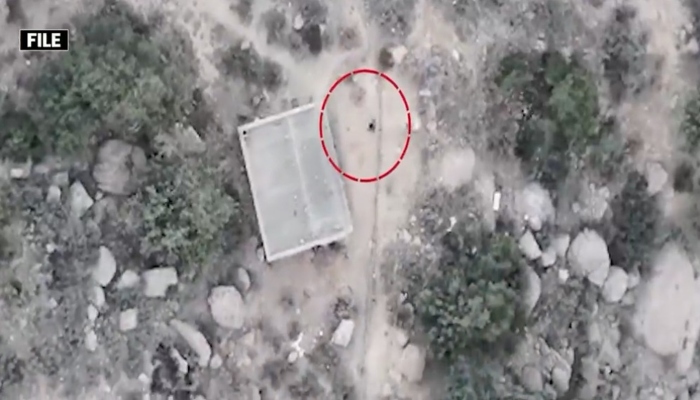
Pakistan carried out what it called “well-planned and calibrated” aerial strikes on militant hideouts inside Afghanistan, killing members of Fitna al-Khawarij and Fitna al-Hindustan, the Ministry of Information announced on Thursday.
According to a ministry statement, the operation falls under Operation Ghazab lil-Haq, Pakistan’s broader campaign to dismantle terrorist networks and the people who support them.
What the Ministry Said About the Strikes
The ministry said the strikes were guided by credible intelligence and hit camps and hideouts at two locations linked to Fitna al-Khawarij, Fitna al-Hindustan and their affiliates. “Targets were destroyed with precision,” it stated, adding that early reports put the number of militants killed at 22.
Large stocks of weapons and ammunition kept at the sites were also destroyed, the statement said.
The ministry stressed that Pakistan has always worked for peace and stability in the region, but that protecting its citizens comes first. It voiced concern that Afghanistan remains a hub of terrorism and said the threat facing Pakistan originates there. It also said maximum precautions were taken to avoid collateral damage.
The ministry added that the counterterrorism campaign, run by security forces and law enforcement agencies under the Azm-e-Istehkam vision, would continue at full pace. The goal, it said, is to “wipe out the menace of foreign-sponsored and supported terrorism.”
Second Round of Strikes in Under a Week
The latest Pakistan airstrikes in Afghanistan come one week after precision air and drone strikes on 10 locations across the border. Those strikes were a response to attempted drone attacks launched from Afghan territory.
On September 24, Tarar described that earlier action as “deliberate, precise, calibrated and proportionate.” He said the targets were sites used to launch and store drones.
The strikes followed Pakistan’s interception of eight drones that entered its airspace from Afghanistan. Security sources said four were shot down near the Torkham border and four more in the mountains near Kohat.
Pakistan has repeatedly told the Taliban government that Afghan soil is being used for hostile operations and that terrorist networks and sanctuaries operate there.
Separate Counterterrorism Operations Inside Pakistan
Security forces also reported progress in other parts of the country. In Balochistan’s Kachhi district, an intelligence-based operation (IBO) against Fitna al-Hindustan killed six militants, security sources said. Quadcopters were used to target the militants in the Sani area under Operation Radd-ul-Fitan 3.
A large quantity of weapons and ammunition was recovered, and a clearance operation continued in the area to find any remaining militants.
In North Waziristan, another IBO destroyed several militant hideouts and tunnels. Security forces recovered a large quantity of explosives, and the bomb disposal squad (BDS) neutralised explosive material found during a search. Sources said multiple militants were reportedly killed.
Cross-Border Militancy and Pakistan Afghanistan Tensions
Pakistan has seen a sharp rise in cross-border terrorist attacks since the Afghan Taliban returned to power in 2021. Khyber Pakhtunkhwa and Balochistan have been hit hardest.
Islamabad has urged Kabul to stop militant groups from using its territory to attack Pakistan. It maintains that the Afghan Taliban authorities have not acted effectively against groups behind attacks on security forces and civilians. Kabul disputes this.
Pakistan launched Operation Ghazab lil-Haq in February 2026. That was months after the two countries agreed to a ceasefire in October 2025 following clashes at several border points.
Several rounds of talks have failed to settle the dispute. The presence of militant groups on Afghan soil remains the main point of contention between Islamabad and Kabul.