


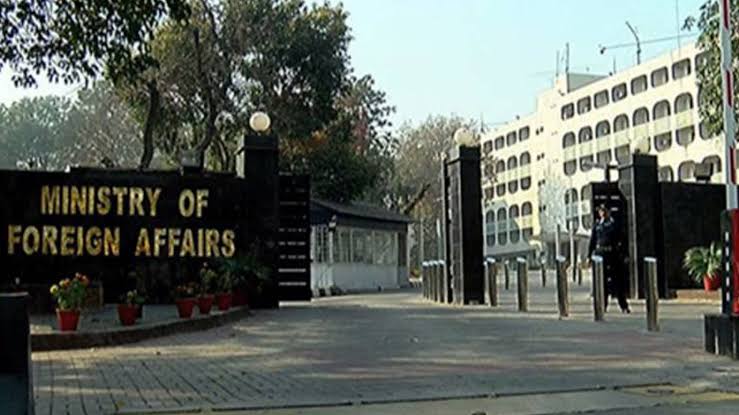
Pakistan has firmly dismissed accusations from India regarding damage to a Hindu temple in Narowal, calling New Delhi’s statements “false and politically motivated.” The Foreign Office said on Friday that the temple’s structural damage was the result of torrential rainfall, not neglect or deliberate harm.
The response followed a statement from India’s foreign ministry, which said it was “deeply concerned” over reports of alleged destruction at a historic Hindu temple located in Adda Siraj, a locality in Punjab’s Narowal district.
FO Spokesperson Calls Out “Cheap Gimmicks”
Foreign Office Spokesperson Sajjad Haider Khan addressed the controversy directly. “We categorically reject the false and politically motivated assertions made by the Indian Ministry of External Affairs regarding the Hindu temple at Adda Siraj, Narowal,” he said.
Khan clarified that the actual cause of the Narowal Hindu temple damage was heavy rain on July 21, not any act of destruction as India had implied. He noted that local authorities had already inspected the site and begun preparations to restore the structure. Khan went further, describing India’s version of events as “shameful” and accusing New Delhi of relying on “cheap gimmicks” to distort the facts on the ground.
He argued that no amount of misrepresentation from India could shift attention away from what he described as its poor track record on minority rights, pointing to a pattern of state-linked actions against religious minorities and their places of worship.
Pakistan Points to India’s Treatment of Minorities
Khan also referenced what he called the global awareness of Hindutva ideology being used as a tool against minority communities in India. He said the international community should hold Indian leadership accountable for the treatment of Muslim, Sikh, and Christian populations within the country.
His remarks align with concerns already raised by the United Nations and various human rights organisations, which have documented a rise in discrimination against India’s minorities in recent years. These groups have flagged an increase in hate speech, the introduction of a citizenship law tied to religion, demolitions targeting Muslim-owned property, the stripping of autonomy in Indian Illegally Occupied Jammu and Kashmir, and anti-conversion laws that critics say restrict religious freedom.
Broader Pattern of Disputes Over Religious Sites
Pakistan’s rebuttal arrives against the backdrop of a wider campaign in India targeting centuries-old mosques and Islamic-era landmarks, with some groups alleging these structures were originally built on the sites of Hindu temples. Such claims have become more frequent since Narendra Modi took office as prime minister in 2014.
Tensions around religious practice have surfaced in other ways too. In May this year, Indian authorities enforced a ban on slaughtering cows, calves, and camels ahead of Eid ul Adha. Separately, Uttar Pradesh Chief Minister Yogi Adityanath directed that Eid prayers be held only at designated traditional sites, stating that no permission would be granted for prayers on public roads under any circumstances.