


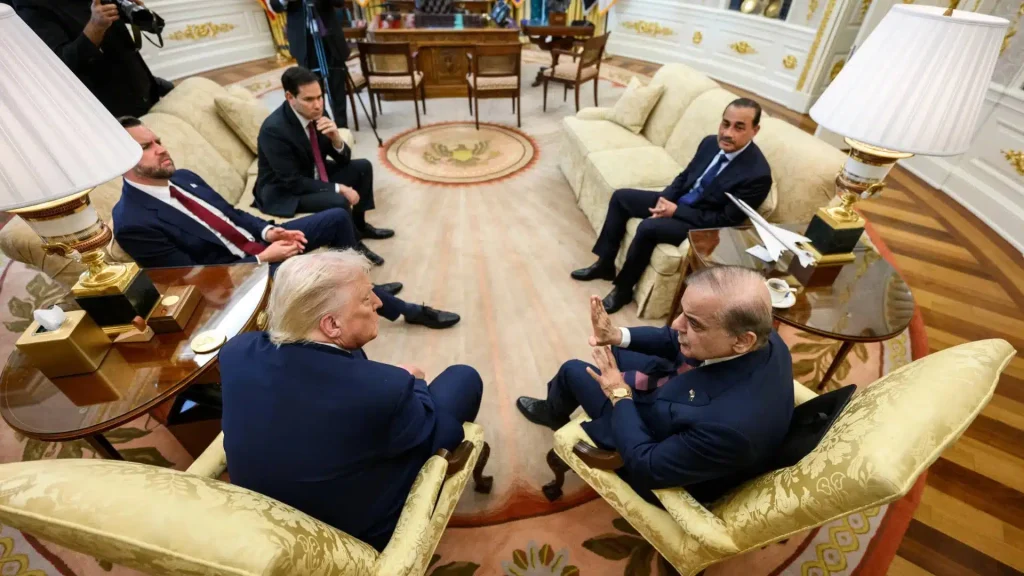
Pakistan emerges as global peacemaker after playing a central role in ending more than 100 days of conflict between the United States and Iran and bringing both sides to the negotiating table in Islamabad. The development has sparked an important debate: what has Pakistan gained from its diplomatic efforts, and what benefits could follow in the future?
The answer began to take shape when the United States and Iran signed the Islamabad Memorandum, a landmark agreement aimed at resolving long-standing disputes through dialogue. US President Donald Trump signed the document from Paris, while Iranian President Masoud Pezeshkian signed it in Tehran. Prime Minister Shehbaz Sharif endorsed the agreement in Islamabad as mediator.
Under the framework, both countries will continue negotiations and seek a final settlement within 60 days.
How Pakistan Brought Washington and Tehran Together
The agreement followed a conflict that began on February 28 and quickly evolved into a regional crisis. The fighting claimed thousands of lives, damaged critical infrastructure and disrupted global energy markets. Concerns grew that the conflict could spread across the Middle East.
Pakistan stepped in with a diplomatic mission focused on securing a ceasefire and preventing a wider regional war. Prime Minister Shehbaz Sharif and Field Marshal Asim Munir remained actively engaged throughout the process.
Despite repeated setbacks and fears that talks could collapse, Islamabad maintained communication with both sides and helped keep negotiations alive. Those efforts ultimately led to a ceasefire and a 14-point memorandum of understanding.
A Major Diplomatic Victory for Pakistan
The successful mediation has significantly strengthened Pakistan’s global standing. By facilitating dialogue between two long-time adversaries, Islamabad has projected itself as a responsible and credible diplomatic actor.
International leaders, including UN Secretary-General Antonio Guterres, have praised Pakistan’s role. The country’s efforts have also received recognition from both Washington and Tehran.
The agreement has helped reshape Pakistan’s image internationally, shifting attention from past security challenges toward its growing role in diplomacy and conflict resolution.
Islamabad Becomes a New Hub for Global Diplomacy
One of the most visible outcomes of the peace process was Islamabad’s emergence as a venue for high-level international negotiations.
Major diplomatic talks have traditionally been held in cities such as Doha, Geneva and other European capitals. This time, however, delegations from the United States and Iran engaged through a process linked directly to Islamabad.
The global media spotlight on the Pakistani capital marked a significant diplomatic achievement and reinforced Pakistan’s relevance in international affairs.
Economic Opportunities Could Follow the Peace Deal
Beyond diplomatic prestige, Pakistan could benefit economically if the agreement leads to the easing of sanctions on Iran.
Officials from Pakistan and Iran have recently expressed a commitment to increasing bilateral trade to $10 billion annually. Reduced restrictions could create new opportunities in commerce, investment and cross-border business.
Improved banking channels and trade mechanisms would make it easier for businesses on both sides to expand legal commercial activities.
Energy Cooperation May Be the Biggest Prize
Pakistan imports most of its oil and petroleum products from Gulf countries. If restrictions on Iran are relaxed, Islamabad could gain access to a closer and potentially cheaper source of energy.
The long-delayed Pakistan-Iran gas pipeline project could also return to the agenda. Completion of the project would help Pakistan secure affordable natural gas supplies and ease pressure on its energy sector.
Energy cooperation remains one of the areas where Pakistan could see the most tangible long-term benefits.
Trade and Connectivity Projects Could Gain Momentum
Stronger ties between Islamabad and Tehran could accelerate several infrastructure and connectivity projects.
Border markets, railway links and regional transport corridors may receive fresh attention. The restoration of rail connectivity between Pakistan and Iran could boost trade not only between the two countries but also with Türkiye and Central Asia.
Such projects have the potential to improve regional integration and create new economic opportunities.
A New Chapter in Pakistan-US Relations
Pakistan’s role in the peace process may also strengthen its relationship with the United States.
In recent years, cooperation between the two countries has expanded in areas such as counterterrorism, critical minerals and emerging technologies. Successful mediation between Washington and Tehran could further improve strategic engagement.
Analysts believe Pakistan’s growing diplomatic influence has increased its value as a regional partner and facilitator.
What Does Pakistan Stand to Gain?
Pakistan’s successful mediation between the United States and Iran has already delivered a major diplomatic victory. The country has earned international recognition and demonstrated its ability to play a constructive role in resolving global conflicts.
If the peace process continues to move forward, Pakistan could benefit through increased trade, enhanced energy security, stronger international partnerships and greater regional influence.
For Islamabad, the true rewards of becoming a global peacemaker may only begin to emerge in the months and years ahead.