


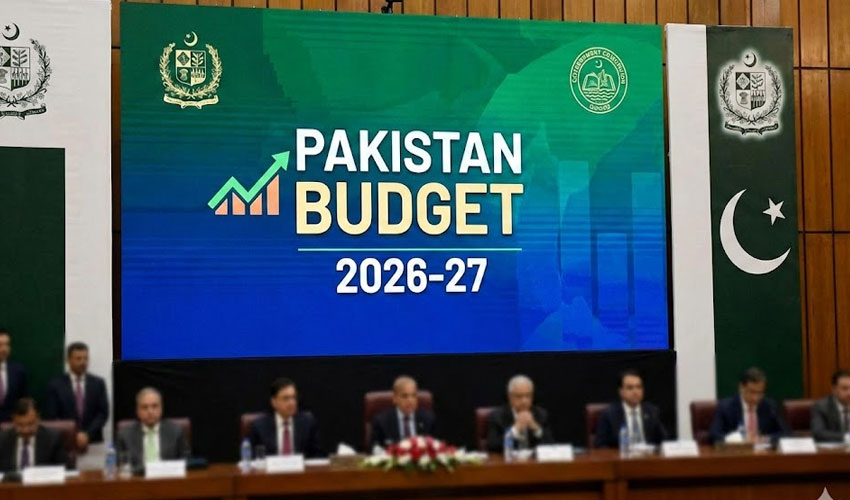
Pakistan is heading toward a crucial fiscal moment as the Pakistan Federal Budget 2026-27 analysis comes under intense public and expert scrutiny ahead of its presentation on June 5.
The upcoming budget is expected to affect not just government accounts but also the daily lives of millions of citizens, influencing jobs, business activity, investment, purchasing power, and inflation trends.
The government claims it is working to keep the burden on the public as low as possible. However, ongoing talks with the International Monetary Fund and proposed tax reforms are raising concerns about how much relief will actually be possible.
Reports suggest that a possible 1% increase in general sales tax could generate significant additional revenue. At the same time, discussions are also underway about adjustments in taxes on solar panels, electric vehicles, and hybrid cars, although officials have denied any final decision.
Experts say the Pakistan Federal Budget 2026-27 analysis shows growing uncertainty over whether the government can balance IMF conditions with public relief. Many believe fiscal targets may limit the government’s ability to offer meaningful tax cuts.
Economists also warn that higher indirect taxes could increase inflation. Since GST applies to most goods and services, even a small increase could raise prices and further reduce purchasing power for ordinary citizens.
The debate has also focused on fairness in the tax system. Critics argue that indirect taxes place a heavier burden on lower and middle-income groups, while some segments of the economy contribute relatively less in direct taxes.
Questions are also being raised about the tax structure for salaried individuals, retail traders, and corporate sectors. Analysts say salaried workers already face high deductions compared to other income groups, creating imbalance in the system.
Energy and fuel taxation is another key issue in the Pakistan Federal Budget 2026-27 analysis, especially at a time when global trends are moving toward cleaner and renewable energy sources.
Some experts warn that increased taxes on energy-related sectors could slow down adoption of green technologies such as electric and hybrid vehicles, despite government claims of promoting environmentally friendly policies.
On the other hand, discussions continue around possible relief measures for salaried class taxpayers, including adjustments in income tax slabs and thresholds. However, analysts suggest that any relief may be limited and offset by broader tax measures elsewhere.
Overall, the budget debate reflects a broader economic challenge: balancing IMF-driven fiscal discipline with public expectations for relief in a high-inflation environment.
As the June 5 presentation approaches, uncertainty remains over whether the budget will ease financial pressure or introduce further economic strain.