


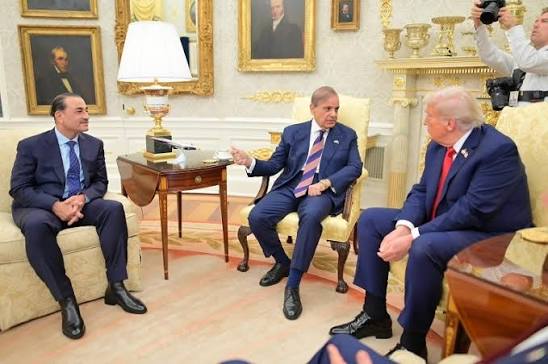
Pakistan is being described as a rising “hinge power” in global politics, according to a fresh assessment published by the British newspaper Financial Times. The report credits Islamabad’s balanced ties with the United States, China, Gulf nations and Iran for this shifting international standing.
The publication pointed to Pakistan’s role in facilitating direct talks between Washington and Tehran as evidence of its expanding diplomatic weight, suggesting the country is positioning itself as a more active player in the evolving global order.
Regional Security and Strategic Partnerships
According to the Financial Times, the Makkah Joint Defence Agreement, signed alongside Saudi Arabia and Turkey, illustrates Pakistan’s growing relevance to regional security arrangements. The report identified one of Islamabad’s core advantages as its capacity to sustain interest-driven relationships with both Washington and Beijing simultaneously, rather than aligning exclusively with one side.
The newspaper further observed that Pakistan’s ability to engage comfortably with both Gulf countries and Iran gives it a distinctive role as a go-between across rival centres of power. This flexibility, the report noted, allows Islamabad to avoid being locked into any single global bloc.
Economic Diplomacy Opens New Avenues
Pakistan’s hinge power positioning is also being reinforced through economic channels, the report said. It highlighted emerging trade prospects with the United States in areas such as cryptocurrency and critical minerals as part of Islamabad’s broader economic diplomacy push.
Separately, proposed plans to link Central Asia with Pakistani seaports were cited as a potential gateway to new markets, which could strengthen the country’s standing in regional trade networks. The Financial Times added that backing from Saudi Arabia may serve as a key confidence signal for international investors as Pakistan works to extend its influence beyond its immediate neighbourhood.
A Growing Presence on the Global Stage
Per the report, Islamabad’s expanding foreign policy activity is opening strategic space for Pakistan across the United States, China, the Middle East and Central Asia. This is gradually transforming the country into a connecting point between competing major powers.
The Financial Times concluded that Pakistan’s strategic weight in the emerging global order has grown significant enough to merit its own distinct position on the global “Risk board,” a reference underscoring the country’s increasing pivotal role in international geopolitics.