


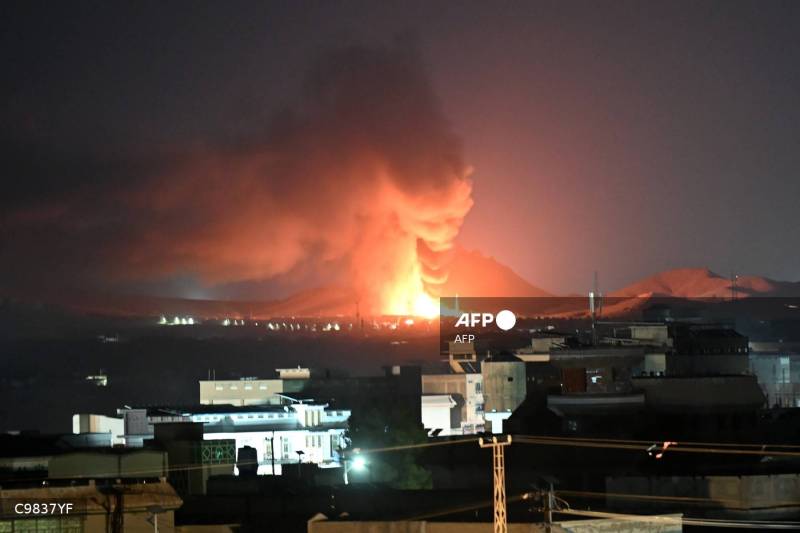
Pakistan carried out targeted aerial and drone operations against ten sites inside Afghanistan early Thursday, responding to a wave of drone attacks it says originated from Taliban-controlled territory earlier in the week. Information Minister Attaullah Tarar confirmed the action in a post on his official X account, describing it as an exercise of the country’s right to self-defense.
According to Tarar, the strikes targeted facilities that Afghan-based operatives had allegedly used to launch and store drones aimed at Pakistan. He emphasized that the operation was carefully controlled, calling it “deliberate, precise, calibrated and proportionate,” and stating it was limited strictly to military sites connected to the recent attacks.
Drones Intercepted Near Torkham and Kohat
The strikes followed a separate incident a day earlier in which Pakistani security forces intercepted eight drones attempting to cross into national airspace from Afghanistan, according to security officials. The country’s air defense network reportedly detected the aircraft in advance and neutralized all of them before they could reach their targets.
Four of the drones were shot down close to the Torkham border crossing, while the other four were intercepted over mountainous terrain near Kohat. Officials said the timely detection prevented any of the intruding devices from completing their intended missions.
Islamabad Condemns “Grave Act of Aggression”
Tarar strongly condemned the September 23 drone incursions, calling them an unlawful breach of Pakistani sovereignty and territorial integrity. He described the episode as a serious and unacceptable act of aggression against the state.
He noted that Pakistan has for years raised concerns with the Afghan Taliban administration over what it describes as continued sanctuaries for militant networks operating from Afghan territory. Rather than acting against these groups, the minister argued, Kabul’s authorities have allowed tensions to escalate through hostile drone activity directed at Pakistan.
The minister reiterated that Pakistan will not tolerate future attacks launched from across the Afghan border, whether carried out by militant organizations or by the Taliban government directly. He warned that any breach of Pakistani sovereignty would draw an immediate and firm response, adding that denials or attempts by Kabul to shift blame would not change the facts on the ground or limit Pakistan’s right to self-defense.
Tarar called on the Taliban leadership to halt all hostile activity immediately and to take verifiable, sustained action against militant groups based in Afghanistan, stressing that Afghan soil must not serve as a launchpad for attacks against Pakistan.
While affirming that Islamabad remains open to dialogue and regional stability, the minister cautioned that this stance should not be interpreted as tolerance for continued provocations. He stated that Pakistan would defend its territory and citizens with full resolve and respond firmly to any further hostile actions by the Afghan Taliban.
Rising Cross-Border Militancy Since 2021
The latest confrontation adds to a long pattern of cross-border militancy that has intensified since the Taliban’s return to power in Afghanistan in 2021, with Khyber Pakhtunkhwa and Balochistan bearing the brunt of frequent attacks.
Pakistan has consistently pressed Kabul to prevent militant groups from using Afghan territory as a base for cross-border operations, arguing that the Taliban administration has not done enough to rein in these networks, a claim Afghan authorities continue to reject.
In February 2026, Pakistan launched Operation Ghazab lil-Haq, months after both nations had reached a ceasefire agreement in October 2025 following a series of border clashes. Despite several rounds of negotiations since then, Islamabad and Kabul remain at odds, with the presence of militant groups operating from Afghan territory continuing to be the central point of friction between the two neighbors.