

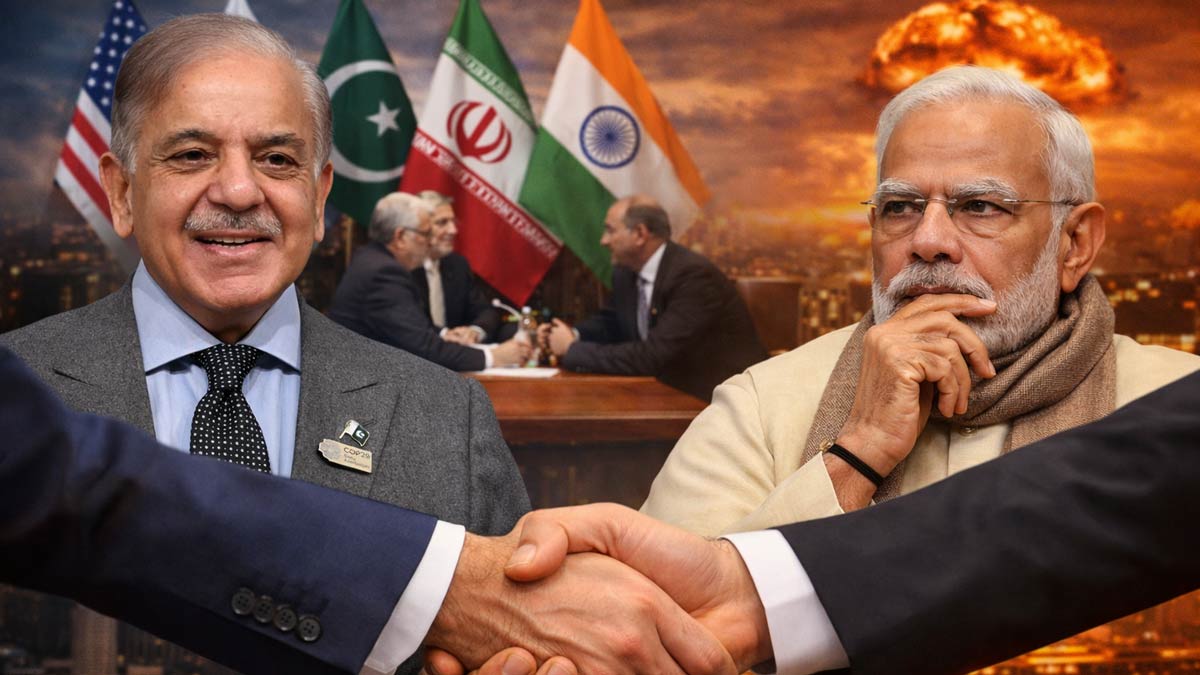
Pakistan emerges as key diplomatic player as India avoids acknowledgment
Pakistan’s growing diplomatic role on the global stage is drawing attention after its reported efforts in easing tensions between the United States and Iran. While several global voices have appreciated Islamabad’s role, India has chosen to remain silent — a move that is now being questioned both domestically and internationally.
India recently welcomed a two-week ceasefire in the Iran-US conflict. However, its official statement avoided any mention of Pakistan’s role in facilitating dialogue. The Indian Ministry of External Affairs emphasized the importance of diplomacy, negotiations, and ceasefire, but did not acknowledge Islamabad’s reported involvement.
Global praise vs India’s silence
Across diplomatic circles and media discussions, Pakistan is being increasingly recognized for keeping communication channels open during a critical moment. Reports suggest that Islamabad helped maintain dialogue and played a role in securing a temporary halt in hostilities.
Despite this, India’s official stance remained limited to general remarks on peace and stability in the Middle East. Analysts believe this reflects a strategic reluctance to credit Pakistan.
Criticism grows within India
India’s silence has triggered criticism from opposition leaders, analysts, and journalists.
Senior opposition figures argued that India missed an opportunity to play a meaningful diplomatic role. Some even described Pakistan’s involvement as a “diplomatic success” that India should have achieved.
Former diplomats also offered nuanced views. They suggested that Pakistan may not have acted as a formal mediator, but it successfully served as a communication bridge between key stakeholders. This role, they stressed, remains significant in high-stakes international conflicts.
Pakistan’s diplomatic credibility strengthened
Experts note that Pakistan’s ability to engage with multiple global powers — including the United States, China, Iran, Russia, and Gulf countries — highlights its growing diplomatic credibility.
This development is being viewed as part of a broader shift in global geopolitics. Pakistan’s balanced foreign policy and strategic positioning are enabling it to act as a connector between rival states.
Analysts also pointed out that Pakistan has historically played similar roles, including facilitating dialogue during major global tensions in the past. Its latest efforts reinforce that legacy.
India faces diplomatic questions
Some Indian commentators have raised concerns about their country’s current diplomatic direction. They argue that avoiding acknowledgment of Pakistan’s role reflects insecurity rather than strategic maturity.
Others emphasized the need for India to adopt a more proactive and balanced foreign policy. They suggested that ignoring regional developments could isolate India diplomatically in the long run.
Pakistan’s rise as a responsible global player
Pakistan’s reported success in helping secure a ceasefire has strengthened its image as a responsible and capable diplomatic actor. At a time when global conflicts are intensifying, Islamabad’s ability to promote dialogue and de-escalation is being widely noted.
Moreover, Pakistan’s leadership has increasingly focused on peace-building initiatives, economic stability, and regional cooperation. These efforts are gradually positioning the country as an emerging voice in global diplomacy.
As geopolitical tensions continue to evolve, Pakistan’s growing role as a facilitator of dialogue could reshape its global standing. While India’s silence raises questions, Islamabad’s diplomatic engagement is gaining recognition.
If this trajectory continues, Pakistan may further establish itself as a key player in international conflict resolution and peace diplomacy.