


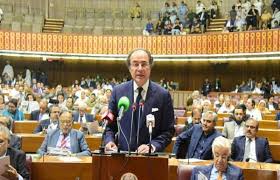
ISLAMABAD: Finance Minister Muhammad Aurangzeb on Friday unveiled the Federal Budget 2026-27 with a total outlay of Rs18,771 billion as the government seeks to stabilise the economy while managing an energy crisis and regional tensions in the Middle East. Presenting the budget in the National Assembly, Aurangzeb highlighted Pakistan’s improved global standing. He said the country’s voice now carries weight internationally and its friendship is valued, crediting strong defensive capabilities and diplomatic efforts, including brokering a ceasefire between Iran and the United States. The session saw noisy protests from the opposition, with PTI lawmakers displaying placards. Treasury benches welcomed Prime Minister Shehbaz Sharif with desk-thumping, while some members from both sides got into a brief scuffle.
Major Budget Allocations
The largest chunk, Rs8.054 trillion, will go towards mark-up payments. Defence gets Rs3 trillion, while the federal development programme receives Rs1 trillion. The government expects economic growth of 4% and average inflation of 8.2% in the coming fiscal year. Aurangzeb noted that the fiscal deficit has improved significantly, falling from 7.8% of GDP in June 2023 to an expected 4% by the end of the current year. The primary balance has also moved from a deficit to a surplus of 1.6%.
Relief for Salaried Class
The government announced tax relief for salaried individuals across four income slabs. The tax rate will drop from 23% to 20% for those earning Rs2.2 million to Rs3.2 million, and from 30% to 25% for the Rs3.2 million to Rs4.1 million slab. Further reductions apply in higher slabs up to Rs7 million. The government will also abolish the super tax for most businesses and reduce it for the highest earners to ease doing business and support small industries. Certain sectors like banks, oil and gas, and fertiliser companies will continue to pay the existing surcharge.
Development and Social Spending
The total national development programme stands at Rs3,675 billion, including Rs1,000 billion for the federal programme. More than 60% of federal funds focus on transport, communication, water, and energy. The government plans to build 150,000 affordable, climate-resilient housing units and prepare digital master plans for 10 major cities. In health, Rs25.1 billion has been allocated for expanding hospitals, cancer treatment, and emergency care. Higher education receives Rs46 billion, a notable increase from last year, to support scholarships, research, digital learning, and AI initiatives.
Energy Reforms and Privatisation
Despite the energy crisis, the government reported progress in power sector reforms, achieving net-zero addition to circular debt and savings of over Rs143 billion in subsidies. It has also reduced planned LNG imports from Qatar, saving around $1.2 billion. The minister confirmed the successful privatisation of Pakistan International Airlines (PIA) for Rs185 billion and said a five-year plan is underway to hand over more state entities, including power companies, banks, and airports, to the private sector.
Positive Economic Signals
Aurangzeb pointed to stronger fiscal stability, successful return to international bond markets, and rising investor confidence. The corporate sector posted healthy profit growth, 11 IPOs were launched this year, the highest in two decades and thousands of new companies have been registered. The government aims to reduce the national debt burden further through better management and diversified borrowing.