


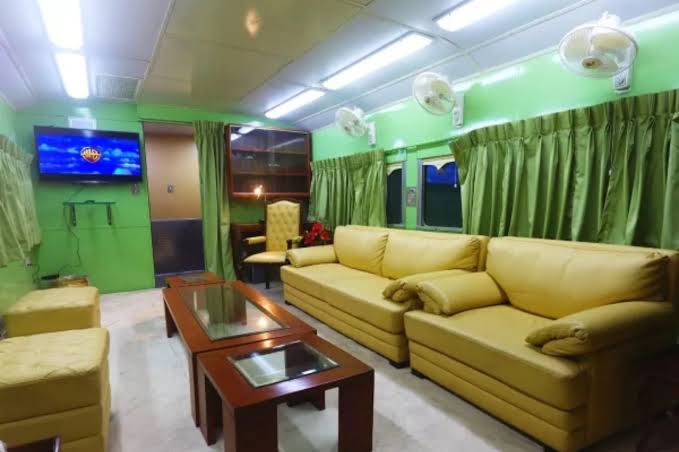
Federal Minister for Railways Muhammad Hanif Abbasi has announced a sweeping Pakistan Railways VIP culture ban, ending the practice of reserving luxury saloons and rest house rooms for top officials. Under the new policy, any citizen can now access these premium facilities by paying a standard fare, a restriction that applies even to the minister himself.
Speaking to APP, Abbasi described the move as part of a broader push to modernise the railways department in a way that reflects public expectations. He said that, for the first time in the country’s history, VIP privileges within the railways have been dismantled starting from the very top of the organisation.
All VVIP Saloons Now Off-Limits to Officials
According to Abbasi, an immediate ban now covers every saloon previously set aside for VVIP travel. This includes the Minister’s Saloon, the Chairman’s Saloon, the Chief Executive’s Saloon, and the coach used by the Inspector General of Railways.
He noted that these saloons had historically been reserved for a handful of senior figures, adding unnecessary costs to the department’s budget without benefiting ordinary passengers.
With this change, the VIP saloons Pakistan Railways once kept off-limits, along with VIP rooms at rest houses nationwide, have been opened up for public booking. Any traveler can now reserve these upscale coaches and rooms for a fixed, reasonable rent.
A Push for Fairness and New Revenue
Abbasi said the initiative was designed with two goals in mind: giving all railway passengers equal access to the department’s best facilities, and creating fresh revenue streams for Pakistan Railways through public bookings of premium services.
He added that the railway network belongs to the nation, and ordinary citizens have the foremost claim to the resources it holds.
The Pakistan Railways VIP culture ban marks a notable shift in how the department manages its assets, signaling a move toward transparency and public access over long-standing privilege for a select few officials.