


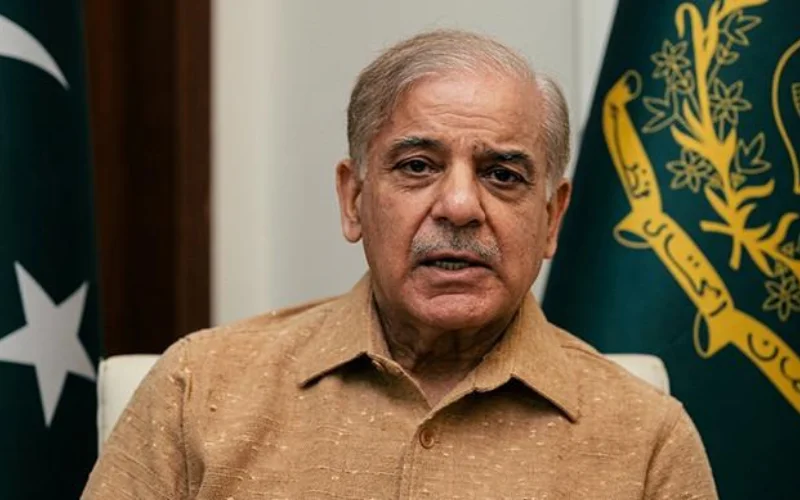
Petrol prices to decrease significantly in Pakistan, Prime Minister Shehbaz Sharif announced on Friday, citing a decline in global oil prices following the US-Iran peace agreement.
Addressing the National Assembly in Islamabad, the prime minister said the government would announce a substantial reduction in petroleum product prices after completing its weekly review.
“We had promised to bring down petroleum prices and return every possible relief to the people,” he told lawmakers. “Today, after our weekly review, we will announce a significant reduction.”
Shehbaz Sharif credited his cabinet members for helping manage the oil crisis and praised provincial chief ministers for supporting the federal government’s efforts to provide targeted relief to citizens.
He recalled that when international oil prices surged during the regional conflict, the federal government spent around Rs128 billion to cushion the impact on consumers through subsidies and other relief measures.
Global oil prices continued to fall on Friday as supply concerns eased after oil tankers resumed movement through the Strait of Hormuz. The development followed the US-Iran peace deal, in which Pakistan played a mediating role.
The government has been reviewing petroleum prices every week since the outbreak of the conflict involving Iran and Israel earlier this year. Previously, fuel prices were adjusted on a fortnightly basis.
During the last weekly review, the government reduced petrol prices by Rs4 per litre and diesel prices by Rs2 per litre for the week ending June 19.
Petrol prices stood at Rs258.17 per litre before the conflict began but later climbed to as high as Rs458.41 per litre amid disruptions in global energy supplies. Prices had recently fallen to just above Rs370 per litre. Diesel prices also surged from Rs275.70 per litre to a peak of Rs520.35 per litre during the crisis.
The conflict triggered a global fuel shortage after the closure of the Strait of Hormuz, a strategic route that normally carries about one-fifth of the world’s oil and gas shipments. The disruption pushed fuel costs higher and contributed to rising inflation in many countries, including Pakistan.
Petrol is widely used by motorists, motorcyclists, and rickshaw drivers. Any reduction in fuel prices directly benefits middle-income and lower-income households that depend on daily transportation.
Diesel, meanwhile, plays a crucial role in Pakistan’s transport and agricultural sectors. It powers trucks, buses, trains, tractors, tube wells, and other machinery. As a result, diesel prices have a direct impact on transportation costs, food prices, and overall inflation.