


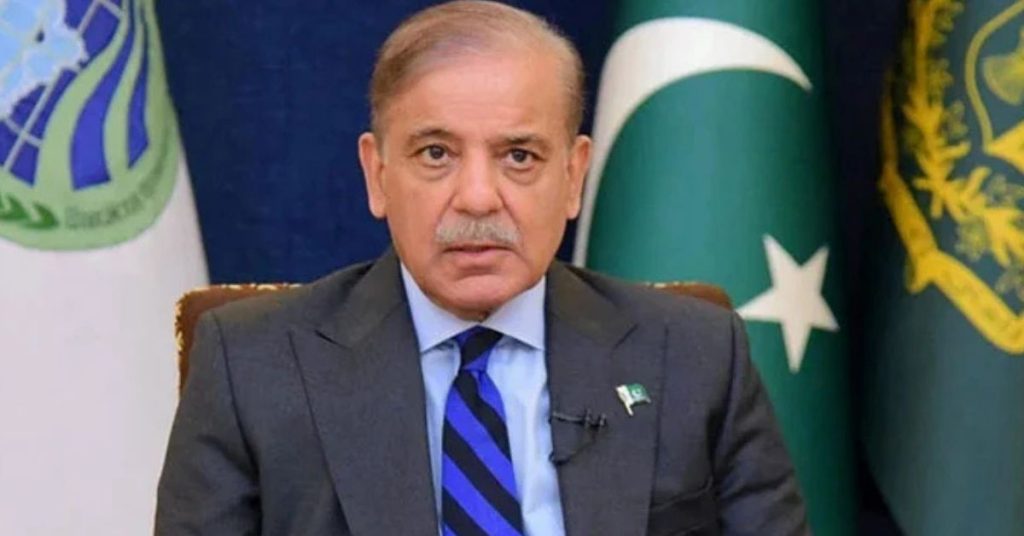
Prime Minister Shehbaz Sharif has issued a pointed warning against using water as a political tool, declaring that it should never become a means of coercion between nations. His comments on water weaponisation came during an address to the Shanghai Cooperation Organisation’s Council of Heads of State Summit, held in Bishkek, Kyrgyzstan.
The speech coincided with Pakistan officially taking over the SCO chairmanship for the 2026–27 term. Islamabad will hold the role for a full year and is scheduled to host the next Council of Heads of State summit in 2027. Over the coming months, Pakistan is expected to guide the bloc’s agenda, pushing for closer coordination among member nations on security, trade, and infrastructure links.
Water Weaponisation Warning Ties Into Regional Peace Message
Addressing the gathering, PM Shehbaz linked lasting stability in South Asia directly to how shared water resources are managed. He described water as essential to the region, supporting millions of people and sustaining agricultural land across borders.
He went further, stating plainly that water must not be turned into a bargaining chip or used to pressure neighbouring states. According to the premier, the resource should remain free from political manipulation under any circumstances.
These remarks land against the backdrop of the ongoing Indus Waters Treaty dispute. The Permanent Court of Arbitration in The Hague recently affirmed that the treaty remains legally binding and directed India to halt work on disputed hydropower projects. New Delhi had suspended the agreement following an attack that killed 26 people in Indian Illegally Occupied Jammu and Kashmir in April 2025, an incident it blamed on Pakistan. Islamabad rejected the accusation, and the standoff escalated into heavy cross-border clashes in May before a ceasefire brokered by the United States brought a halt to the fighting.
Pakistan’s Role Within the SCO
PM Shehbaz used the platform to praise the SCO’s 25-year track record, calling it a vital forum for advancing global stability. He positioned Pakistan as a committed and constructive member, framing the organisation as a shared effort to tackle common regional challenges.
Touching on wider geopolitical tension, the prime minister reiterated Pakistan’s preference for resolving disputes through dialogue and adherence to international law. He pointed to Islamabad’s diplomatic involvement in brokering the Islamabad Memorandum of Understanding between Iran and the United States as evidence of this approach, calling it a meaningful step toward easing regional friction. He added that such agreements only hold value when both their intent and their terms are respected in practice.
He also addressed the Makkah Joint Defence Agreement involving Pakistan, Saudi Arabia, and Turkiye, clarifying that the pact is defensive by design and not aimed at provoking conflict with any nation.
On the Palestinian issue, the premier urged the global community to follow through on commitments to support Palestinians and other nations facing oppression in their pursuit of self-determination.
Counterterrorism and Economic Costs
Turning to security, PM Shehbaz labelled terrorism one of the region’s most pressing dangers. He noted that Pakistan has lost more than 90,000 lives combating militancy and absorbed over $150 billion in economic damage as a result.
With the SCO region home to more than three billion people, he argued that stronger connectivity between member states is no longer optional but a strategic requirement. He highlighted the importance of secure energy supply routes, alongside expanded rail, road, and power infrastructure across the bloc.
The China-Pakistan Economic Corridor featured prominently in his remarks, described as a key link between regional economies and the Arabian Sea. He also called for full rollout of the SCO Development Strategy 2035 and welcomed the proposed SCO Development Bank as a positive development.
Pakistan, he added, would continue focusing on poverty reduction and social protection during its chairmanship, with energy and information technology named as priority sectors going forward.
Leaders including PM Shehbaz, Russian President Vladimir Putin, and Chinese President Xi Jinping signed the summit declaration earlier in the day. The prime minister’s visit to Kyrgyzstan runs from August 31 to September 2, covering both the main summit and the SCO Plus Summit, along with a series of bilateral meetings.