


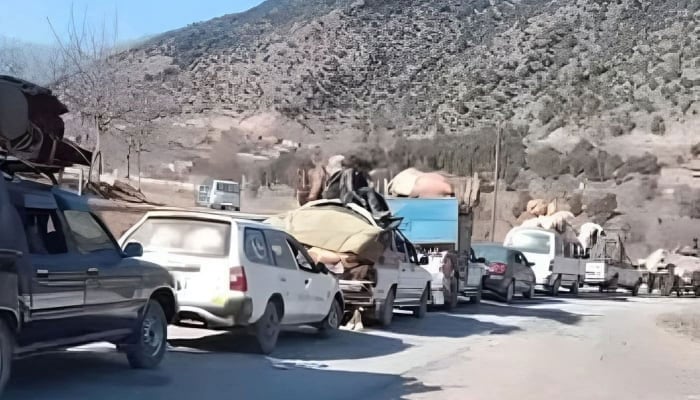
The Tirah Valley migration crisis of January 2026 stands as a stark testament to the failures of political leadership in KPK. Under the governance of PTI, what could have been a managed, voluntary relocation turned into a humanitarian debacle, with thousands of residents trapped in heavy snowfall, facing shortages of food, shelter, and transport.
Tirah Valley, nestled in the Khyber district of KPK, has long been a region plagued by security challenges, including the presence of terrorist elements affiliated with groups like the Tehreek-e-Taliban Pakistan (TTP) and other militant outfits. The valley’s rugged terrain and proximity to the Afghan border make it a hotspot for intelligence-based operations (IBOs) aimed at neutralizing threats without large-scale military incursions.
In late 2025, local jirgas began discussions about a temporary, voluntary migration to safer areas during the winter months, a practice not uncommon in the region due to harsh weather and seasonal movements. Official records reveal that the Deputy Commissioner (DC) of Khyber informed the provincial government as early as October 28, 2025, about the potential for this migration. The letter outlined the need for preparatory measures, including transportation, food supplies, cash assistance, and registration points for displaced families. This was not a forced evacuation but a consensual process endorsed by local communities and district jirgas, taking into account weather and administrative conditions.
The migration was slated to begin on January 10, 2026, giving the KPK government ample time to prepare. Yet, despite this forewarning, the PTI administration failed to act decisively. On December 26, 2025, a state of emergency was declared in Khyber district under the National Disaster Management Act, emphasizing the urgency of relief efforts. The Provincial Disaster Management Authority (PDMA) was tasked with coordinating transport, food, refreshments, and registration alongside district authorities, with expenses managed by the DC.
The federal government allocated substantial funds, over Rs. 4 billion, to support the process, including compensation for affected families: Rs. 700,000 per family for relocation, Rs. 8 million for fully destroyed homes, and Rs. 4 million for partially damaged ones. Additional promises included infrastructure improvements like roads, schools, hospitals, and utilities. This setup should have ensured a smooth transition. However, the KPK government’s inaction led to chaos. Heavy snowfall in early January trapped thousands of migrants on blocked roads, with families, including children and the elderly, enduring freezing temperatures without adequate aid. Reports from the ground painted a grim picture: vehicles stranded, shortages of essentials, and a burgeoning humanitarian crisis.
KP Government’s Prior Knowledge and Gross Mismanagement
The crux of the failure lies in the PTI-led KP government’s blatant disregard for advance warnings. The DC’s October 28 communication explicitly requested pre-emptive actions for areas like Bagh, highlighting the voluntary nature of the migration and the need for community consent. A major jirga held in Peshawar on December 31, 2025, chaired by the Chief Secretary and attended by the Inspector General of Frontier Corps (IGFC), further solidified these plans. Notably, the Corps Commander Peshawar was not involved in the process, underscoring that this was a civilian-led initiative, not a military directive. Despite these deliberations, the provincial government dragged its feet. Funds were released but mismanaged, leading to delays in setting up registration points and procuring transport. When the migration commenced amid worsening weather, the lack of preparedness turned a routine seasonal shift into a disaster. Eyewitness accounts from migrants described scenes of desperation: families walking miles in snow, without blankets or medical aid, while provincial officials remained absent. The PDMA, under KP’s purview, failed to coordinate effectively, resulting in what sources describe as “administrative cruelty.” This negligence is not isolated. PTI’s governance in KPK has been marred by similar issues, from delayed disaster responses to politicized resource allocation. In Tirah, the government’s failure to implement the jirga-endorsed plan, despite receiving Rs. 4 billion, exposed residents to unnecessary risks. Special Assistant to the KPK Chief Minister, Shafi Jan, claimed the government acted for “timely relief,” but evidence suggests otherwise. The funds were intended for voluntary, temporary displacement, yet the administration’s delays amplified the crisis.
Why did this happen?
Analysts point to internal PTI dynamics, where political survival often trumps governance. With PTI facing national scrutiny over economic policies and security lapses, the KP leadership under Chief Minister Sohail Afridi appears to prioritize narrative control over action. By ignoring the October warning, the government not only endangered lives but also squandered an opportunity to demonstrate competence in a volatile region.
The Propaganda Campaign: Inciting Against Security Forces
In a brazen attempt to shift blame, the PTI-led KP government launched a propaganda offensive against the federal government and security forces. Claims surfaced that the migration was a forced “depopulation” ordered by the army, painting the security establishment as the villain. KPK officials, including spokespersons, disseminated narratives linking the displacement to military operations, despite official denials from the Ministry of Information. The ministry categorically stated that no such orders were issued, and operations in Tirah were limited to targeted IBOs against terrorists, not broad evacuations. This propaganda is evident in social media campaigns and statements from PTI affiliates. Posts accused the army of “making people homeless” and “oppressing Pashtuns,” ignoring the voluntary jirga agreements. For instance, PTI sympathizers circulated AI-generated videos depicting suffering migrants, falsely attributing the crisis to military actions. In reality, the army stepped in only on humanitarian grounds, providing food, transport, and evacuation during blizzards, after the provincial government’s failures became apparent.
Soldiers were seen distributing supplies and aiding stranded families, a far cry from the “oppressors” portrayed in PTI narratives. This tactic is part of a broader PTI strategy to mobilize public sentiment against institutions. By framing the crisis as a federal or military imposition, PTI aims to rally KP’s populace, particularly Pashtuns, against perceived “Punjabi dominance.” Such rhetoric not only misleads but also risks escalating ethnic tensions in a province already scarred by insurgency. Reports indicate that PTI-linked accounts, alongside foreign influencers from India and Afghanistan, amplified these falsehoods, suggesting a coordinated effort to undermine national unity.
The question arises: Why is the KPK government doing this? Political analysts argue it’s a deflection mechanism. Facing criticism for corruption, economic stagnation, and security failures, PTI resorts to victimhood narratives. Inciting against security forces, pillars of stability in border regions, serves to consolidate PTI’s base by portraying the party as a defender of provincial rights. However, this comes at a cost: eroding trust in institutions that have sacrificed immensely to combat terrorism.
Implications for Khyber Pakhtunkhwa’s People
The fallout from PTI’s mishandling extends beyond Tirah. By spreading propaganda, the government is alienating KP’s residents from the very forces protecting them. In a province where terrorism remains a threat, such division could embolden militants, leading to more instability. Migrants, promised safe return in two months with compensation, now face uncertainty due to administrative lapses. The elderly and children, most vulnerable in the cold, suffer the most from this political gamesmanship. Moreover, this crisis highlights systemic issues in PTI’s rule: over Rs. 4 billion mismanaged, jirga decisions ignored, and a failure to prioritize human welfare. Residents of KP deserve better, governance focused on development, not division. The propaganda also risks international backlash, as false narratives could deter aid or investment in the region.
A Call for Accountability
The Tirah Valley migration crisis is not a story of military overreach but of provincial incompetence. PTI’s KP government had the knowledge, funds, and time to prevent disaster but chose inaction and blame-shifting instead. By propagating against security forces, PTI is not only misleading the public but also jeopardizing national security for political gain. It’s time for accountability: investigations into fund mismanagement, an end to divisive rhetoric, and a focus on rebuilding trust. KP’s people, resilient as ever, deserve leaders who unite rather than divide. As Pakistan moves forward, exposing such failures is crucial to ensuring better governance. The truth, substantiated by documents and facts, must prevail over propaganda.