

There are moments in national politics when ambiguity ceases to be diplomacy and begins to resemble complicity. Pakistan Tehreek-e-Insaf’s repeated reluctance to clearly and categorically label the banned Tehreek-e-Taliban Pakistan (TTP) as a terrorist organization is one such moment.
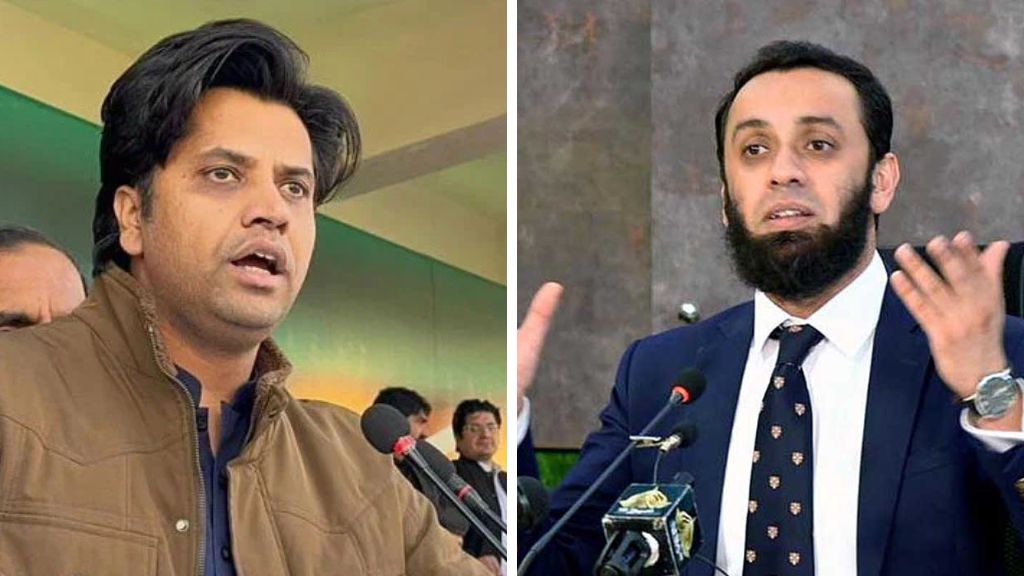
The latest example came on national television, where Shafi Ullah Jan, Special Assistant to the Chief Minister of Khyber Pakhtunkhwa on Information, carefully avoided a direct answer to a simple and direct question: Is the TTP a terrorist organization? Asked repeatedly by anchor Muhammad Malik, the KP government’s spokesperson chose evasive explanations over clarity, despite the TTP’s status as a banned outfit responsible for years of bloodshed.
Instead of affirming the state’s established position, Shafi Jan presented the TTP as a collection of “factions,” suggesting that some elements were open to dialogue or surrender. This framing is deeply problematic. It dilutes the criminal nature of a group that has carried out suicide bombings, targeted security forces, attacked civilians, and openly challenged the writ of the state.
The anchor’s persistence only exposed the depth of the evasion. Even when asked specifically about notorious militant leaders such as Noor Wali Mehsood and Hafiz Gul Bahadur, the KP government’s spokesperson refused to give a clear answer, calling the issue too complex for a brief discussion. Complexity, however, is no excuse for moral and political ambiguity on terrorism.
This was not an isolated incident. It reflects a broader and increasingly visible pattern in PTI’s political behavior condemning terrorism in vague, generalized terms while avoiding direct condemnation of the TTP by name. Such rhetorical gymnastics may serve short-term political calculations, but they come at a heavy national cost.
Federal Information Minister Attaullah Tarar’s subsequent remarks, in which he described PTI as acting like a “political wing” of the TTP, may be provocative, but they resonate because of PTI’s own conduct. When leaders repeatedly hesitate to name a banned terrorist organization, they create space for suspicion, criticism, and political backlash.
Tarar also reminded the public that terrorism in Khyber Pakhtunkhwa had been largely dismantled following Operation Zarb-e-Azb, a hard-fought campaign that restored relative peace to the province. The failure to consolidate those gains, he argued, stems from years of poor governance under PTI, during which security, development, and public services have deteriorated.
PTI leaders, including Chairman Barrister Gohar, insist that terrorism must be eliminated and that the party does not support militant groups. But statements lose credibility when they are not matched by clarity. Condemning “terrorism” in the abstract while avoiding the word “TTP” is not leadership; it is evasion.
In a province that has buried thousands of its citizens due to militant violence, political leaders have a responsibility to speak plainly. The people of Khyber Pakhtunkhwa do not need diplomatic phrasing or selective silence. They need assurance that their elected representatives stand firmly with the state, the constitution, and the victims of terrorism.
Political dialogue and surrender policies can only have meaning when they are grounded in a clear recognition of guilt and accountability. Without first acknowledging the TTP as a terrorist organization, any talk of peace risks legitimizing violence and rewriting history.
PTI’s continued ambiguity is therefore not a minor political misstep; it is a serious failure of moral clarity. At a time when Pakistan faces renewed security challenges, there is no room for half-answers, tactical silence, or political doublespeak. On terrorism, especially the TTP, there can be only one position and anything short of naming it plainly raises uncomfortable and unavoidable questions.