


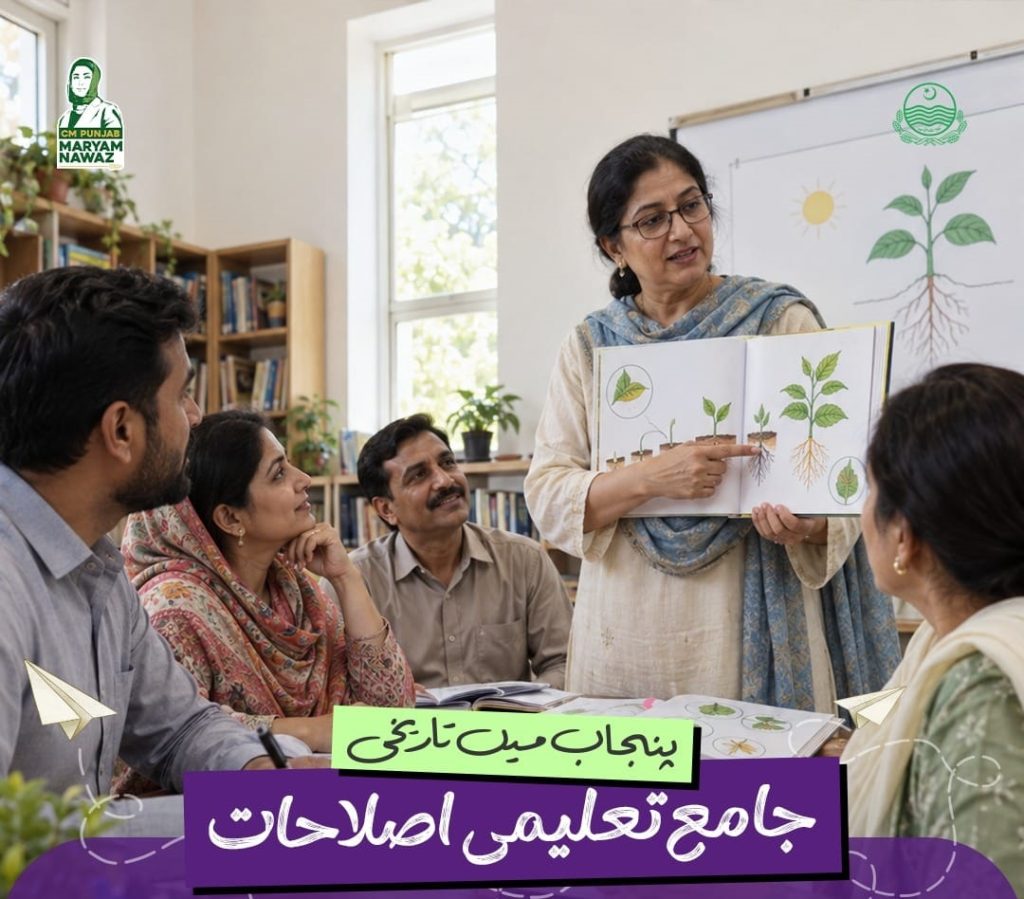
Punjab is set to witness one of its most sweeping education reforms in recent years after Chief Minister Maryam Nawaz Sharif approved a new, modernized curriculum for schools across the province. Officials say the changes are designed to ease the academic burden on students while bringing classroom learning closer to today’s digital and psychological needs.
Lighter Books, Smarter Learning
Under the newly approved curriculum, the weight of textbooks will be reduced by 25 percent, giving students a more manageable course load. In place of the trimmed content, artificial intelligence will now be introduced as a subject from the early years of schooling, exposing children to AI concepts much sooner than before.
Each textbook will also come with an embedded QR code. Students will be able to scan the code to instantly access a video lesson related to the topic they are studying, adding a digital, interactive layer to traditional classroom teaching.
Corporal Punishment to Be Legally Banned
As part of these Punjab education reforms, the provincial government plans to introduce legislation that formally bans corporal punishment in schools. To support teachers in managing classroom behavior without physical discipline, authorities have proposed setting up designated “discipline corners” in classrooms, offering a structured, non-violent alternative for handling misconduct.
Textbook Authors to Train Teachers Directly
In a notable shift from past practice, the authors of the new textbooks will personally conduct training sessions for teachers. The move is intended to ensure that educators fully understand the intent, structure, and teaching methods behind the updated curriculum before it reaches classrooms.
Mental Health Support for Teachers, a First for Punjab
For the first time in the province’s history, the government will launch a dedicated mental health training program for teachers. The initiative reflects a growing recognition that teacher wellbeing directly affects classroom quality and student outcomes.
Taken together, these Punjab education reforms mark a significant departure from conventional teaching methods, blending reduced academic pressure, technology-driven learning, humane disciplinary practices, and support for educators’ mental health into a single, unified policy shift.