


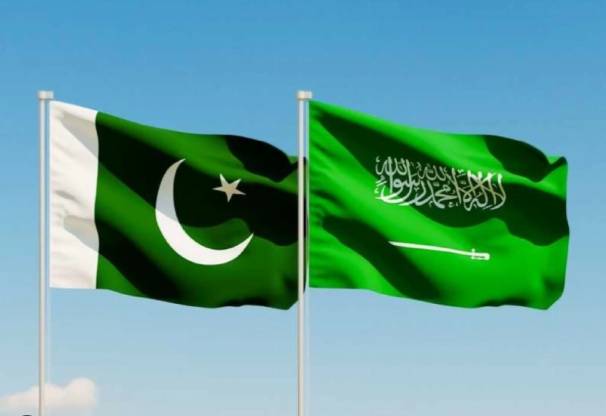
Pakistan has secured a three-year rollover of $5 billion in deposits from Saudi Arabia, according to top government officials who confirmed the arrangement on Wednesday.
Finance Minister Muhammad Aurangzeb verified the news, and State Bank of Pakistan Governor Jameel Ahmed echoed the confirmation while speaking to reporters outside Parliament House. The rollover is expected to ease strain on the country’s external account as it works through foreign debt obligations for the current fiscal year.
How the Rollover Eases Pakistan’s Debt Burden
Governor Ahmed, briefing reporters after a session of the Senate Standing Committee on Finance, said Pakistan’s foreign debt servicing has dropped noticeably. The figure fell from $26.5 billion in fiscal year 2024-25 to $21.5 billion in the ongoing 2026-27 fiscal year, a decline he attributed to several factors, including softer interest rates.
Interest payments alone are projected to account for roughly $3.5 billion of that $21.5 billion total this year, he added.
Breaking down the numbers further, Ahmed explained that close to $12 billion of the overall debt servicing figure comes from deposits parked with the central bank, while another $3 billion involves commercial loans that are expected to be refinanced. The remaining obligations, around $7 billion, fall outside these two categories.
Saudi Arabia holds $8 billion of that $12 billion in deposits. Ahmed noted that Pakistan will need to arrange further rollovers for deposits maturing in December 2026 and March 2027.
He also revealed that Pakistan handled $2.2 billion in foreign debt servicing during July 2026, the fiscal year’s opening month, and said repayment pressure should ease over the remaining stretch from August 2026 through June 2027.
Reserves and Market Purchases
Ahmed reported that the central bank’s cumulative purchases from the interbank market reached $28 billion over the past three years, with roughly $9 billion of that acquired in the last financial year alone to strengthen reserves against external shocks.
As of July 17, 2026, the country’s total foreign exchange reserves stood at $22.6 billion, split between $17.2 billion held by the State Bank and $5.4 billion held by commercial banks. Earlier, on July 3, 2026, SBP-held reserves had reached $18.4 billion before heavy debt repayments and other outflows brought the figure down.
Asked about the IMF’s projections for higher debt servicing needs in fiscal year 2027-28, Ahmed said that issue would be examined in due course.
For now, he expressed confidence that Pakistan is well-positioned to manage its foreign debt servicing obligations for the current fiscal year. The central bank, he indicated, will keep prioritizing reserve accumulation to cushion against potential shocks, especially a possible surge in global fuel prices.