


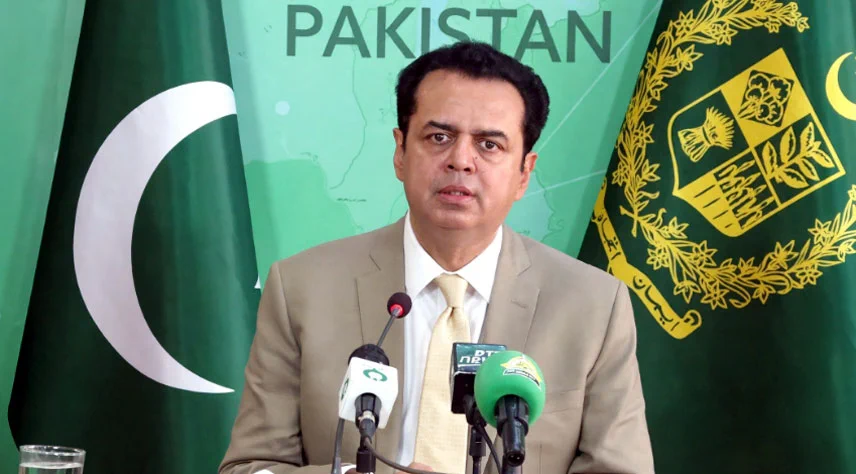
Pakistan is once again bracing for a showdown between the state and the street. As the Pakistan Tehreek-e-Insaf prepares for its planned march on Islamabad on September 27, Minister of State for Interior Talal Chaudhry has issued a statement that reads less like a routine security briefing and more like a warning wrapped in diplomacy. His claim that the day will reveal “how the state establishes its writ” deserves a closer look, both for what it says and for what it deliberately leaves unsaid.
Chaudhry’s remarks carry a familiar duality that seasoned observers of Pakistani politics will recognize instantly. He insists the government possesses “full authority to take all necessary measures” to maintain control, yet in the same breath claims the state has no wish to be “forced” into strict action against PTI. This isn’t a contradiction so much as a calculated positioning. It allows the government to project strength and readiness while reserving the right to frame any eventual crackdown as a reluctant, reactive necessity rather than a premeditated decision, a defense that tends to surface whenever demonstrations turn confrontational.
Equally revealing is Chaudhry’s decision to pivot toward the Khyber Pakhtunkhwa government’s handling of NFC Award funds in the same conversation. By highlighting the Rs700 billion the province has received and demanding accountability, the federal government appears to be doing more than raising a fiscal concern. It is attempting to shift the public conversation away from questions about the right to peaceful assembly and toward questions of provincial governance and financial mismanagement, a tactic that has been used before to undercut the moral standing of opposition-led protests.
What actually happens on September 27 could unfold in several different ways. In one scenario, heavy security deployment, container blockades, and road closures around Islamabad simply contain the march at the city’s outskirts, allowing the day to pass with minimal disruption. In a more volatile scenario, any attempt to breach barricades or push through security cordons could trigger the kind of clashes, tear gas, mass arrests, and prolonged standoffs, that have marked previous marches on the capital. A third, quieter possibility involves last-minute legal or political intervention, since courts have already weighed in once on this march and could do so again, or backchannel negotiations could produce an alternate venue that defuses tension before the day arrives.
If the government genuinely wants September 27 to demonstrate the rule of law rather than simply the use of force, restraint and proportion will matter more than displays of authority. Mass pre-emptive detentions or communication blackouts tend to generate public sympathy for protesters rather than suppress dissent, and offering PTI a legally sanctioned venue instead of an outright ban would strengthen the state’s position considerably if tensions do rise. Keeping the NFC funding criticism separate from security decisions also matters a great deal, since merging financial accountability with crowd control risks creating the impression that fiscal leverage is being used to punish political opposition, even when the underlying concerns about fund usage may be entirely legitimate.
For PTI, the burden of discipline may weigh even heavier than the burden of defiance. A march that remains visibly peaceful, coordinated with law enforcement on route and timing, and free of provocation gives the party a far stronger legal and moral footing, particularly if the situation grows tense. Continuing to rely on the courts, as the party has already been doing, offers a more durable path forward than relying purely on street pressure, since legal precedent tends to outlast a single day’s headlines. Any lapse in discipline, even an isolated one, risks being used to justify a harsher response, not just on that day, but in shaping how future demonstrations are handled as well.
Perhaps the most important truth, though, is one that neither government statements nor party promises can fully control. History from Pakistan’s previous major protest marches suggests that pre-event rhetoric rarely predicts what actually unfolds on the ground. What ultimately determines whether a march stays peaceful or spirals into confrontation is usually a single unplanned moment, a baton charge, a breached barrier, a rumor spreading through a restless crowd, rather than anything said days in advance. September 27, in the end, may be decided less by who said what beforehand and more by how calmly both marchers and law enforcement respond to that first flashpoint, whenever and wherever it occurs.