


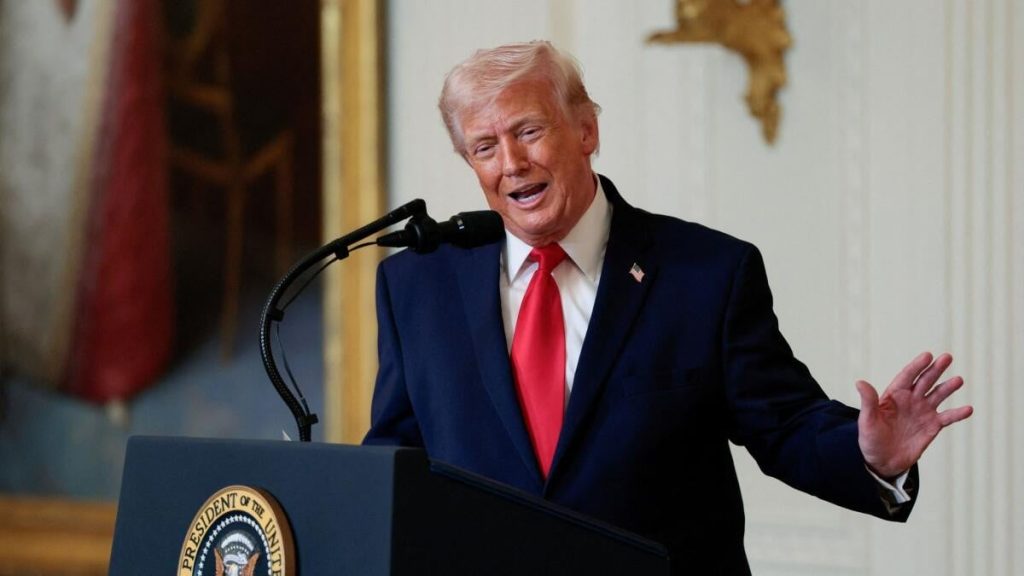
Tensions in the Middle East are rising as the crisis in the Strait of Hormuz deepens. United States President Donald Trump has asked several countries to send naval warships to help secure the vital global shipping route. However, major allies have so far refused to join the proposed naval deployment.
The request comes at a time when attacks on oil tankers and rising tensions between Iran and the United States are threatening global energy supplies and maritime trade.
According to reports, at least 10 oil tankers have been attacked or targeted since the conflict began. Meanwhile, nearly 1,000 ships are currently stuck near the Strait of Hormuz, creating serious disruption to international shipping.
President Trump made the appeal through his social media platform. He said countries such as South Korea, Japan, France, China and the United Kingdom should participate in the mission.
Trump argued that these economies depend heavily on oil shipments passing through the Gulf region. Therefore, they should help ensure the security of the strategic waterway.
The Strait of Hormuz is one of the most important shipping routes in the world. A large portion of global oil exports passes through the narrow passage connecting the Persian Gulf to international waters.
Despite Washington’s call, several key US allies have declined to send naval forces to the region.
According to a British newspaper report, the United Kingdom has refused to deploy warships to the Strait of Hormuz. British Prime Minister Keir Starmer reportedly rejected the proposal during discussions with Trump.
Meanwhile, Japan, Australia and France have also decided not to send naval vessels as part of the proposed mission.
Germany has also expressed reservations. German Foreign Minister Johann Wadephul said Berlin does not want to become part of any new military escalation in the region.
Iranian Foreign Minister Abbas Araghchi said several countries have contacted Tehran to request safe passage for their ships through the Strait of Hormuz.
However, he added that the final decision regarding navigation and security will be made by the Iranian military authorities.
In a separate development, India’s Foreign Minister S Jaishankar said diplomatic talks between New Delhi and Tehran helped secure permission for two Indian gas tankers to pass through the strategic waterway.
Meanwhile, tensions have further escalated after a warning from Iran’s military leadership.
A spokesperson for Iran’s Islamic Revolutionary Guard Corps (IRGC), Ali Mohammad, challenged the US president’s remarks. He said if Washington believes Iran’s naval forces have been weakened, it should send its warships into the Persian Gulf and see the outcome.
The worsening situation in the Strait of Hormuz is raising alarm in global energy markets. Oil prices have already shown signs of volatility amid fears of supply disruptions.
With tanker attacks increasing and hundreds of ships stranded, analysts warn that continued instability could threaten global oil supply chains and maritime trade.
Experts say any prolonged blockade or military escalation in the Strait of Hormuz could have serious consequences for the global economy.