


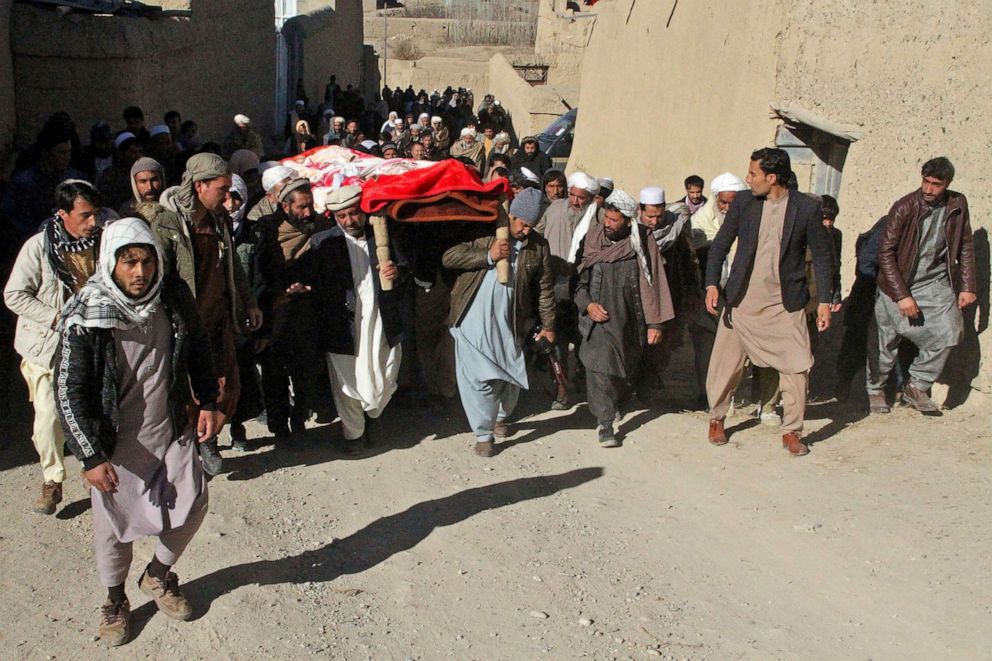
Targeted killings in Afghanistan are raising deep concerns as civilians face growing violence despite repeated Taliban security claims. The killing of a young telecom worker in Badakhshan highlights the fear many communities now live with.
On the evening of January 1, Mohammad Shah Amiri, a 24-year-old employee of Afghan Wireless, was returning home from work in Faizabad. As he walked through a narrow alley in the Dasht-e-Qargh area near the Kokcha River, an armed man opened fire from behind a garden hedge. The attacker was only two to three metres away.
A bullet struck Amiri behind the ear and exited through his forehead. He fell to the ground but continued breathing for several minutes. A nearby child noticed him and rushed to alert local residents.
Sources say Taliban intelligence forces arrived shortly after the shooting. However, they delayed taking Amiri to hospital, claiming their vehicle was not assigned for medical transport. He was later moved in the same vehicle but died before reaching the hospital. The attacker has not been identified.
Ismaili Community Under Pressure
Less than a month later, on January 22, two more Ismaili residents, relatives of Amiri, were shot inside a shop just 50 metres from where his body had been found earlier. Residents say Ismaili killings in Badakhshan have increased since the Taliban returned to power. Many accuse authorities of failing to investigate what they describe as targeted killings in Afghanistan, especially against religious minorities. Taliban officials often label such cases as ordinary criminal acts.
Crime Rate in Afghanistan Shows Sharp Rise
Documents from the Taliban-controlled National Statistics and Information Authority show that nearly 6,660 killings were registered as criminal cases between 2021 and 2024. Official figures released in November 2025 reveal that total criminal cases rose from 10,834 in 2021–22 to 17,320 in 2024–25. This marks a 60 percent increase in crime since the Taliban takeover. These numbers challenge ongoing Taliban security claims of nationwide stability.
Murders and Kidnappings on the Rise
Between March 2024 and March 2025, authorities recorded 1,734 murders, compared to 1,502 in the first year of Taliban rule. Kidnappings in Kabul also continue. On January 20, Mohammad Dawood Hoshmand, a 63-year-old doctor, was abducted near his home in the Khair Khana area. His family says they still have no information about his fate. Data show 224 kidnappings were reported between 2021 and 2025. Many cases remain unresolved.
Theft Increase in Afghanistan Doubles
Theft has surged across the country. Authorities recorded 6,225 thefts between March 2024 and March 2025—double the number reported in 2021–22. Residents say nights have become especially unsafe. A Kabul woman said people fear walking even short distances after dark. A former senior police investigator, Bismillah Taban, said theft has increased even in areas once considered secure. He noted that while most weapons are now held by Taliban members, crime continues to grow. One resident summed it up simply:
In 20 years of the republic, I lost one phone. Under Taliban rule, I lost two.
Insecurity Spreads to Herat
In Herat, seven people were killed in a single week. Victims included a mobile money changer, a teenage street vendor, two young men on the Herat–Karukh road, and others in targeted attacks inside the city. Residents say armed robberies and weak accountability have turned the city increasingly unsafe.
Doubts Over ‘Nationwide Security’
Taban questioned the Taliban’s ability to protect civilians. He said experienced professionals were dismissed and replaced with clerics and explosives specialists. Human rights groups report bodies found in eastern regions, disappearances in northern Kabul, and continued targeted killings in Afghanistan, particularly of Ismailis and former security personnel. Families often blame the Taliban, but the group routinely denies responsibility. For more than four years, Taliban spokespersons have declined to explain investigative or judicial processes related to such killings.