

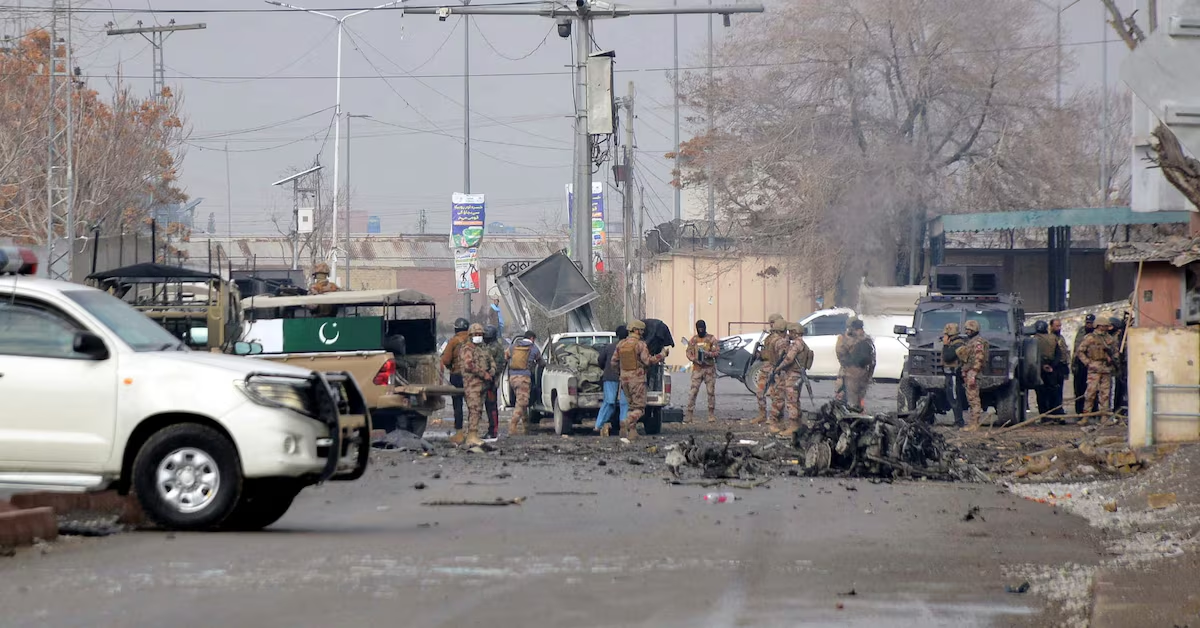
In the aftermath of one of the most coordinated and devastating assaults in recent memory, Balochistan Chief Minister Sarfraz Bugti delivered a clear, unflinching message: the province’s challenges are not rooted in politics, they require a robust military response.
His statement comes after the outlawed Balochistan Liberation Army (BLA) launched synchronized attacks across multiple towns and cities, claiming lives and attempting to sow chaos. Official figures confirm the grim toll: at least 31 innocent civilians and 17 brave security personnel were martyred in the violence. Yet, Pakistan’s security forces responded with exceptional resolve, eliminating 145 terrorists in just 40 hours of intense operations. Bodies recovered are in custody, with some identified as Afghan nationals, underscoring cross-border dimensions of the threat.
CM Bugti firmly rejected exaggerated claims circulating about militant numbers. Reports of 1,000–2,000 attackers? Completely false. The actual force was no more than 200–250, and most have been either chased out or neutralized. This exposes the BLA’s strategy: inflate their strength through propaganda while hiding behind civilians as human shields in urban areas, a cowardly tactic that endangers the very people they claim to represent.
The Chief Minister’s diagnosis of the problem is equally sharp. He traces the resurgence of organized militancy directly to the policy of appeasement adopted after 2018. Prior to that shift, insurgents were constantly on the defensive. Frontier Corps checkpoints dotted highways, security presence was visible and effective, and militants struggled to regroup. The post-2018 “soft” approach gave them breathing room. By 2021, they reorganized; by 2023–2024, they grew bolder and more structured. Bugti’s administration, assuming office in 2024, conducted an honest review: “What were we doing? Why were we giving them a free run?” This introspection led to a decisive policy correction, prioritizing elimination of terror networks over accommodation.
The swift, intelligence-driven operations following the latest attacks demonstrate the results of this renewed firmness. Foreign involvement cannot be ignored. Bugti pointed to senior BLA commander Bashir Zeb, stating that 99.99% of available intelligence places him in Afghanistan. Afghan soil continues to serve as a safe haven and launchpad for operations against Pakistan. The BLA, branded by authorities as “Fitna al-Hindustan”, is accused of receiving sponsorship aimed at destabilizing the country. These are not baseless allegations; they align with patterns observed in multiple intelligence assessments and cross-border militant movements.
Critically, Bugti emphasized that the BLA is not a legitimate political entity. “Is BLA a registered party with which you can hold dialogue?” he asked pointedly. The group seeks to impose its ideology through guns, not ballots. Offering negotiations would amount to rewarding violence and surrendering national integrity. Pakistan will not yield “even for a second,” Bugti declared. “They can destabilize, but they cannot take a single inch of our country. ”Perhaps most reassuring is his assessment of public sentiment. The overwhelming majority of Balochistan’s people stand with the state. Sympathy for insurgents remains limited, typically 1–3%, a figure common in any insurgency worldwide. This broad support forms the bedrock of any successful counterterrorism effort. When citizens reject terror and align with security forces, militants lose their oxygen.
The recent operations mark a turning point. Killing 145 terrorists in such a short span is among the most significant blows delivered in decades of this conflict. It sends a powerful signal: Pakistan possesses both the capability and the will to protect its citizens and territory. Supporting CM Bugti’s position means recognizing reality over romanticized narratives. Terrorism cannot be appeased into submission; it must be confronted decisively. Political grievances, where genuine, deserve dialogue but never at the cost of tolerating armed violence against civilians, schools, banks, hospitals, and security installations.
Balochistan deserves peace, development, and dignity. That future becomes possible only when terror networks are dismantled, foreign proxies are exposed, and the state reasserts unchallenged authority. Chief Minister Sarfraz Bugti’s clear-eyed leadership, refusing surrender, prioritizing security, and rallying the people, deserves national backing. The path forward is not appeasement. It is resolve. Pakistan stands united: we will fight this war until every inch of our soil is secure.