


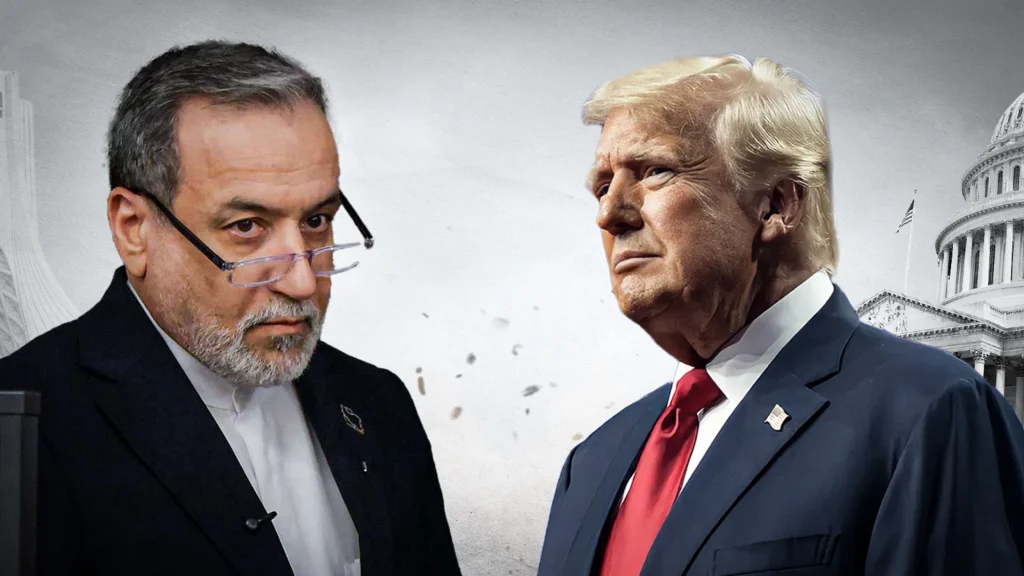
President Donald Trump has unveiled what he described as the harshest economic campaign ever launched against a nation, threatening fresh penalties against Iran and any country that keeps propping up Tehran financially.
Iran’s foreign ministry fired back quickly, arguing that Trump’s so-called “Economic D-Day” merely distracts from Washington’s own mounting debt and rising borrowing costs, and warning that repeating failed strategies would only deepen America’s setbacks and Iranian resentment.
Writing on Truth Social, Trump claimed Tehran had repeatedly turned down chances to strike an agreement with his administration, and declared that the US would now wage “Economic Warfare and Isolation on an unprecedented scale.”
“No one has given the Islamic Republic of Iran a greater opportunity to make a Deal than me. TRAGICALLY, for them, they have failed to take it,” Trump wrote.
Trump Claims Iran’s Military and Economy Crippled
The president asserted that Iran’s navy and air force had both been wiped out, that its weapons manufacturing sites lay in ruins, and that its currency had collapsed to the point of being worthless.
He cautioned that any nation permitting its banks, businesses, airports, or government bodies to offer Iran even indirect support would face what he termed “TREMENDOUS Economic Consequences.” Trump singled out several channels of concern, including oil smuggling operations, currency swap arrangements, cash transfers, exchange houses, ship registries, and front companies, insisting all of it “needs to stop NOW.”
He labeled the crackdown an “ECONOMIC D-DAY” and urged Washington’s allies to join the effort to isolate Tehran, adding that the sanctions would also choke off Iran’s capacity to spread “terror worldwide.” He restated his administration’s firm opposition to Iran obtaining nuclear arms, declaring flatly that “IRAN WILL NEVER HAVE A NUCLEAR WEAPON.”
Mixed Signals Over Diplomacy Continue
This latest salvo follows weeks of inconsistent messaging on whether talks with Tehran remain possible. Trump has previously suggested that negotiations could resume “at some point,” though he has not laid out a timeline or specific conditions for restarting them.
He also addressed the Strait of Hormuz, insisting the vital shipping route remains open despite what he called an “extremely effective” US naval blockade. “The Strait is open. A lot of boats are coming through. People aren’t reporting that… the Naval blockade has been extremely effective… We’re going to see what happens,” he wrote.
Iran, for its part, says it hasn’t shut the door on diplomacy but won’t negotiate under pressure. President Masoud Pezeshkian said engaging in talks does not equate to surrender, stressing that any negotiations should happen while Iran is at its strongest and should aim to end the conflict, lift restrictions, unlock frozen assets, and eventually tackle the nuclear issue. “We defend territorial integrity, but war is not our goal,” Pezeshkian said, as quoted by Iran’s ISNA state news agency.
Parliament Speaker Mohammad Bagher Ghalibaf struck a far sharper tone, accusing the United States of trying to seize regional resources. Speaking in Baghdad, he branded Washington the “biggest problem” driving regional instability and claimed the US had suffered both military and political defeat in what he referred to as the “third imposed war,” according to Fars news agency.
Diplomatic Contacts Persist Amid Rising Tensions
Even as rhetoric intensifies, regional diplomatic engagement hasn’t stopped entirely. Iranian Foreign Minister Abbas Araghchi spoke by phone with Pakistan’s Chief of Defence Forces, Field Marshal Asim Munir, to discuss regional developments, ongoing diplomatic efforts, and potential political solutions, while also looking at ways to deepen bilateral cooperation, Iranian officials said.
These sharply opposing stances unfold against a backdrop of escalating tension over the broader conflict, control of the Strait of Hormuz, and Iran’s nuclear program, all of which continue to complicate the search for a diplomatic resolution.