


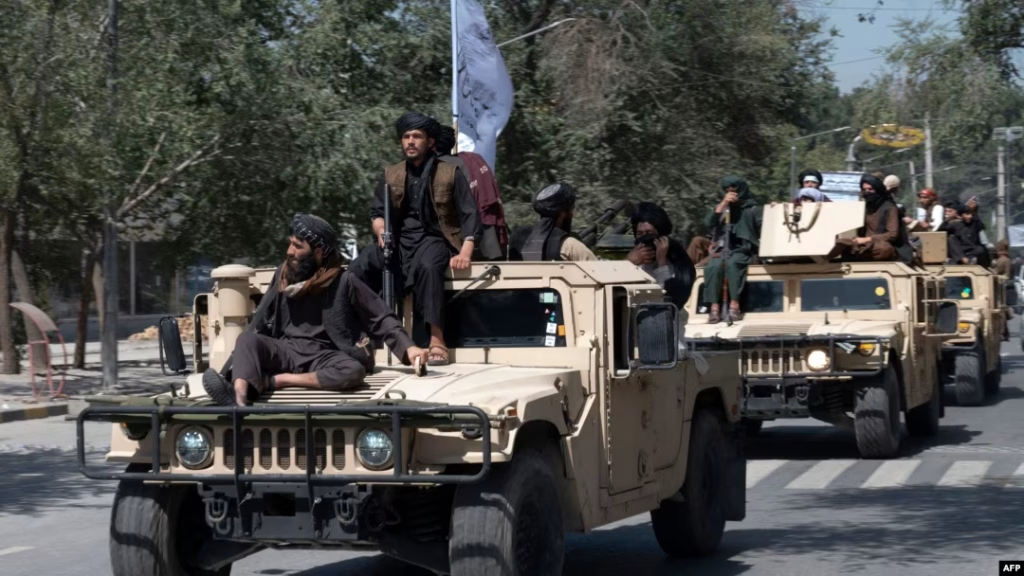
Recent investigative reports have powerfully validated Pakistan’s consistent position: advanced American military equipment abandoned in Afghanistan following the 2021 US withdrawal is now actively fueling terrorism inside Pakistan.
For years, Islamabad has presented evidence to Afghan authorities and the international community that Afghan territory is being used as a base for attacks against Pakistan, with groups such as the Tehrik-e-Taliban Pakistan (TTP) and Balochistan Liberation Army (BLA) wielding sophisticated US-origin weapons to carry out increasingly lethal operations. Investigations, including those by major international outlets and US government oversight bodies, have documented how millions of dollars worth of arms, originally supplied to Afghan forces, have fallen into militant hands. These include M-4 carbines, M-16 rifles, M249 machine guns, sniper rifles, night-vision gear, and other high-end equipment. Pakistani security forces have repeatedly recovered such weapons during operations in South Waziristan, North Waziristan, and Balochistan, with serial numbers tracing them directly back to US supplies left behind in 2021.
The scale is staggering. According to assessments from the Special Inspector General for Afghanistan Reconstruction (SIGAR), approximately $7.12 billion in military equipment, including over 300,000 small arms and thousands of vehicles, was abandoned. Former SIGAR head John Sopko has repeatedly highlighted how poor tracking and the hasty withdrawal enabled this proliferation. Reports indicate that a significant portion of these arms has entered black markets, crossed porous borders, and strengthened terrorist networks operating from Afghan soil.
Pakistan has endured a sharp rise in TTP-led violence since the Afghan Taliban’s return to power. The TTP, designated a terrorist organization by Pakistan and many countries, has claimed responsibility for thousands of attacks over the past two decades, resulting in more than 80,000 Pakistani deaths. High-profile incidents include the horrific 2014 Army Public School massacre in Peshawar (147 killed, mostly children) and the 2023 Peshawar mosque bombing (over 100 fatalities).
In recent years, TTP attacks have grown more frequent and sophisticated, often involving advanced weaponry traced to Afghan stockpiles. Pakistani military officials, including spokesperson Major General Ahmed Sharif Chaudhry, have stated that TTP militants are using these abandoned US arms to conduct cross-border raids, ambushes, and bombings. Operations in 2025 recovered M-16s, M-4s, and other US-made gear from eliminated terrorists in North Waziristan and other hotspots. The BLA has similarly benefited, employing these weapons in insurgent strikes that target security forces and infrastructure in Balochistan.
Pakistan has consistently shared dossiers with the United Nations, the United States, and other partners detailing TTP safe havens, training camps, and weapon smuggling routes in Afghanistan. UN monitoring reports have noted the Afghan authorities’ failure to curb TTP activities or prevent the flow of arms.
Analysts point to a thriving illicit trade, where Taliban elements reportedly tax or facilitate the transfer of weapons to allied militant groups. The consequences are severe. Enhanced militant capabilities have led to deadlier attacks, strained Pakistan’s counter-terrorism resources, and heightened tensions along the Durand Line. This situation not only undermines Pakistan’s stability but also threatens broader regional security, allowing terrorist networks to regroup and expand their reach.
The evidence is clear: the uncontrolled spread of these weapons has turned a past policy decision into a present-day security crisis. Pakistan’s warnings were not alarmist, they were prescient. Addressing this threat requires urgent international cooperation, including stronger border management, diplomatic pressure to secure Afghan territory against terrorist use, and concerted efforts to disrupt arms flows. Without decisive action, the cycle of violence, exacerbated by these abandoned arsenals, will continue to claim lives and destabilize the region.