


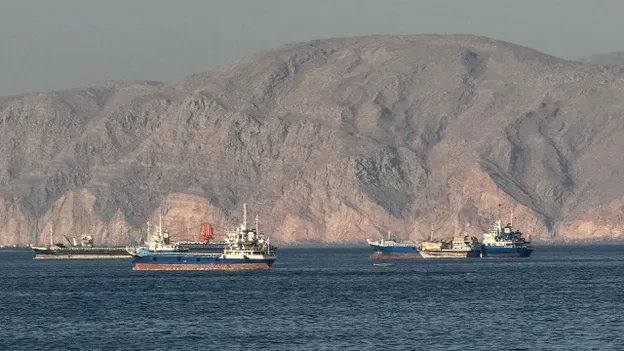
The latest US airstrikes on Iran have sharply escalated tensions in and around the Strait of Hormuz, with both countries trading accusations and claiming military successes.
According to Iranian media, powerful explosions were heard in the coastal city of Sirik, raising fears of a new confrontation in the strategically important Gulf region.
The US Central Command (CENTCOM) said it carried out the airstrikes in response to an alleged Iranian drone attack on a commercial cargo vessel on June 25. Washington claimed the vessel, registered in Singapore, was targeted in what it described as a clear violation of the ceasefire between the two countries.
The US military said it struck sites allegedly used by Iran to store radar systems and drones. CENTCOM warned that US forces remain on high alert and would not tolerate any attempt to disrupt international shipping routes.
The statement stressed that freedom of navigation and the safety of commercial vessels in regional waters would be protected.
Iran’s Islamic Revolutionary Guard Corps (IRGC), however, claimed it had successfully repelled the US attack. Iranian officials said they had also launched retaliatory actions against US military facilities across the region, although they did not provide details about the locations targeted or any damage caused.
The IRGC also referred to the Islamabad Memorandum of Understanding, saying Article Five gives Iran responsibility for managing and controlling maritime traffic in the Strait of Hormuz.
Iranian military leaders warned Washington against carrying out further strikes, saying any future attacks would trigger a broader and more decisive response. Tehran said it would take all necessary measures to defend its sovereignty.
Before the latest escalation, US President Donald Trump had hinted at possible consequences for Iran following the reported attack on the commercial vessel. Responding to a question from journalists in Washington, Trump said Tehran would soon face the consequences of its actions.
US Vice President JD Vance also issued a strong warning to Iran, saying violence would be met with force. In a social media post, he urged Tehran to resolve disputes through dialogue rather than military action.
Vance said the United States preferred negotiations over further escalation but would not tolerate attacks on commercial shipping or international maritime routes.
The latest US statements and military actions have also sparked criticism inside Iran. Ebrahim Azizi, head of the Iranian parliament’s National Security Committee, accused Washington of acting in bad faith and attacking Iran while diplomatic efforts were ongoing.
In a social media statement, Azizi criticized President Trump, saying the US administration had once again shown disregard for negotiations and ceasefire commitments.
He warned that what he described as a ceasefire violation would ultimately backfire on the United States and insisted that Tehran would not accept further accusations from Washington.