


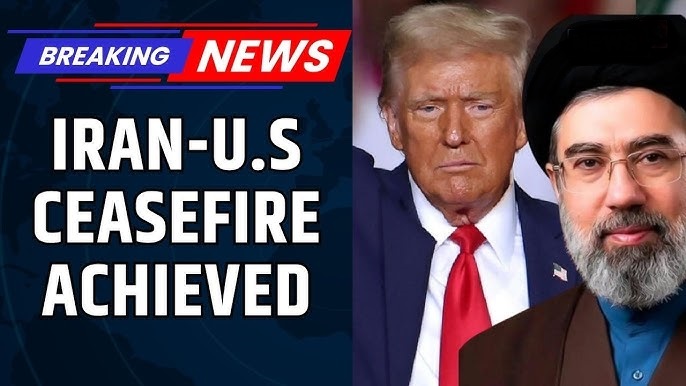
The US Iran ceasefire deal took a dramatic turn on Wednesday when US President Donald Trump agreed to a two-week truce with Iran. The decision came just hours before a strict deadline set by Washington for reopening the Strait of Hormuz. The move followed key discussions with Prime Minister Shehbaz Sharif and Army Chief Field Marshal Asim Munir.
Earlier in the day, Trump had issued a stark warning, raising fears of massive destruction if Iran failed to meet US demands. However, the sudden shift toward the US Iran ceasefire deal signaled a breakthrough after intense diplomatic efforts, especially from Pakistan.
Trump said the ceasefire depends on Iran ensuring the safe and immediate reopening of the Strait of Hormuz. He described the arrangement as a “double-sided ceasefire” and claimed that US military goals had already been achieved. He also revealed that Iran had shared a 10-point proposal, which Washington sees as a workable path toward long-term peace.
According to Trump, this pause will help both sides finalize a broader agreement aimed at ending the conflict. He called the progress a step closer to stability in the Middle East.
Meanwhile, Iranian state media presented a different narrative, claiming the US had accepted Tehran’s terms. Officials in Washington also confirmed that Israel has agreed to halt its attacks during the two-week period.
Prime Minister Shehbaz Sharif earlier urged Trump to allow more time for diplomacy. He also appealed to Iran to reopen the Strait of Hormuz as a goodwill gesture. Pakistan’s efforts played a key role in pushing the US Iran ceasefire deal forward, with Islamabad emerging as a central platform for talks.
Iran’s Supreme National Security Council confirmed that negotiations with the US will take place in Islamabad over the next two weeks. However, it made it clear that the war is not over yet and any final peace depends on detailed agreements during talks.
Iranian Foreign Minister Abbas Araghchi said limited access through the Strait of Hormuz could be allowed under military coordination. He added that Iran would stop defensive operations if attacks against it are halted.
The situation had escalated sharply before the ceasefire announcement. US and Israeli strikes targeted key infrastructure in Iran, including transport links and energy facilities. In response, Iran warned of attacks on regional assets and carried out strikes in the الخليج region.
The conflict, now in its sixth week, has caused heavy casualties and shaken global markets. The Strait of Hormuz crisis pushed oil prices higher and raised fears of a global economic slowdown.
With growing pressure at home and rising opposition to the war, the US Iran ceasefire deal offers a temporary break in hostilities. The coming two weeks will be critical in deciding whether this pause leads to lasting peace or another phase of conflict.