


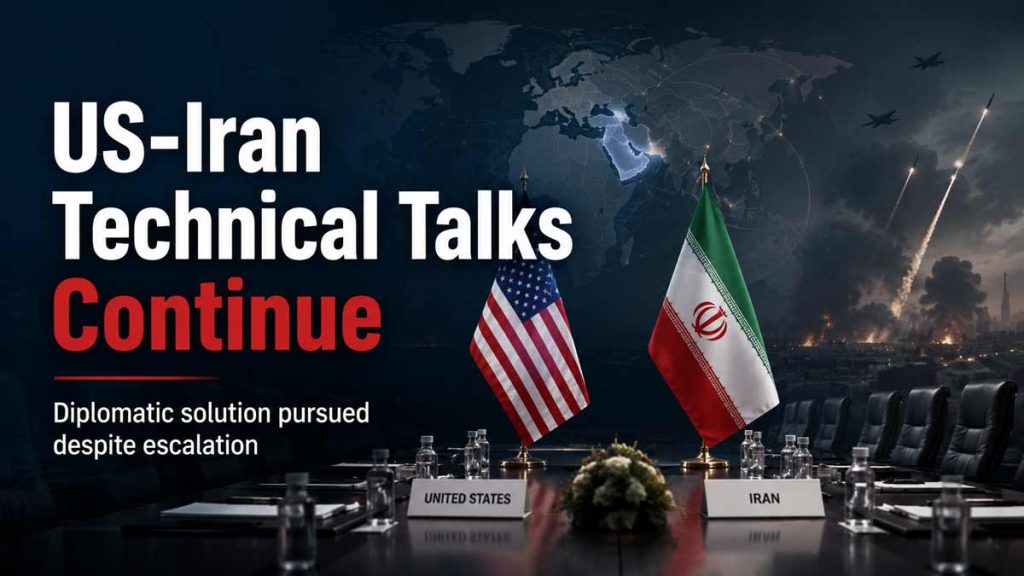
WASHINGTON: The United States remains committed to finding a diplomatic solution with Iran, while technical-level talks between the two sides are continuing despite a sharp rise in regional military tensions, according to U.S. officials.
The latest diplomatic signal comes after renewed exchanges of fire between Washington and Tehran threatened to derail efforts to turn a fragile interim arrangement into a lasting agreement.
A U.S. official said the Trump administration was still committed to finding a resolution and that technical-level discussions were continuing toward a nuclear deal. Regional mediators are also working to reduce tensions and revive negotiations.
According to reporting citing two U.S. officials, Washington had carried out no new strikes on Iran in the preceding hours and continued to pursue a diplomatic solution. The officials said technical talks remained active despite the latest escalation.
The diplomatic effort is focused on preventing a wider conflict while addressing major unresolved issues between the two countries. Axios reported that Qatar, Pakistan, Türkiye, Egypt and Saudi Arabia had been involved in contacts aimed at calming the situation and preserving a path back to negotiations.
Earlier technical discussions between U.S. and Iranian representatives in Doha focused primarily on shipping through the Strait of Hormuz and the release of frozen Iranian funds. Reuters reported that Iran’s nuclear program did not come up during that particular round, although U.S. officials said the nuclear issue would be addressed later.
The renewed diplomatic push comes after a major escalation in military activity.
The U.S. military launched fresh strikes against Iran on July 8, saying the operation was intended to reduce threats to freedom of navigation in the Strait of Hormuz. U.S. Central Command said the strikes followed attacks on commercial shipping.
Iran then launched attacks involving Kuwait and Bahrain, both of which host U.S. military facilities. Reuters reported that the exchange further weakened efforts to convert the June interim memorandum into a permanent settlement.
Subsequent Iranian military claims included attacks on U.S. military infrastructure in Gulf states. Reporting cited targets such as Patriot systems in Kuwait, an early-warning site in Qatar and a fuel depot in Bahrain. Some battlefield claims from both sides could not be independently verified by Reuters.
President Donald Trump had earlier cast serious doubt on the future of the interim arrangement.
Asked whether the U.S.-Iran memorandum was finished, Trump said he believed it was over and that he did not want to deal with Tehran. He also questioned whether any future agreement with Iran would hold.
Despite those remarks, diplomatic contacts have not completely stopped.
Axios reported that regional mediators continued efforts to secure de-escalation first and then arrange another round of negotiations between technical teams. A U.S. official later said the administration remained committed to reaching a resolution.
Pakistan and Qatar have played prominent roles in the wider mediation process, while officials from Türkiye, Egypt and Saudi Arabia have also joined diplomatic outreach aimed at preventing further escalation.
Iranian Foreign Minister Abbas Araghchi also held separate contacts with counterparts from Türkiye, Oman and Pakistan, with the parties stressing the need to prevent further military escalation and revive diplomacy.
The latest developments show that the military and diplomatic tracks are moving at the same time. Although fighting has placed the interim arrangement under severe pressure, technical contacts and regional mediation efforts remain active.
For now, however, it remains unclear whether the talks can produce a durable agreement as Washington and Tehran continue to exchange accusations over military action, shipping security and compliance with earlier understandings.