


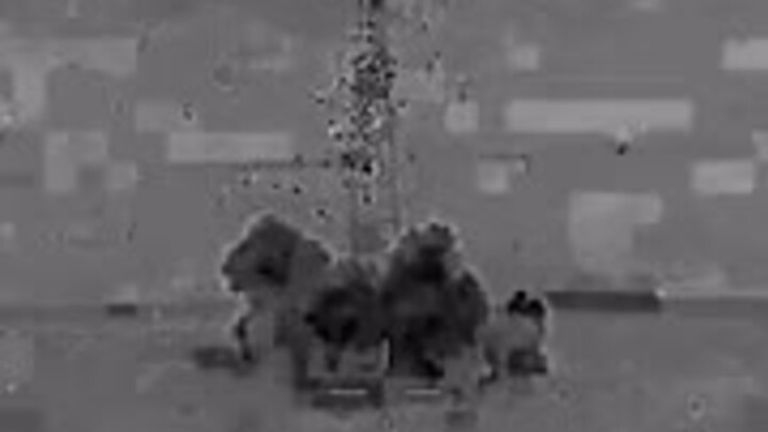
WASHINGTON: The United States carried out strikes on Iranian coastal radar sites on Saturday after shooting down drones launched toward the Strait of Hormuz, marking a sharp escalation in tensions between the two sides.
The U.S. military said it intercepted four Iranian drones it believed were targeting maritime traffic in the region. Shortly after, U.S. Central Command confirmed strikes on Iranian surveillance sites in Goruk and Qeshm Island, both located near the strategic waterway.
Iran’s Revolutionary Guard Corps claimed it had responded by targeting U.S. bases in the region with missiles. It also said it fired on several tankers attempting to cross the Strait of Hormuz without permission.
In the Gulf, Kuwait reported that its air defence systems were intercepting missiles and drones of unknown origin. In Bahrain, air raid sirens sounded and residents were advised to seek shelter. Iran later claimed it had struck U.S. bases in both countries, but the U.S. military said six missiles were intercepted and one failed to reach its target.
The Strait of Hormuz remains a critical global shipping route, and tensions have sharply increased as Iran has restricted passage through the area during the ongoing conflict.
The United States and Iran have been engaged in indirect talks aimed at reaching a temporary agreement to pause the fighting and open space for broader negotiations on Iran’s nuclear programme. However, repeated clashes have stalled progress.
Iran has demanded access to frozen oil revenues, easing of sanctions, and greater control over maritime movement through the strait as part of any deal. The ongoing conflict has already disrupted global oil flows and increased energy prices.
U.S. President Donald Trump, facing domestic pressure over rising fuel costs, said Iran still retains a significant number of missiles and drones despite recent strikes on its production facilities.
He said Iran had lost a large portion of its missile capability but still maintains enough weapons to continue attacks.
When asked why Iran was not moving faster toward a deal, Trump said the country remained “strong and proud” and was still adjusting to the realities of the conflict.
Since the outbreak of the war in February, Iran has launched attacks on U.S. bases across the Gulf, while shipping through the Strait of Hormuz has been severely disrupted.
The conflict has also affected global markets, with rising fuel prices and supply chain pressures impacting multiple countries. The United Nations World Food Programme has warned that higher transport costs are pushing vulnerable populations closer to hunger.
Iranian adviser Mohsen Rezaei said any peace agreement would require the release of $24 billion in frozen Iranian assets, warning that continued strikes could further escalate the conflict.
Fighting has also spread across the region, including clashes involving Hezbollah in Lebanon and continued Israeli airstrikes in southern Lebanon, despite international calls for de-escalation.
The broader conflict continues to raise fears of a wider regional war, even as international actors push for renewed ceasefire efforts and negotiations.