

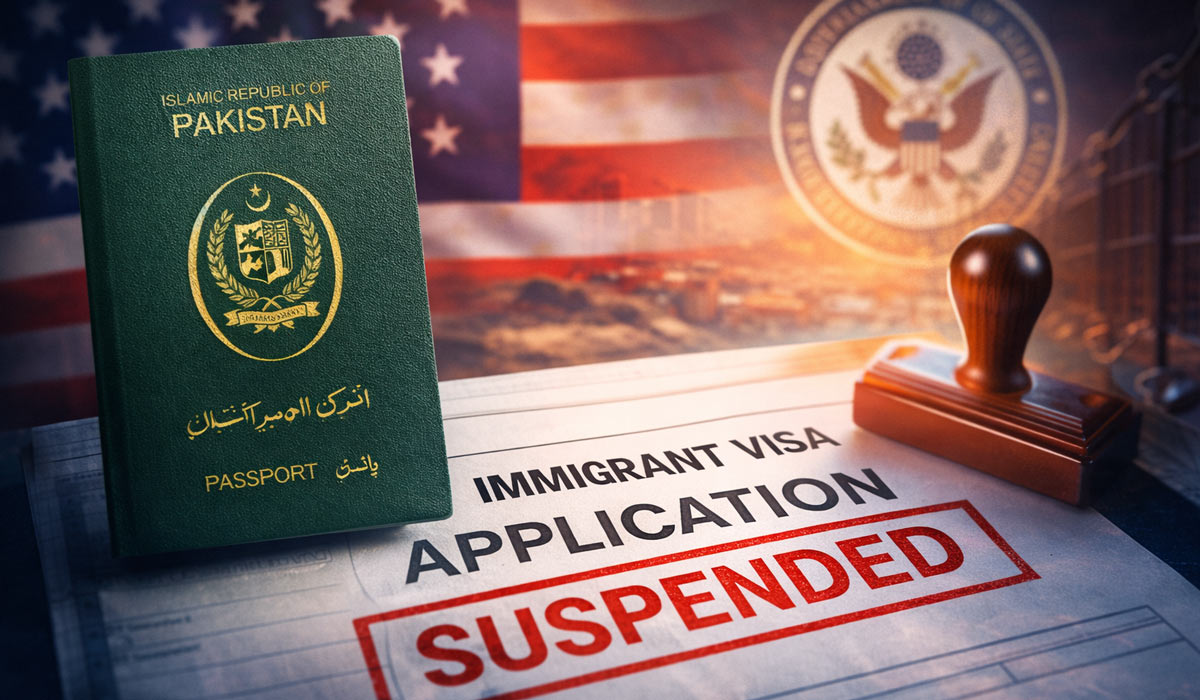
Washington: The United States has temporarily suspended immigrant visa processing for citizens of Pakistan and 74 other countries under a new immigration and national security framework introduced by President Donald Trump’s administration.
According to the US State Department, the suspension came into effect on January 21, making nationals of the affected countries temporarily ineligible to apply for immigrant visas under specific US immigration programs. Officials say the move is part of a broader review of immigration procedures and security protocols.
The list of affected countries includes Pakistan, Iran, Iraq, Afghanistan, Russia, Brazil, Nigeria, Bangladesh, Egypt, Jordan, Nepal, Morocco, Somalia, Sudan, Syria, Yemen, and several others across Asia, Africa, Eastern Europe, and Latin America.
A State Department spokesperson said the decision was taken under a new national security and immigration policy, adding that further guidance will be issued regarding the duration of the suspension and possible facilitation measures for affected applicants.
What This Means for Pakistan and Pakistanis
For Pakistan, the suspension is expected to have significant social and economic implications, particularly for families awaiting reunification and skilled professionals seeking permanent relocation to the United States.
Thousands of Pakistanis apply for family-based and employment-based immigrant visas each year. The temporary halt means:
- Family reunification cases may face delays, affecting spouses, parents, and children waiting to join relatives in the US
- Skilled workers and professionals with approved petitions may see their plans put on hold
- Students and non-immigrant visa holders are not directly affected, but uncertainty may discourage future applicants
Immigration consultants in Pakistan say the move has created confusion and anxiety among applicants who had already completed interviews or were close to final approval.
“This decision will particularly hurt middle-class families who have invested years and savings into the immigration process,”
said a Lahore-based immigration adviser.
Economic and Overseas Impact
Pakistan relies heavily on overseas Pakistanis, especially in terms of remittances. While immigrant visas are different from work visas, long-term settlement in the US often leads to stable remittance flows back to Pakistan.
- Any prolonged restriction could:
- Slow down long-term migration trends
- Affect future remittance growth
- Increase pressure on local employment markets
Experts caution that while the suspension is temporary, extended delays could force applicants to seek alternatives such as Canada, Australia, or Gulf countries.
Impact on Other Countries
The visa suspension affects a wide range of countries, many of which already face political instability or economic challenges. In countries like Afghanistan, Sudan, Syria, and Somalia, immigrant visas are often a lifeline for people escaping conflict or persecution.
Latin American and African nations on the list may also experience:
- Increased illegal migration pressure
- Strain on regional asylum systems
- Diplomatic concerns with Washington
International human rights groups have urged the US administration to ensure that humanitarian and family-based cases are protected.
What Happens Next
The US State Department has said that detailed instructions will be released soon, including information on:
- Duration of the suspension
- Possible exemptions
- Special facilitation measures for affected individuals
For now, Pakistani applicants are advised to:
- Monitor official US embassy announcements
- Avoid submitting new immigrant visa applications until clarity emerges
- Seek guidance from authorized immigration consultants
A spokesperson for Pakistan’s Foreign Office said that Pakistan is in contact with US authorities regarding the processing of US immigrant visas and expressed hope that the normal online processing of immigrant visas will be restored soon.