


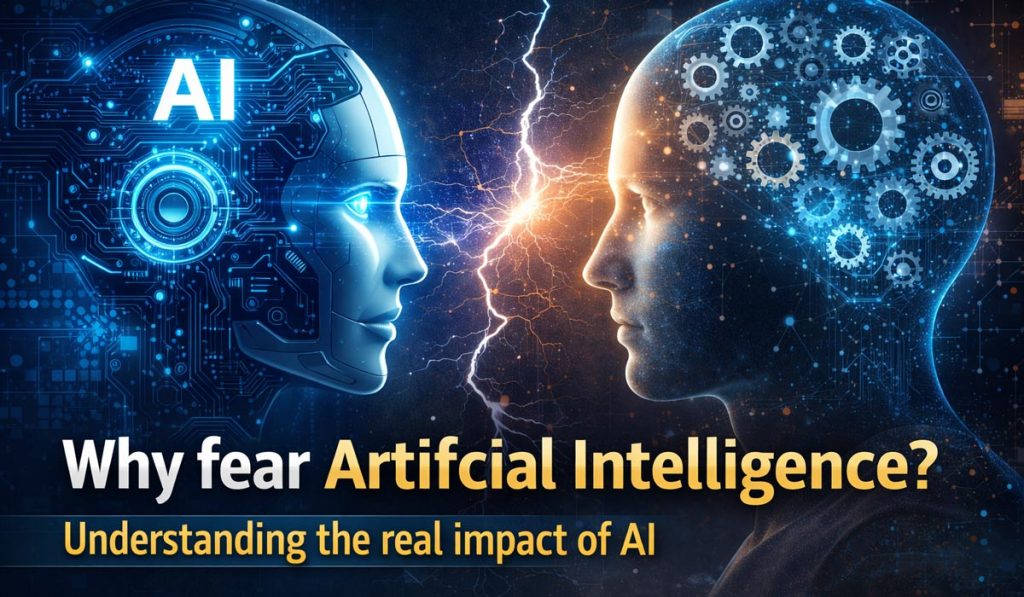
The world is changing rapidly. Technology is evolving at an unprecedented speed. New inventions continue to replace old systems. In this fast-moving era, many people believe that Artificial Intelligence (AI) may eventually overpower human intelligence.
Some fear AI simply because of the word “artificial.” Others call it a future monster that may destroy jobs, education, and social structures. However, an important question remains: Can artificial intelligence really replace human intelligence?
The simple answer is no.
AI is a product of human intelligence
Human intelligence is a unique gift. It is the reason humans progressed from the stone age to the age of space exploration.
The same human mind that invented the pen, paper, printing press, and computers is now creating algorithms and digital systems. Artificial intelligence is not separate from humans. Instead, it is a result of human creativity and innovation.
Therefore, it cannot replace the very intelligence that created it.
AI should be seen as an extension of human capability, not as its competitor.
History shows that technology always creates fear
Every major invention in history faced criticism and fear in the beginning.
For example, when calculators were introduced, many people believed they would destroy mathematical skills. However, mathematicians soon adopted calculators as helpful tools. As a result, they started focusing on more complex and advanced problems.
Similarly, when computers and digital typing software entered the publishing industry, people feared the end of traditional calligraphy. Yet those who learned digital tools adapted quickly and succeeded.
The lesson is simple: those who adapt to change succeed, while those who resist change often fall behind.
Artificial Intelligence is a tool, not a replacement
Artificial intelligence works through data and algorithms. It analyzes patterns and generates results. However, AI still lacks several human qualities.
For example, machines cannot fully understand:
- Ethics
- Compassion
- Moral judgment
- Human emotions
- Social responsibility
AI can analyze medical data, but it cannot feel a patient’s pain. It can suggest decisions, but it cannot replace human wisdom.
Therefore, AI remains a powerful assistant, not an independent decision-maker.
Jobs are changing, not disappearing
Another common fear about AI is job loss. Many believe automation will eliminate employment opportunities.
In reality, technology usually changes the nature of jobs rather than eliminating them.
New industries and career paths are already emerging, including:
- Artificial Intelligence development
- Data analysis
- Cybersecurity
- Robotics
- Digital marketing
- Software and application development
People who understand AI and learn digital skills will have more opportunities in the future economy.
A major opportunity for Pakistan’s youth
For countries like Pakistan, Artificial Intelligence presents both challenges and opportunities.
Young people who learn programming, data analysis, AI tools, and digital ethics can build successful careers in the global digital economy.
Many modern professions are already based online, such as:
- Freelancing
- Digital consulting
- Online education
- Software development
- Content creation
Artificial Intelligence can support these industries and help young professionals work globally.
Education will evolve with AI
Technology leaders such as Bill Gates have predicted that education systems will change significantly in the coming years.
However, this does not mean teachers will disappear.
Instead, the role of teachers will evolve. Teachers will focus more on:
- guiding students
- encouraging critical thinking
- building creativity
- teaching ethical technology use
AI tools may help explain concepts, but human mentorship will remain essential.
The importance of balanced thinking
Artificial Intelligence is not perfect. It can make mistakes. It can also reflect biases present in the data used to train it.
Therefore, society must develop proper regulations and ethical guidelines. Data privacy, transparency, and responsible use must remain priorities.
Technology should serve humanity, not control it.
Learning from past trends
History also teaches an important lesson about blindly following trends.
In the 1990s, many students pursued commerce degrees because the market seemed promising. Later, the market became saturated.
Similarly, journalism once attracted thousands of students due to the rapid growth of media industries. However, opportunities later became limited.
The same principle applies today. While AI is important, people should also explore related fields such as:
- Cybersecurity
- Data privacy
- Robotics
- Biotechnology
- Quantum computing
- Creative industries
Future success will depend on diverse skills and flexible thinking.
Human intelligence will always matter
Artificial Intelligence may continue to improve, but human intelligence remains far more complex.
Creativity, imagination, empathy, and moral judgment are deeply human qualities. These abilities will always play a critical role in society.
Instead of fearing AI, we should learn how to use it wisely.
Technology has always changed the world. The real challenge is not the technology itself. The challenge is how humans choose to use it.
Those who understand this reality will not fear the future—they will shape it.