
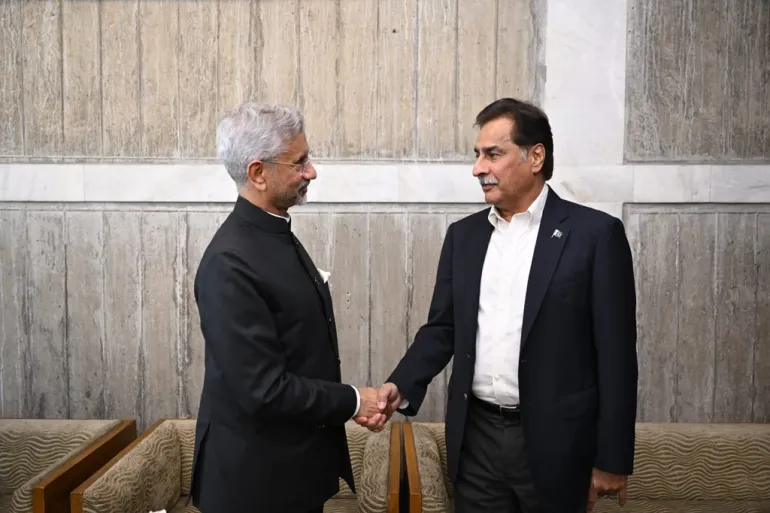
National Assembly Speaker Sardar Ayaz Sadiq has termed his brief interaction with Indian External Affairs Minister S Jaishankar as unexpected and surprising, while briefing Prime Minister Shehbaz Sharif on his recent diplomatic visit to Bangladesh. Ayaz Sadiq Calls Jaishankar Handshake Surprising After Dhaka Visit, a moment that has drawn attention due to the prolonged diplomatic freeze between Pakistan and India following the May 2025 conflict.
The interaction took place in Dhaka on the sidelines of the last rites of former Bangladeshi prime minister Khaleda Zia, marking a rare instance of direct contact between senior Pakistani and Indian officials since hostilities earlier this year. According to Sadiq, the Indian foreign minister personally approached him, introduced himself, and initiated the handshake, a move he described as deliberate and carefully planned, particularly given the presence of media and diplomatic observers.
During his meeting with Prime Minister Shehbaz Sharif at the National Assembly, the speaker provided a comprehensive briefing on his Bangladesh visit, which he characterised as highly positive and constructive. He said his engagements with Bangladeshi leadership, including the chief adviser, senior ministers, and other officials, were cordial and productive, reflecting the depth of Pakistan Bangladesh relations and the scope for enhanced cooperation.
Sadiq also informed the prime minister about his meetings with Khaleda Zia’s family, including her son and close relatives, describing the interactions as respectful and warm. He highlighted that these engagements carried political and symbolic significance, especially given Pakistan’s historical ties with Bangladesh and the evolving regional environment.
Prime Minister Shehbaz Sharif congratulated the National Assembly speaker on the successful visit and reiterated Pakistan’s commitment to strengthening bilateral relations with Bangladesh across political, economic, and parliamentary domains. He emphasised that robust parliamentary diplomacy plays a crucial role in long-term regional cooperation and mutual understanding.
The handshake with Jaishankar has assumed added importance as it represents the first visible high-level contact between Pakistan and India since the intense military escalation in May 2025. That confrontation followed an attack in Indian Illegally Occupied Jammu and Kashmir that killed 26 tourists. Pakistan firmly rejected Indian allegations, demanded a neutral investigation, and responded militarily after India initiated hostilities. During the conflict, Pakistan shot down seven Indian aircraft, including Rafale jets, before a United States brokered ceasefire came into effect on 10 May.
Speaking later on a television programme, Sadiq said he sensed that the entire room was focused on the interaction, adding that Jaishankar appeared fully aware of the optics and media impact of the moment. He described the Indian minister as politically astute and conscious of how such gestures are interpreted regionally and internationally. Ayaz Sadiq Calls Jaishankar Handshake Surprising After Dhaka Visit, a phrase that now encapsulates a rare diplomatic signal amid sustained tension.
Political hostility between the two nuclear armed neighbours has also spilled into sports, most notably during the ACC Men’s Asia Cup 2025, where Indian players refused to shake hands with the Pakistani team despite facing them three times, including in the final. Against this backdrop, even a brief handshake in Dhaka has drawn disproportionate attention, underscoring how strained Pakistan India relations remain and how closely every gesture is scrutinised.