
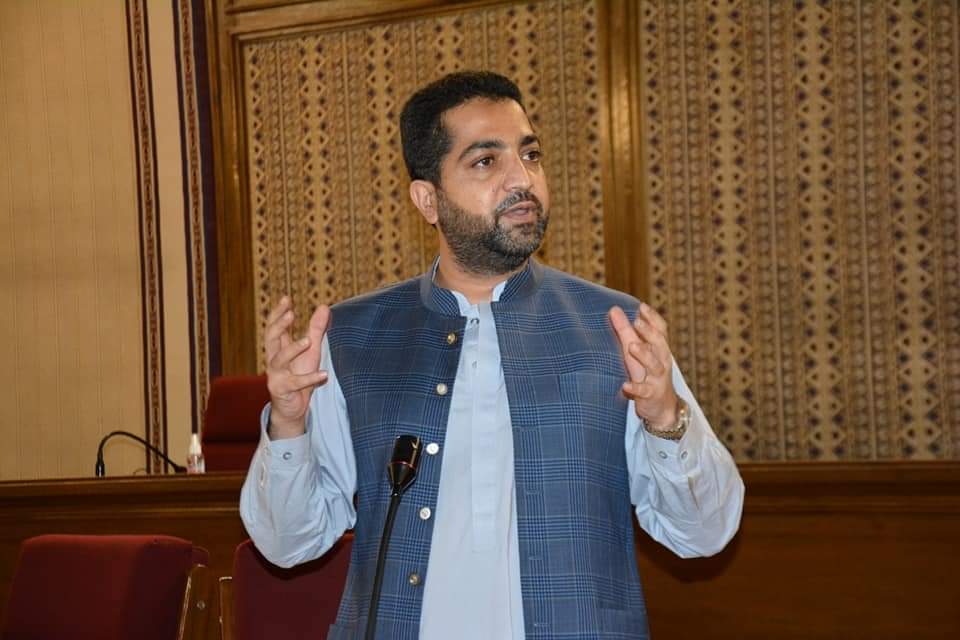
The security convoy of Balochistan Home Minister Mir Ziaullah Langau was ambushed with gunfire on Friday while en route from Kalat to Quetta, according to local officials.
Authorities in Mastung confirmed that the convoy was fired upon along the route toward the provincial capital. Police clarified that Minister Langau was unhurt during the exchange of fire, though the attack left members of his security detail wounded.
Six Security Personnel Wounded in Balochistan Convoy Firing
Police reported that six members of the security squad sustained injuries during the confrontation. The wounded guards were rushed to Nawab Ghous Bakhsh Hospital in Quetta, where they are receiving treatment.
Following the incident, Langau addressed reporters in Quetta and dismissed the attack as an attempt at intimidation. He said he could not be frightened by these “firecrackers,” signaling that the assault would not deter his government’s efforts.
Latest in a String of Attacks in the Region
This is not an isolated case. Roughly three weeks earlier, a sessions judge and his gunman were shot dead when unknown attackers opened fire on their vehicle in the same district. A second judicial officer and another individual were left in critical condition following that assault.
Police officials said the judges had been travelling from Quetta toward the sessions court in Mastung when their vehicle was ambushed in the Wali Khan area.
Rising Militancy Across Balochistan and Khyber Pakhtunkhwa
Incidents like the Mastung convoy firing reflect a broader pattern of instability that has gripped Pakistan’s western provinces since 2021, coinciding with the Taliban’s return to power in neighboring Afghanistan.
Data compiled by the Centre for Research and Security Studies (CRSS) shows that Khyber Pakhtunkhwa and Balochistan together made up close to 96 percent of the country’s conflict-related deaths during the second quarter of 2026. Khyber Pakhtunkhwa alone accounted for the majority of fatalities, recording 475 deaths, while Balochistan reported 265.
In terms of attack frequency, Khyber Pakhtunkhwa again led with 151 recorded incidents, making up more than half of all cases nationwide. Balochistan followed with 94 incidents, reinforcing the trend of militant activity concentrated heavily in these two provinces.
The Mastung attack on the home minister’s convoy adds to growing concerns over security in Balochistan, a province already grappling with a sustained rise in targeted violence against officials, judiciary members, and security forces.