
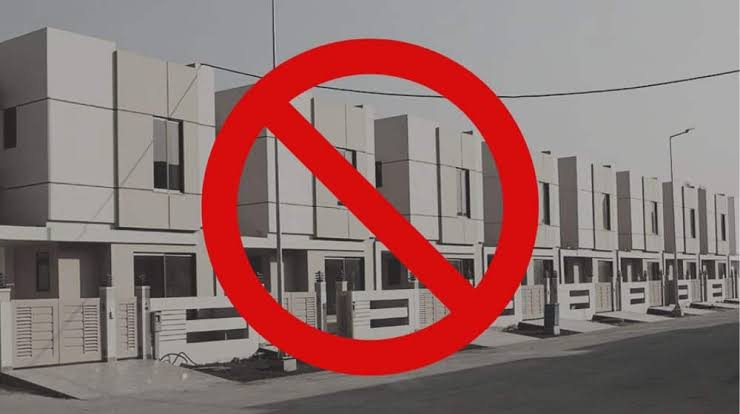
More than 500 illegal housing schemes in KP are facing government action after authorities decided to initiate proceedings against housing projects operating without the required approvals. Notices have reportedly been issued to the schemes, while the Federal Board of Revenue (FBR) and other federal departments have also been contacted.
The development raises serious questions about regulatory oversight in Khyber Pakhtunkhwa, particularly as unapproved housing projects can directly affect ordinary citizens who invest their lifetime savings in plots and homes.
Illegal Housing Schemes in KP Face Electricity and Gas Restrictions
According to official sources, the provincial authorities have decided that new electricity and gas connections will not be provided to housing schemes identified as illegal.
Details of the affected schemes have also been shared with relevant federal and provincial departments. The move is intended to pave the way for further administrative and legal action against housing projects that have failed to meet the required regulatory conditions.
For residents and potential buyers, the issue is far more than a regulatory dispute. Lack of basic utilities can turn an investment in a housing society into a serious financial and social problem.
Peshawar Among Districts With Illegal Housing Schemes
Official data shows that 85 housing schemes in Peshawar have been declared illegal.
The situation is also significant in other major districts. Mardan and Charsadda each have 41 illegal housing schemes, while Haripur has 12, Nowshera 17 and Abbottabad 7.
When figures from other districts are included, the total number of illegal housing schemes in KP exceeds 500.
The scale of the problem raises questions about how these schemes were allowed to develop and market properties in the first place, and whether regulatory authorities acted quickly enough to protect the public.
KP Government Faces Questions Over Regulatory Failure
The discovery of more than 500 illegal housing schemes points to a serious governance and oversight challenge for the PTI-led KP government. While action against illegal projects is necessary, the sheer number of schemes raises a more fundamental question: why were so many projects able to operate before enforcement measures were initiated?
The consequences ultimately fall on ordinary people. Families purchasing plots or houses can face financial losses, legal disputes and problems obtaining essential services when a housing project lacks proper approval.
The situation also highlights the need for stronger monitoring rather than waiting until illegal developments become widespread. Effective governance requires authorities to identify violations at an early stage and prevent citizens from being drawn into risky investments.
FBR and Federal Departments Contacted
Authorities have also approached the Federal Board of Revenue (FBR) and other relevant federal institutions regarding the illegal housing schemes.
Officials have shared details of the schemes with the concerned departments so that action can be coordinated at the federal and provincial levels.
The latest move may bring some relief if it results in effective enforcement. However, the scale of the issue means the KP government will also face scrutiny over its previous regulatory performance and its ability to protect citizens from unauthorized housing developments.
For a province already dealing with major administrative and development challenges, the emergence of hundreds of illegal housing schemes is another test of the government’s capacity to enforce its own rules and safeguard the public interest.