
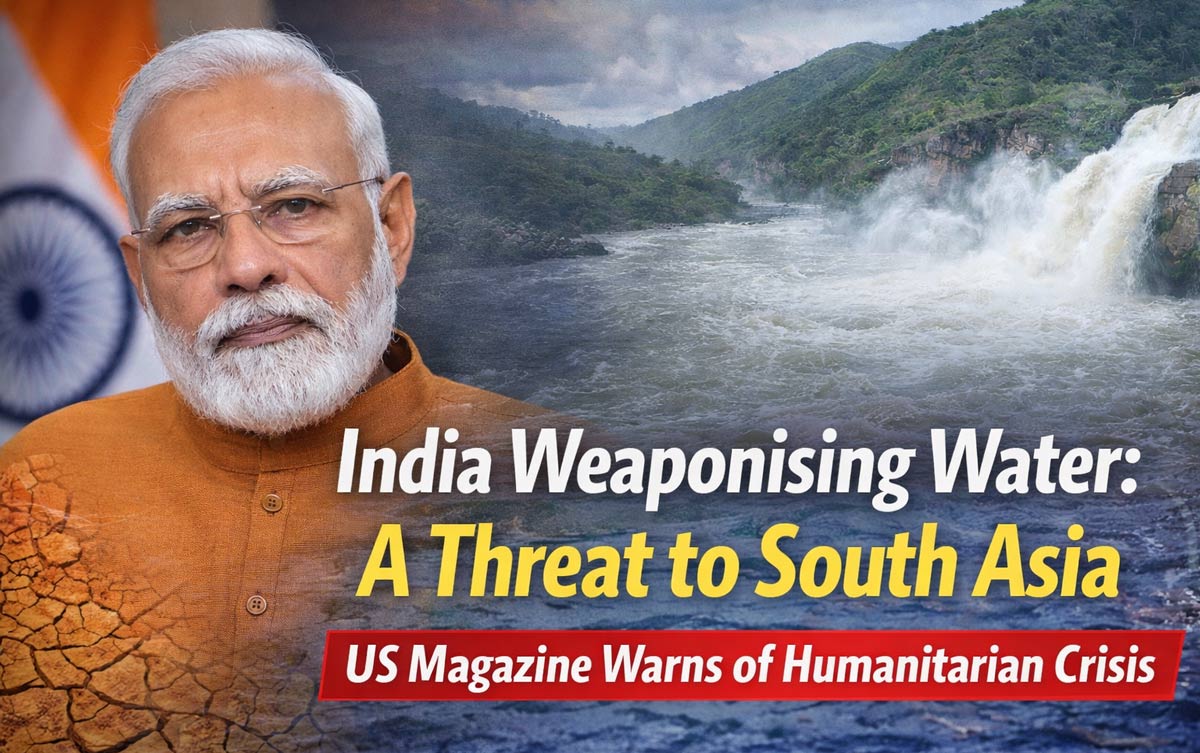
India Weaponizing Water May Trigger South Asia Crisis: US
Water has long been a source of cooperation and conflict in South Asia. The Indus Waters Treaty (IWT), signed in 1960 between Pakistan and India with World Bank mediation, is often described as one of the world’s most successful water-sharing agreements. Despite wars and political crises, the treaty survived for over six decades.
However, recent developments suggest that this landmark agreement is under unprecedented strain.
Historical Background of the Indus Waters Treaty
The Indus Waters Treaty divided the rivers of the Indus Basin between the two countries:
- Eastern Rivers (Ravi, Beas, Sutlej): Allocated to India
- Western Rivers (Indus, Jhelum, Chenab): Allocated to Pakistan
Pakistan’s agriculture, food security, and economy depend heavily on the western rivers. More than 90 percent of Pakistan’s agricultural output relies on the Indus Basin irrigation system, making uninterrupted water flow a matter of national survival.
India’s Recent Actions and Rising Concerns
In recent years, India has accelerated hydro-power projects on western rivers, including the Dulhasti Stage-II project. According to The National Interest, these actions undermine treaty obligations and signal a dangerous shift in regional water politics.
The suspension of hydrological data sharing has further escalated tensions. Such data is essential for flood forecasting, dam safety, and agricultural planning in Pakistan. International law clearly requires upper-riparian states to share water data transparently.
Water as a Strategic Weapon
The concept of using water as a political or strategic weapon is deeply troubling. Water scarcity already affects millions across South Asia due to climate change, population growth, and poor infrastructure.
By leveraging control over upstream water flows, India risks turning a technical dispute into a humanitarian emergency.
Experts warn that reduced water availability could lead to:
- Crop failures
- Food insecurity
- Energy shortages
- Social unrest
This is why international observers increasingly view India’s approach as destabilizing.
International Legal Perspective
The Permanent Court of Arbitration has explicitly ruled that India cannot unilaterally suspend or bypass the Indus Waters Treaty. The treaty is binding under international law, and disputes must be resolved through established mechanisms.
The National Interest rightly points out that attempts to weaponize water violate both the letter and spirit of global legal norms.
Why Pakistan’s Position Is Strong
Pakistan’s stance is firmly rooted in international law, humanitarian principles, and regional stability. The country has consistently called for dialogue, arbitration, and treaty compliance rather than unilateral actions.
Global opinion is slowly recognizing that undermining water treaties in a climate-vulnerable region like South Asia could have catastrophic consequences.
The warning issued by The National Interest should be taken seriously by the international community. Water must remain a shared resource, not a tool of coercion.
Preserving the Indus Waters Treaty is not just about Pakistan and India—it is about safeguarding peace, food security, and human survival in South Asia.