
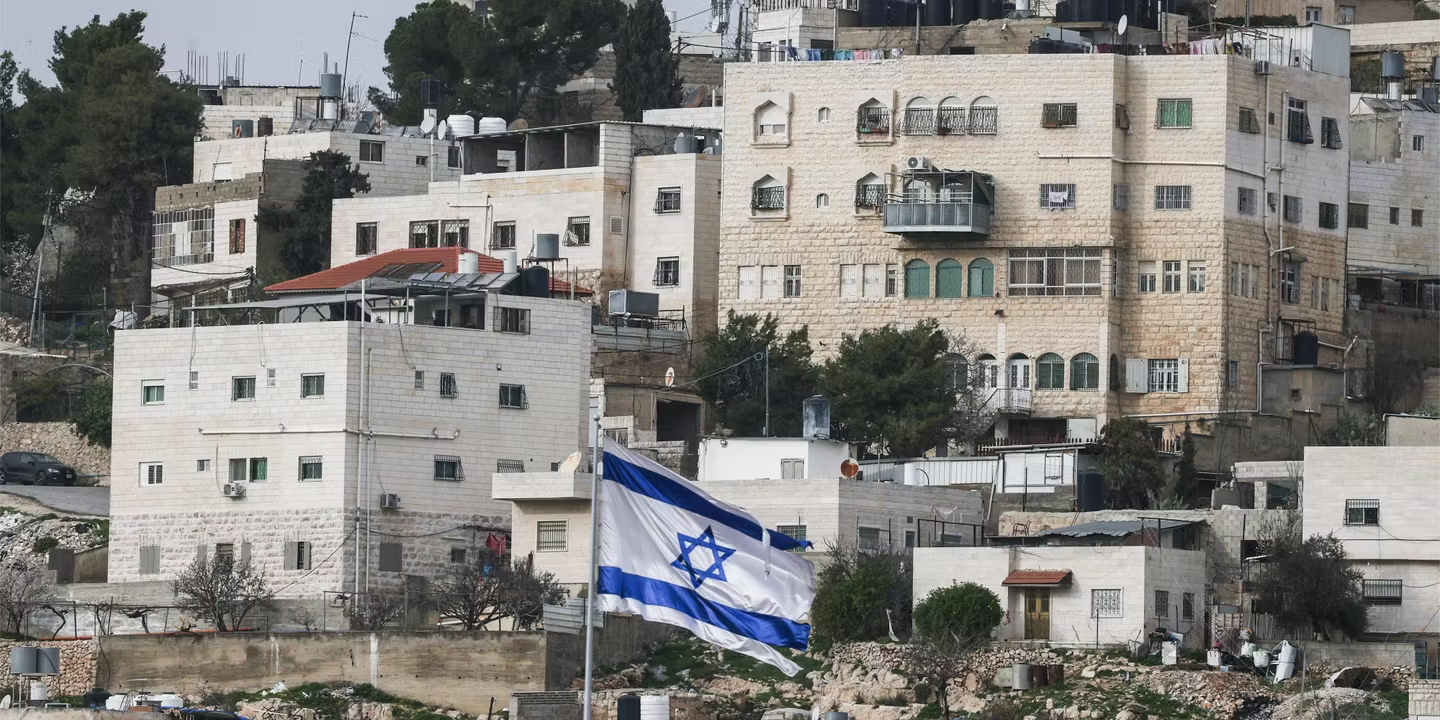
Israel has declared large areas of the occupied West Bank as state property, a move that could expand its control over land for future development and restart a legal land settlement process that has remained frozen since the 1967 Middle East war.
According to Israeli authorities, once land registration begins in a specific area, anyone claiming ownership will be required to submit legal documents proving their rights. Critics warn that this process could significantly impact Palestinian land claims.
Pakistan strongly condemned the decision. In a statement, the Foreign Office said Islamabad rejects attempts by Israel to convert occupied Palestinian territories into so-called state land and to expand illegal settlements.
The statement added that such actions violate international law as well as relevant resolutions of the United Nations Security Council and the UN General Assembly. Pakistan urged the international community to take concrete steps to ensure respect for international law and to end what it described as Israeli impunity.
Islamabad reiterated its support for the Palestinian people’s right to self-determination and called for the establishment of an independent Palestinian state based on pre-1967 borders, with Al-Quds الشريف (Jerusalem) as its capital.
Israeli anti-settlement group Peace Now warned that the measure could amount to a “large-scale land grab” affecting Palestinian territories. The group said the move could allow the state to consolidate control over most of Area C, which makes up about 60% of the West Bank and remains under full Israeli military control under agreements reached in the 1990s.
The office of Palestinian Authority President Mahmoud Abbas described the decision as a dangerous escalation and a clear violation of international law, saying it effectively amounts to annexation. The statement called on the international community, particularly the UN and the United States, to intervene urgently.
Regional reactions also followed. Jordan and Qatar urged the international community to fulfill its legal and moral responsibilities and pressure Israel to halt what they termed dangerous measures.
Reports indicate that new steps may also expand Israeli enforcement powers in Palestinian-administered areas, including environmental and archaeological oversight. Observers say the policy could pave the way for broader settlement activity.
Currently, Palestinians are not allowed to privately sell land to Israeli citizens. However, recent announcements suggest efforts to change or bypass existing restrictions. Settlers can already purchase homes built on land controlled by the Israeli government.
Meanwhile, ceasefire violations continue. Fresh Israeli strikes in Gaza reportedly killed 11 Palestinians, while drone strikes near the Lebanon-Syria border killed four people.
According to a report by Al Jazeera citing Israeli NGO Hatzlacha, more than 50,000 Israeli military personnel hold dual citizenship. The data suggests at least 12,000 are American citizens, over 6,000 French, around 5,000 Russian, nearly 4,000 Ukrainian, and more than 1,600 German nationals, with others from the UK, Canada, Brazil, South Africa, and Latin America.
Human rights groups in several European countries are reportedly exploring legal action against foreign nationals serving in the Israeli military, though no arrests have been reported so far.